
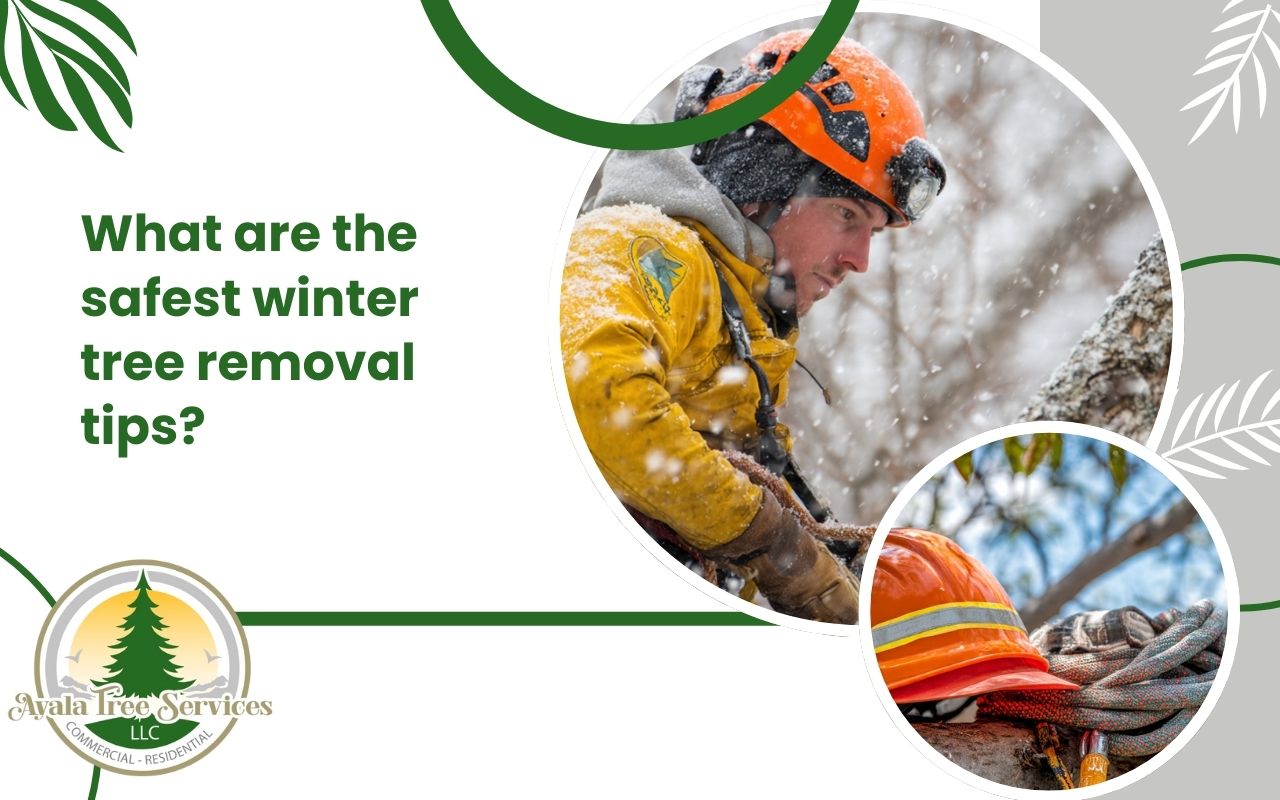
Winter can turn routine tree work into a high-risk job: frozen ground shifts, ice loads limbs, and storms hide structural cracks. This guide shares Winter Tree Removal Safety Tips for homeowners and property managers, from spotting dangerous trees to using gear that prevents slips and kickbacks. Use these steps to reduce damage, protect people, and know when to call professionals.
What are the safest winter tree removal tips?
Start by treating every winter-damaged tree as unstable. Inspect for cracks, lean, and lifted roots, set a wide drop zone, and use traction footwear plus full PPE. Avoid cutting under energized lines or during active ice/wind. If the tree threatens a structure, hire a licensed crew.
Identifying Hazardous Trees for Winter Removal
Winter conditions can hide serious defects under snow, ice, and low light. Before any cold weather tree removal, inspect the entire tree from a safe distance and assume limbs may drop without warning.
- Trunk or limb cracks that widened after freeze/thaw cycles
- Dead, hanging, or partially broken branches that may fall under ice weight
- Leaning trees pointing toward homes, driveways, sidewalks, or power lines
- Soil heaving, exposed roots, or fresh ground cracks near the base
- Decay signs like cavities, mushrooms, or soft wood along the trunk
Assessing Risks and Planning a Removal Strategy
Winter storm tree damage often creates “hidden movement” in the canopy. Planning reduces surprise shifts and helps prevent injuries.
Map the drop zone and escape routes
Clear people, pets, vehicles, and tools beyond the expected fall area. Pick at least two exit paths that won’t become icy bottlenecks.
Check conditions before you cut
Delay work during active wind, freezing rain, or whiteout visibility. Icy branch hazards increase when gusts shake frozen limbs loose.
Use a two-person safety approach
One person cuts; the other monitors overhead movement and changing ground traction. Winter is not the season for solo removals.
Essential Safety Gear for Winter Tree Removal
The right PPE helps you keep warm, visible, and protected if a limb snaps or ice drops. This is the core of Winter Tree Removal Safety Tips for DIY-sized cleanup.
- Hard hat for falling branches and ice chunks
- Eye and hearing protection for debris and power tools
- Insulated, grip-safe gloves that still allow tool control
- Chainsaw chaps (or leg protection rated for saw work)
- Steel-toe, high-traction boots (consider ice cleats on hardpack)
- High-visibility outer layer for short winter daylight
Precautions for Working in Cold Weather Conditions
Cold can reduce reaction time and decision-making—especially when you’re tired or wet.
Dress to stay dry, not just warm
Use a moisture-wicking base, insulating layer, and waterproof shell. Wet clothing can trigger rapid heat loss.
Fuel your body and your focus
Drink water (dehydration happens in winter) and snack regularly. Take warm-up breaks before hands lose dexterity.
Techniques for Safely Removing Ice-Laden Branches
Ice adds weight and changes how wood fibers fail—branches can snap, twist, or “spring” unexpectedly.
Reduce weight in small sections
Start at the outer tips and work inward with controlled cuts. Stand to the side—never directly underneath.
Keep distance with the right tool
A pole saw or extendable pruner helps you avoid standing in the impact zone.
Use controlled lowering when needed
For heavy limbs, use ropes and an anchor point to lower sections gradually. If you can’t control the fall, don’t cut it.
Securing the Work Area During Winter Tree Removal
Slips and bystander injuries spike in winter. Lock down the site before any cutting begins.
- Mark boundaries with cones, tape, or temporary fencing
- Improve traction with sand/salt on walkways and work paths
- Clear snow to reveal trip hazards (rocks, roots, uneven ground)
- Stabilize ladders on level ground (avoid ladders when possible in ice)
- Post a spotter near access points to prevent entry into the drop zone
Proper Handling of Tools and Equipment in Cold Weather
Freezing temperatures change how tools behave. Batteries drain faster, plastics can become brittle, and dull chains snag frozen wood.
Pre-check everything
Inspect ropes, saws, and handles for cracks and wear. Use cold-weather lubricants where appropriate.
Keep tools reliable
Store batteries warm, sharpen blades often, and clean ice buildup from handles and footings. A dull or slipping tool is an accident waiting to happen.
Emergency Response Protocols for Unexpected Situations
Even careful crews can face sudden shifts, falls, or electrical hazards after winter storms.
Build a simple, clear plan
Assign who calls emergency services, who gives first aid, and who secures the area. Keep a charged phone, first-aid kit, and thermal blanket on-site.
Respect electrical danger
If limbs touch utility lines, do not approach. Treat every line as energized and contact the utility provider immediately.
Ensuring Post-Removal Safety Measures
Cleanup is part of the job. Remove small debris that becomes hidden under snow and recheck nearby trees for new cracks caused by falling sections.
Finish by restoring the site: pick up tools, remove ice patches where possible, and store equipment dry to prevent corrosion.
How to Handle Winter Storm Tree Damage Safely
- Pause and assess the tree from a safe distance (look up before you look down).
- Confirm hazards: lean direction, broken hangers, lifted roots, nearby lines, and slick footing.
- Create a drop zone and block access with cones/tape; clear two escape routes.
- Gear up with helmet, eye/ear protection, traction boots, and leg protection.
- Remove small debris first using a pole tool—avoid standing under the canopy.
- Section heavy limbs with controlled cuts; use ropes to lower when needed.
- Stop immediately if the tree shifts, wind increases, or you lose traction control.
- Document damage for insurance and schedule professional help when risk exceeds tools/experience.
Frequently Asked Questions
Can I remove a winter-damaged tree myself?
Only if it’s a small, low-risk tree with no lean, no overhead hangers, and no nearby structures or lines. For urgent hazards—especially after storms—use Emergency Fallen Tree Removal in Alpharetta, GA to reduce risk.
Do you offer emergency service after winter storms?
Yes—storm response typically prioritizes trees blocking access, threatening roofs, or creating electrical risk. If you’re dealing with immediate danger, review options for Emergency Fallen Tree Removal in Alpharetta, GA.
What’s the biggest risk during cold weather tree removal?
Loss of footing plus unpredictable limb failure. Ice-laden branches can drop without warning, and frozen ground can shift under load. If you can’t maintain stable footing and full control of the cut, postpone or hire a pro.
How soon should I remove a damaged tree after a storm?
As soon as it becomes a safety hazard—especially if it’s leaning or has hanging limbs. If the ground is saturated after thaw or rain, see Tree Removal After Heavy Rain in Alpharetta for risk factors tied to unstable soil.
How do I request a quote with Ayala Tree Services LLC?
The fastest way is to share photos, your address, and whether access is blocked or a structure is threatened. Use Contact Us for Expert Hardscaping, Sod, and Tree Services to schedule an assessment.
When to Call Ayala Tree Services LLC
Choose professional help when a tree is leaning toward a home, tangled near utilities, too large to control in sections, or creating repeated icy branch hazards. If you’re in Cobb County and need local support, explore Tree Removal in Marietta, GA – Safe, Reliable, and Efficient for service details and availability.
For high-risk jobs, these Winter Tree Removal Safety Tips still apply—site control, PPE, and weather timing—because safety starts before the first cut.
References
- The safest way to use a chainsaw, according to science (Popular Science)
- How to Use a Chainsaw Safely When Cutting Trees and Branches (Better Homes & Gardens)