
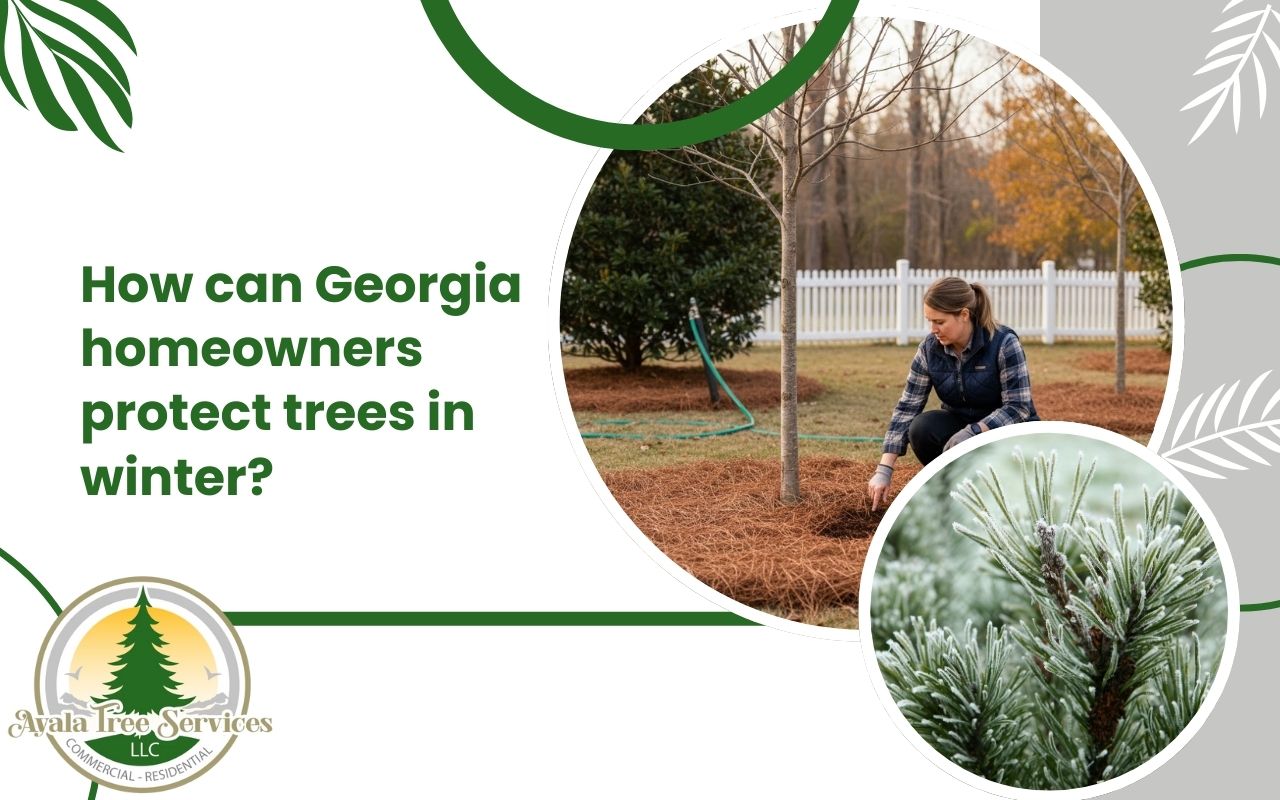
Georgia winters may be mild, but your trees still face cold snaps, dry winds, and surprise frosts. Learning a few Winter Tree Care Tips for Homeowners in Georgia helps protect roots, bark, and branches so they bounce back in spring. With the right watering, mulching, pruning, and frost protection, your landscape can stay safer, greener, and more resilient all year.
How can Georgia homeowners protect trees in winter?
Georgia homeowners protect trees in winter by combining deep but careful watering, smart frost protection, proper mulching, and well-timed pruning. Focusing on young, newly planted, and stressed trees first reduces damage from freeze–thaw cycles, dry winds, and surprise cold snaps. A short winter checklist keeps maintenance simple while supporting healthy growth when warmer weather returns.
Importance of Winter Tree Care in Georgia
Winter Tree Care Tips for Homeowners in Georgia go beyond cosmetic cleanup. Even short cold spells and icy rain can stress branches, bark, and roots, especially on young or ornamental trees.
Good winter care protects both your landscape’s structure and your property’s value. Proactive work also supports steady recovery in spring and lowers the risk of emergency removals after storms.
Regular inspections and tree maintenance tips for homeowners help keep canopies balanced, roots insulated, and problem branches under control before severe weather arrives.
Understanding the Challenges Trees Face in Winter
Cold nights and warmer days create repeated freeze–thaw cycles. Water inside the tree expands and contracts, which can lead to bark cracks, split branches, and stress at old pruning cuts.
Shorter days reduce photosynthesis and stored energy. At the same time, dry winter winds pull moisture from needles and evergreen leaves. This combination of cold, drought, and low light can quietly weaken even established trees.
Knowing these stressors helps you focus on moisture management, insulation, and gentle structural pruning during the dormant season.
Winter watering tips for tree health
Even dormant trees need consistent moisture. Long dry periods can dehydrate roots and increase the risk of cracking bark and dieback, especially after windy days.
- Water on the warmest daytime hours so liquid can soak into unfrozen soil.
- Apply slow, deep watering at the drip line instead of quick, shallow bursts.
- Check moisture 2–3 inches down; water only when soil feels dry, not soggy.
- Prioritize young or newly planted trees and evergreen species during winter watering trees routines.
Balanced watering protects roots from drought without leaving soil waterlogged before a freeze.
Strategies for providing frost protection
Rapid temperature swings can damage bark and buds, especially on young or thin-barked trees. Simple frost protection trees strategies reduce this risk significantly.
- Wrap trunks of vulnerable trees with breathable tree wrap from the base to the first branches.
- Use frost cloths or garden blankets over small trees when hard frost is forecast.
- Secure coverings to the ground to trap radiating heat, then remove them once temperatures rise.
- Avoid plastic touching foliage directly, as it can trap moisture against leaves and bark.
Protecting sensitive bark and buds helps trees leaf out evenly and recover faster in spring.
Mulching techniques to shield tree roots
Applying thoughtful mulching trees winter practices is one of the easiest ways to protect roots. A 2–4 inch layer of shredded bark or wood chips acts like a natural blanket, moderating soil temperatures and conserving moisture.
Keep mulch a few inches away from the trunk flare to prevent rot and pest issues. A flat, wide mulch ring is healthier than a tall mulch “volcano.”
As mulch breaks down, it enriches the soil structure and slowly feeds beneficial organisms, supporting long-term root health with minimal effort.
The role of pruning in winter tree care
Because many trees are leafless, pruning in cold weather improves visibility and precision. It’s easier to identify dead, crossing, or storm-damaged branches and remove them safely.
Selective pruning opens the canopy, improves airflow, and reduces the risk of broken limbs in winter storms. Use sharp, clean tools and avoid pruning during extreme cold snaps so cuts can begin healing promptly.
Complex or high pruning work is safer when handled by a professional, especially near structures or power lines.
Recognizing signs of winter damage
After cold nights or icy weather, walk your yard and look for bark splits, peeling, or sunscald on the south and southwest sides of trunks. These can appear as elongated, discolored cracks.
Check branches for brittle wood, hanging limbs, or buds that fail to swell as spring approaches. At ground level, lift mulch in a few spots to inspect for rot, mold, or gnaw marks from rodents.
Early detection lets you adjust watering, reshape mulch, or schedule pruning before minor damage becomes a serious hazard. When in doubt, use these tree inspection tips as a guide.
Tree care tips specific to Georgia’s climate
Georgia’s winters often bring mild spells followed by sudden freezes. Native or well-adapted species, such as red maple or bald cypress, usually handle these swings better than more delicate ornamentals.
Proactive tree maintenance in Roswell GA focuses on monitoring forecasts, maintaining mulch depth, and adjusting watering after extended dry periods. Avoid heavy fertilization on warm winter days since it can push tender new growth that cold will quickly damage.
By tailoring care to local weather patterns, you prevent over-treating and keep your landscape in balance.
Implementing sustainable practices for long-term tree health
Sustainable winter care supports both your trees and the surrounding ecosystem. Choose organic mulches and natural soil amendments to feed beneficial microbes instead of relying solely on synthetic products.
Collect rainwater in barrels to use for winter watering sessions, reducing municipal water use. Compost or chip small pruning debris to reuse as mulch rather than sending it to a landfill.
When nutrients are needed, time your applications with a smart seasonal fertilization plan so trees can absorb them efficiently once they resume active growth.
How to prepare your Georgia trees for winter
- Inspect each tree for dead, damaged, or crossing branches and plan safe pruning.
- Test soil moisture and adjust winter watering trees practices based on recent rainfall.
- Refresh mulch to a 2–4 inch depth, keeping it clear of the trunk flare.
- Wrap trunks of young or thin-barked trees before the first hard frost.
- Monitor forecasts and use frost protection trees covers during extreme cold snaps.
Frequently Asked Questions
When should I schedule a winter tree inspection in Georgia?
Schedule a winter tree inspection after the first hard frost and again before early spring storms. This timing makes hidden damage easier to spot. If you’re unsure where to start, review detailed tree inspection tips and then request a professional visit for high-risk or mature trees.
How do I know if my trees need professional pruning in cold weather?
Consider professional pruning in cold weather when branches overhang your roof, power lines, or play areas, or when decay, deep cracks, or large dead limbs are visible. Any work requiring climbing or specialized equipment is safest for trained arborists. For a tailored quote, you can request a winter tree evaluation online.
What is the best way to budget for winter tree maintenance in Roswell, GA?
Start by prioritizing safety tasks: dead limb removal, structural pruning, and critical frost protection. Then plan optional services such as seasonal fertilization or extra mulching. Combining several tasks in one visit often reduces overall cost. Ask your provider for an itemized estimate when you schedule winter tree maintenance.
How can I combine mulching, inspection, and fertilization in one winter visit?
You can group visual inspections, light pruning, mulch refresh, and soil testing into a single service call. This holistic approach saves time and ensures each step supports the next. Use a customized seasonal fertilization plan to decide whether nutrients should be added now or closer to spring growth.
What should I do if I notice severe winter damage on a tree near my home?
If you see large cracks, uprooting, or hanging limbs near structures or walkways, keep people and pets away from the area. A damaged tree can fail suddenly, even in calm weather. Document what you see with photos and quickly contact a tree care specialist in Georgia for an on-site risk assessment.
Ensuring your trees thrive year-round
By following these Winter Tree Care Tips for Homeowners in Georgia, you help trees withstand cold, wind, and sudden freezes while preparing them for vigorous spring growth.
Thoughtful watering, smart mulching, strategic pruning, and targeted frost protection work together to keep your yard safer and more beautiful. Turn winter into a planning season, and your landscape will reward you with stronger trunks, fuller canopies, and fewer emergencies in the year ahead.
References
- Why You Should Keep Watering Trees in Winter – Better Homes & Gardens.
- When To Add A Second Layer Of Mulch For Winter Protection – Southern Living.