
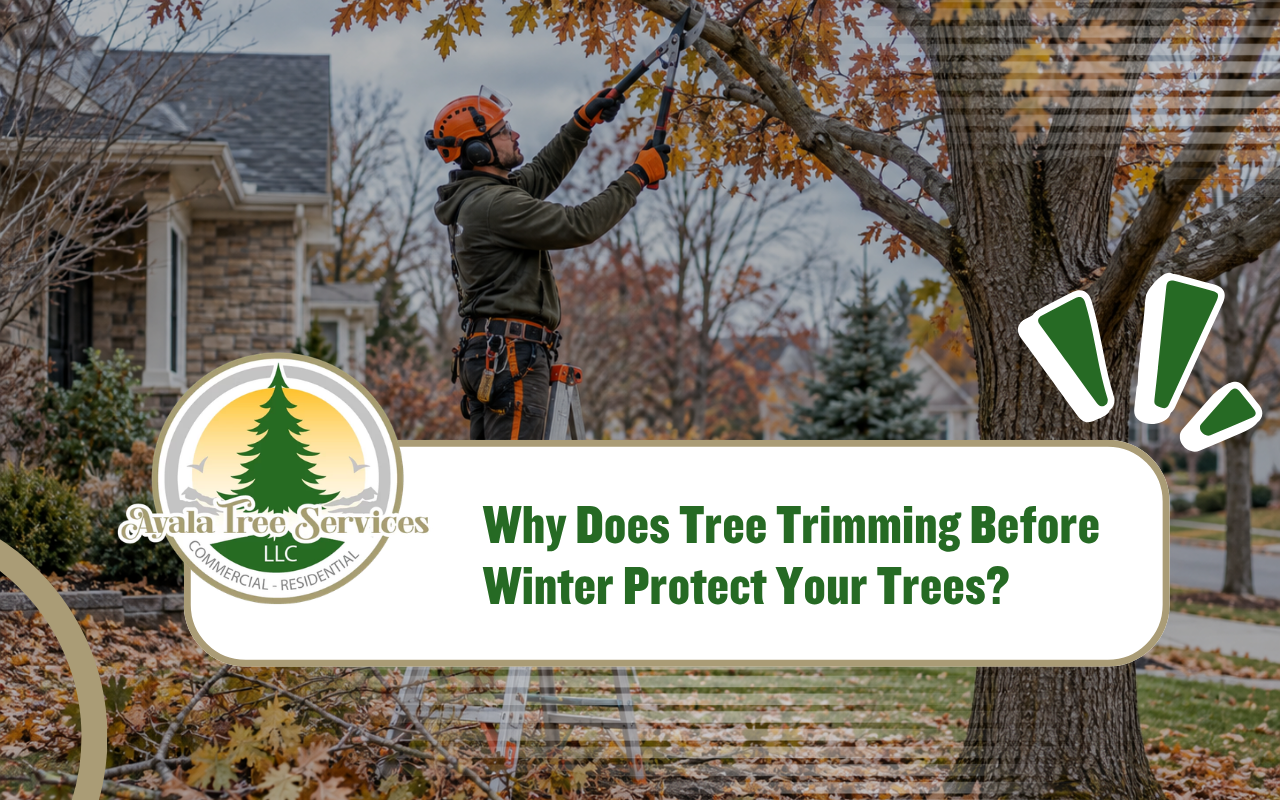
Cold weather can expose weak branches and poor tree structure. Therefore, preparing early can reduce risks around your yard. At Ayala Tree Services LLC, we plan careful cuts that help trees enter colder months with better balance and less stress.
Tree trimming before winter removes weak, damaged, or crowded branches before cold weather adds extra pressure. As a result, trees can carry less unsafe weight during storms. Proper cuts also improve structure and reduce rubbing branches. However, each tree needs individual care because species, age, size, and condition can affect the best timing and trimming plan.
Reduce Winter Damage With Careful Fall Tree Trimming
Winter weather can place extra weight on branches through wind, rain, ice, or snow. Therefore, damaged limbs may become more likely to split. Fall tree trimming can reduce this risk when the right branches are removed carefully.
At Ayala Tree Services LLC, we first look for visible hazards before making cuts. That approach helps us protect the natural shape of the tree. It also helps avoid removing healthy growth without a clear reason.
- Remove dead branches that may break during strong weather.
- Clear cracked limbs before added weight makes damage worse.
- Reduce rubbing branches that can create open wounds.
- Check limbs hanging over roofs, driveways, and walkways.
However, pruning does not make a tree storm-proof. Still, regular care can reduce common hazards. For more details, review our professional branch care service.
Strengthen Tree Structure Through Smart Seasonal Maintenance Choices
Seasonal tree trimming is more than removing branches that look untidy. Instead, good trimming focuses on structure, balance, and long-term health. A crowded canopy may contain limbs that compete for space. Those branches can rub, weaken, or grow toward buildings.
In addition, well-planned cuts can improve light and airflow. They can also reveal damaged areas hidden by dense growth.
At Ayala Tree Services LLC, we prefer careful cuts over heavy removal. Over-pruning can leave a tree stressed and poorly balanced. Therefore, we keep the natural form in mind and remove only what supports the care goal.
Homeowners should also avoid topping trees. That practice removes large upper sections and can lead to weak new shoots. Instead, learn about common branch cutting mistakes before planning any do-it-yourself work.
Choose the Right Timing for Safer Dormant Pruning
Timing matters because trees respond differently during each season. Tree trimming in fall may work well after active growth slows. Yet the right moment depends on the tree species, local weather, and the reason for pruning.
Late fall can make branch structure easier to see after leaves drop. However, some species need another schedule. Therefore, one calendar rule does not fit every tree.
Winter tree trimming can be useful during dormancy for many trees. Still, frozen conditions can make outdoor work difficult and unsafe.
For that reason, tree trimming before winter should begin with an inspection, not a fixed date. At Ayala Tree Services LLC, we consider tree condition and site safety before choosing the next step.
Identify Weak Branches Before Cold Weather Adds Pressure
Weak branches often show warning signs before winter storms arrive. Therefore, a careful visual check can help you decide whether professional attention is needed. Start from the ground and look across the full canopy.
- Look for cracked, split, hanging, or broken branches.
- Notice dead wood with missing bark or brittle twigs.
- Check branches that cross and rub against each other.
- Watch for limbs growing toward roofs, fences, or driveways.
- Keep clear of branches close to power lines.
Fungal growth, cavities, or major trunk cracks may also deserve review. However, visible symptoms do not always reveal hidden decay.
When you are unsure, avoid cutting first and asking questions later. Instead, use our tree care assessment request to discuss the safest next step.
Follow Safe Steps for Better Winter Tree Care
Small ground-level cuts may look simple. However, cutting heavy or high branches can become dangerous quickly. Therefore, safety should guide every decision during tree trimming before winter.
How to prepare trees safely before colder weather
- Walk around each tree and inspect it from several angles.
- Mark dead, cracked, crowded, or rubbing branches from the ground.
- Keep people, pets, vehicles, and objects away from the work area.
- Use sharp tools only for small branches you can reach safely.
- Stop when work requires climbing, large cuts, or power-line access.
Also, never stand below a branch being cut. Avoid unstable ladders. If a limb can strike a structure, wire, or person, professional equipment may be needed.
At Ayala Tree Services LLC, we plan the work area before cutting begins. That planning helps protect the tree, the crew, and nearby property.
Know When Professional Trimming Protects Your Property Better
DIY work can be reasonable for small branches that are easy to reach from the ground. However, larger jobs can involve falling weight, hidden decay, or difficult access. Those conditions can increase risk quickly.
Professional help becomes more important above roofs, on slopes, or near utility lines. Specialized tools can make complex work safer.
At Ayala Tree Services LLC, we also explain the planned cuts before the work starts. This helps homeowners understand which branches need attention and why. If you want a safer care plan, you can schedule a tree care visit with our team.
In addition, professional seasonal tree trimming can help avoid rushed decisions after a storm. Early care allows time to inspect branches before weather creates an urgent problem.
Maintain Strong Trees After Trimming Through Cold Months
Care should continue after pruning ends. For example, mulch can help protect soil moisture and reduce fast temperature changes around roots. However, mulch should not be piled against the trunk.
During dry periods, trees may need water when the ground is not frozen. After storms, inspect the canopy from a safe distance.
Do not pull frozen branches or knock heavy ice from limbs. That action can cause more damage. Instead, allow ice to melt naturally unless an immediate hazard requires professional attention.
At Ayala Tree Services LLC, you can plan care before small concerns become larger problems. A steady approach to tree trimming before winter can support safer yards and stronger trees through the colder season.
Frequently Asked Questions
When should I trim trees before cold weather?
The best time depends on species, condition, and local weather. Therefore, an inspection is the safest starting point. Review our professional tree care guidance for more information about planned branch care.
Is fall a good season for tree trimming?
It can be for some trees, especially after active growth slows. However, timing should match the species and pruning goal. See our pruning mistakes homeowners should avoid before making larger cuts.
Which branches should be removed before winter?
Dead, damaged, cracked, or rubbing branches often deserve attention first. Yet large limbs may require professional handling. Our safer tree maintenance options explain how planned trimming supports a cleaner canopy.
Can I trim large branches by myself?
Large branches can fall with great force and may be difficult to control. Therefore, professional help is safer for complex cuts. You can request professional tree care when the job involves height, heavy limbs, or nearby structures.
How do I avoid common trimming mistakes?
Start by avoiding topping, heavy over-pruning, and unsafe cuts near the trunk. Also, use the right tools for small jobs. Read our guide to avoid harmful pruning errors before starting.
References:
- How to save money on tree work and still get good results – The Washington Post
- Snow protects your garden beds. Trees might need some help – AP News