
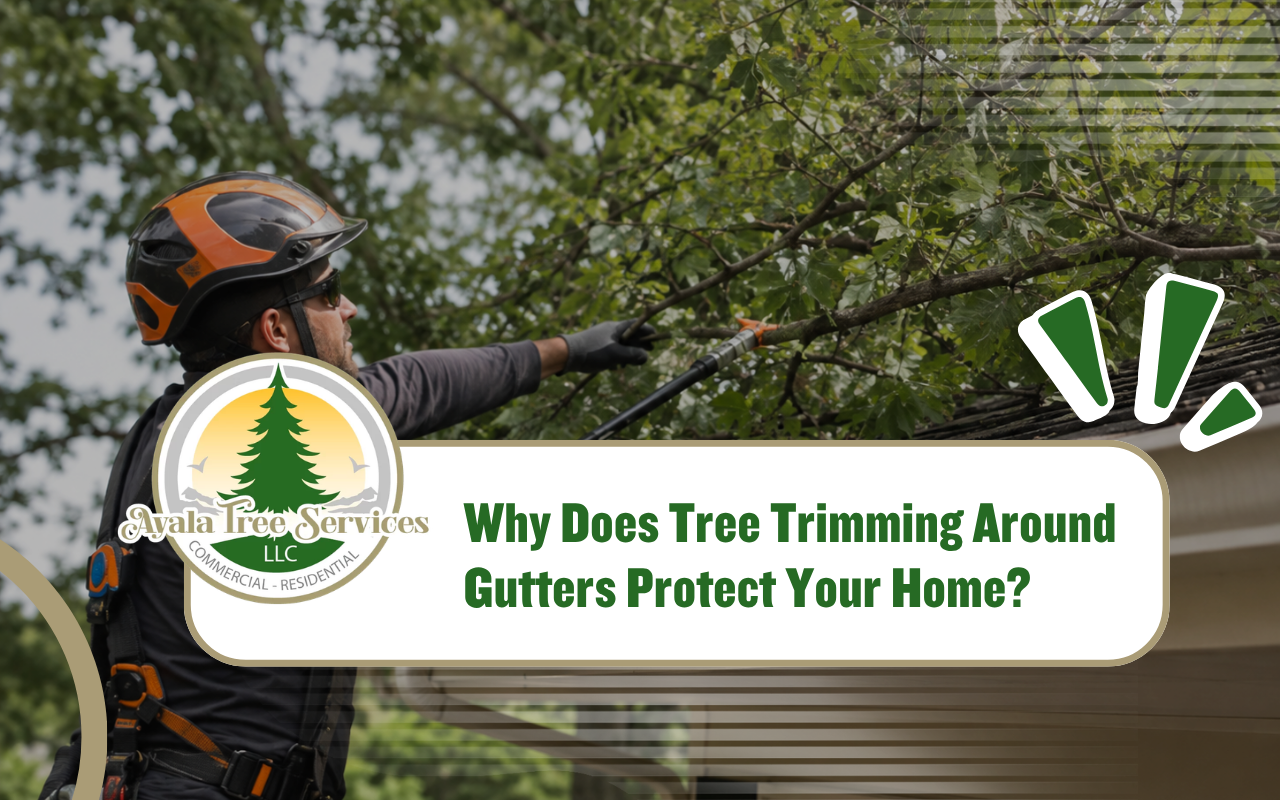
Tree trimming around gutters protects your home by reducing debris, branch contact, and moisture buildup near the roofline. Overhanging growth can drop leaves into gutters and slow water flow. In addition, branches can rub shingles or strike gutters during strong wind. Therefore, proper clearance helps rainwater move away from the house as intended.
At Ayala Tree Services LLC, we look at both the tree and nearby structure before recommending cuts. This approach protects the roof without unnecessary pruning.
Prevent Debris Buildup Before Gutters Stop Draining Properly
First, branches over a roof can send leaves, seeds, and small twigs directly into gutters. This buildup may block water and cause overflow. Meanwhile, wet debris can stay packed inside the gutter. That moisture may affect fascia boards and nearby roof materials.
Branches near gutters also make routine cleaning harder. Therefore, trimming them back can reduce how much debris reaches the drainage system. However, it does not remove the need for gutter cleaning.
- Leaves collecting heavily below one tree.
- Twigs resting across the gutter line.
- Water spilling over during normal rain.
- Branch tips touching shingles or gutter edges.
With Ayala Tree Services LLC, we can assess nearby growth and explain which limbs create concern. For broader property care, explore our Atlanta tree care options.
Identify Risky Branches Before They Reach Your Roofline
Next, inspect trees from the ground before climbing or cutting anything. Look for low limbs, dead wood, cracks, and growth hanging over the roof. Also, watch for roof edge tree limbs that move against shingles during wind.
However, any tree can create trouble when growth becomes too close. Gutter blockage trees often have dense canopies above the roof.
- Limbs directly above valleys or downspouts.
- Dead branches that could fall during storms.
- Growth touching siding, shingles, or gutters.
- Dense clusters that trap moisture near the roof.
- Weak limbs with cracks or hanging sections.
If a limb appears unstable, avoid standing below it. Instead, arrange a professional assessment, especially when the branch is large.
Choose Safe Tools That Make Careful Trimming Easier
For small, reachable branches, the correct tool makes cleaner work possible. Pruning shears handle small stems, while loppers manage thicker growth. However, high limbs can require professional equipment.
- Sharp pruning shears for small growth.
- Loppers for thicker, reachable branches.
- A pruning saw for suitable larger cuts.
- Safety glasses and durable gloves.
- Stable footwear with good grip.
Avoid resting a ladder against the gutter. Likewise, do not climb onto a steep roof to reach a branch. If power lines are nearby, stop and seek professional help.
Our team at Ayala Tree Services LLC can handle difficult access with proper planning. You can also review common pruning errors before attempting tree work near your home.
Follow Safer Steps When Cutting Near Roof Edges
A careful trimming process protects both the tree and your house. First, identify the branch collar where the limb connects to a larger branch. Then, make clean cuts without cutting deeply into that natural area.
Next, remove smaller problem growth before larger limbs. This gives you a clearer view and reduces the chance of dropping heavy material. Never remove too much canopy at once.
How to trim small branches safely near gutters
- Inspect the branch from the ground.
- Confirm there are no wires or unstable limbs nearby.
- Select the correct tool for the branch size.
- Cut small, reachable growth at the proper junction.
- Lower debris away from the roof.
- Recheck clearance from gutters and shingles.
- Stop if the work requires climbing or heavy cutting.
For complicated jobs, professional tree care is usually safer than stretching beyond your reach.
Schedule Routine Checks To Reduce Seasonal Gutter Problems
Regular inspections help prevent problems from returning. Therefore, check trees and gutters during major seasonal changes. Late spring can reveal fast new growth. Meanwhile, early fall can show branches that may drop heavy leaves.
- Inspect the roofline after strong storms.
- Check gutters before heavy leaf drop.
- Watch fast-growing branches during summer.
- Remove safe, small growth before it reaches the roof.
- Arrange professional help for high or heavy limbs.
Tree trimming around gutters works best as part of ongoing home care. It can also reduce repeated buildup from branches near gutters. However, gutters still need normal cleaning and inspection.
When homeowners contact Ayala Tree Services LLC, we can discuss the safest next step. For scheduling help, use our tree service contact page.
Monitor Rainwater Flow After Each Tree Trimming Session
After trimming, observe the gutters during the next rainfall. Water should move toward the downspout without spilling over. If overflow continues, debris may still block part of the system.
Also, inspect the trimmed tree from the ground. Clean cuts should not leave long broken stubs or torn bark. In addition, watch for new growth that quickly returns toward the roof.
Tree trimming around gutters is not a one-time fix. Growth rates, weather, and roof design affect future maintenance. Therefore, continued observation helps adjust the schedule.
At Ayala Tree Services LLC, we believe preventive care is easier than reacting after roof damage.
Know When Professional Tree Care Becomes The Safer Choice
Some situations should not become DIY projects. Large branches can shift suddenly after a cut. Likewise, weak limbs can break before you expect them to move. Steep roofs, tall trees, and electrical lines add more danger.
Professional help is especially important when limbs are heavy, dead, storm-damaged, or difficult to reach. If a tree already hit the home, review our emergency steps after tree damage before approaching the area.
With Ayala Tree Services LLC, you can get clear guidance before major trimming begins. We can evaluate access, branch condition, and nearby structures. Therefore, the work can focus on useful clearance without unnecessary cuts.
Frequently Asked Questions
How often should branches near gutters be checked?
Check them during major seasonal changes and after strong storms. Growth speed varies, so some trees need closer attention. For local service guidance, review our Atlanta tree care options.
Can overhanging branches cause gutter problems?
Yes. Leaves, seeds, and twigs can collect quickly beneath overhanging growth. Therefore, regular clearance can reduce recurring debris. Learn more through our common pruning errors.
Should I trim a large branch above my roof myself?
Usually, large or high branches are safer for trained crews with proper equipment. Falling weight can damage roofs and gutters. You can request professional tree service guidance before cutting.
What should I do if a limb falls onto my house?
Stay away from unstable areas and check for immediate hazards first. Then, arrange qualified help for safe removal. Our emergency steps after tree damage explain what to consider next.
Can regular trimming completely stop gutter clogs?
No. Trimming can reduce debris, but gutters still need cleaning and inspection. However, planned clearance may reduce repeated buildup. request a property assessment for guidance based on your trees and roofline.
Tree trimming around gutters supports cleaner drainage, safer roof clearance, and easier seasonal maintenance. At Ayala Tree Services LLC, we can help homeowners choose simple maintenance or professional care.
References:
- How to Clean Gutters — Better Homes & Gardens
- Can You Trim a Neighbor’s Tree That Hangs Over Your Yard? What a Lawyer Says — Better Homes & Gardens