
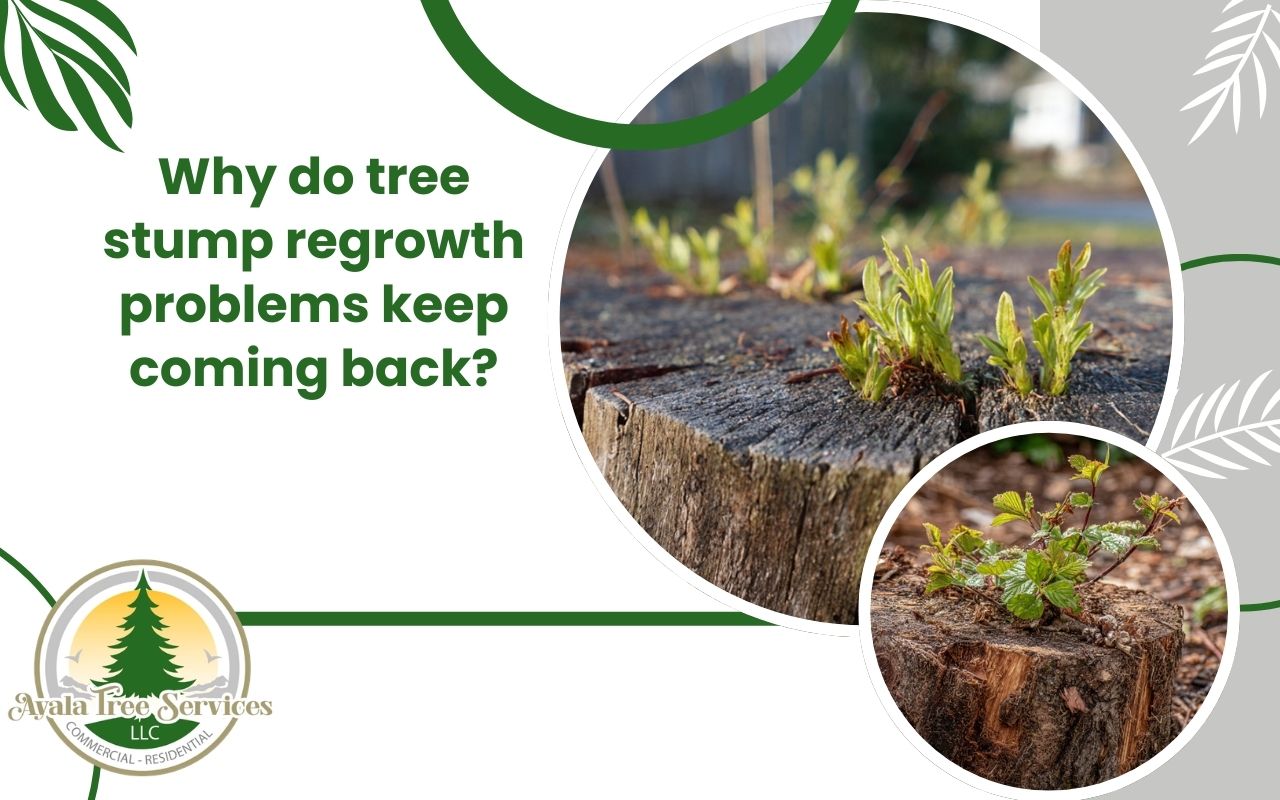
Tree stumps can look quiet at first. However, they often restart growth and disrupt your yard. This guide explains why shoots return, what damage follows, and which fixes work best. You will also learn simple maintenance steps that keep the area stable. When you need expert help, Ayala Tree Services LLC can step in quickly.
Why do tree stump regrowth problems keep coming back, and what stops them for good?
Tree stump regrowth problems return because stored energy in roots fuels new shoots. Therefore, you must cut off that energy source or remove the stump tissue. In practice, the best results come from prompt treatment, consistent monitoring, and full removal when regrowth is aggressive. Ayala Tree Services LLC can confirm the stump type and match the safest solution.
What causes repeated regrowth around a stump?
First, many species keep living cells in the root collar. Therefore, the stump behaves like a battery that keeps feeding sprouts. Tree stump regrowth problems also accelerate when soil stays moist and warm.
Moreover, sprouting roots can travel beyond the stump edge. Consequently, shoots may appear in grass lines or garden beds. If you want a yard-focused overview, use Tree Stump Problems in Yards: Simple Fixes for Pest Attraction and Regrowth Risks.
- Energy reserves in the root system keep feeding new buds.
- Species with aggressive suckering restart faster after cutting.
- High moisture and rich soil can boost invasive regrowth.
How do stump issues affect garden health and safety?
Stump decay changes soil conditions over time. Therefore, nearby plants can lose nutrients and vigor. Meanwhile, decaying wood can also attract insects and rodents.
Additionally, invasive regrowth competes for water and light. Consequently, flowers and vegetables may struggle. If pests are a concern, read Do Tree Stumps Attract Pests? Termites & Rodents Guide.
- Sprouting roots can lift soil and create uneven ground.
- Stump decay can invite fungi and wood-boring pests.
- New shoots can crowd out planting beds and turf.
Prevention techniques reduce repeat sprouting
Start early, because fresh cuts absorb treatments better. Therefore, acting the same day often improves results. Tree stump regrowth problems also drop when you reduce moisture and remove debris.
Moreover, cleanup limits shelter for pests and keeps the stump drier. Consequently, sprouts struggle to establish. For root-focused guidance, review Preventing Tree Root Regrowth the Right Way.
- Cut sprouts quickly and repeatedly to drain stored energy.
- Keep the area clear to reduce moisture retention.
- Block light with a heavy cover to weaken new shoots.
- Plan removal if invasive regrowth continues.
How to fix tree stump regrowth problems step by step
These steps work best when you follow them in order. Therefore, avoid skipping the monitoring phase. Tree stump regrowth problems often return when small shoots are ignored.
- First, inspect the stump and note where sprouts appear.
- Then, cut shoots low to the soil and remove the clippings.
- Next, reduce watering near the stump and improve airflow.
- After that, choose a removal method based on stump size.
- Finally, recheck every two to three weeks for new growth.
However, some stumps resist DIY work. Therefore, consider a pro assessment using How to Remove a Tree Stump: DIY vs Professional.
If you want a fast, clean finish, professional grinding can help. Consequently, many homeowners choose Stump Grinding Services in Roswell, GA.
FAQs
Are sprouting roots a sign the stump is still alive?
Yes, sprouting roots usually mean the root system still has stored energy. Therefore, tree stump regrowth problems will continue unless you stop that energy flow. For long-term strategies, see Preventing Tree Root Regrowth the Right Way.
How can I tell if invasive regrowth will spread across my yard?
Watch for shoots appearing several feet from the stump. Consequently, that pattern suggests active roots beyond the base. For yard-wide risk factors, use Tree Stump Problems in Yards: Simple Fixes for Pest Attraction and Regrowth Risks.
Does stump decay always mean the problem is going away?
No, stump decay can still support pests and weak regrowth. Therefore, you should track soft spots, fungus, and new shoots. For decay warning signs, read Rotting Tree Stump: How to Handle and Remove It.
Will stump grinding stop regrowth completely?
Grinding removes most live stump tissue, so regrowth usually drops fast. However, some roots can still push small shoots. Therefore, follow up with monitoring and quick trimming. For service details, see Stump Grinding Services in Roswell, GA.
When should I call a professional for tree stump regrowth problems?
Call when shoots return repeatedly, or when the stump sits near structures. Consequently, professional tools reduce risk and speed up results. To schedule help with Ayala Tree Services LLC, use Contact Us for Expert Tree Services, Tree Removal, and Tree Care. You can also check View Our Location on Google Maps.
Professional help makes the biggest difference
Some stumps keep returning despite steady work. Therefore, tree stump regrowth problems can become a long, frustrating cycle. Ayala Tree Services LLC can identify species behavior, confirm safety risks, and remove the stump efficiently.
Moreover, professional work can reduce damage to lawns and nearby plants. Consequently, you can replant sooner and keep the area even. If you want to discuss options, contact Ayala Tree Services LLC through Contact Us for Expert Tree Services, Tree Removal, and Tree Care.