
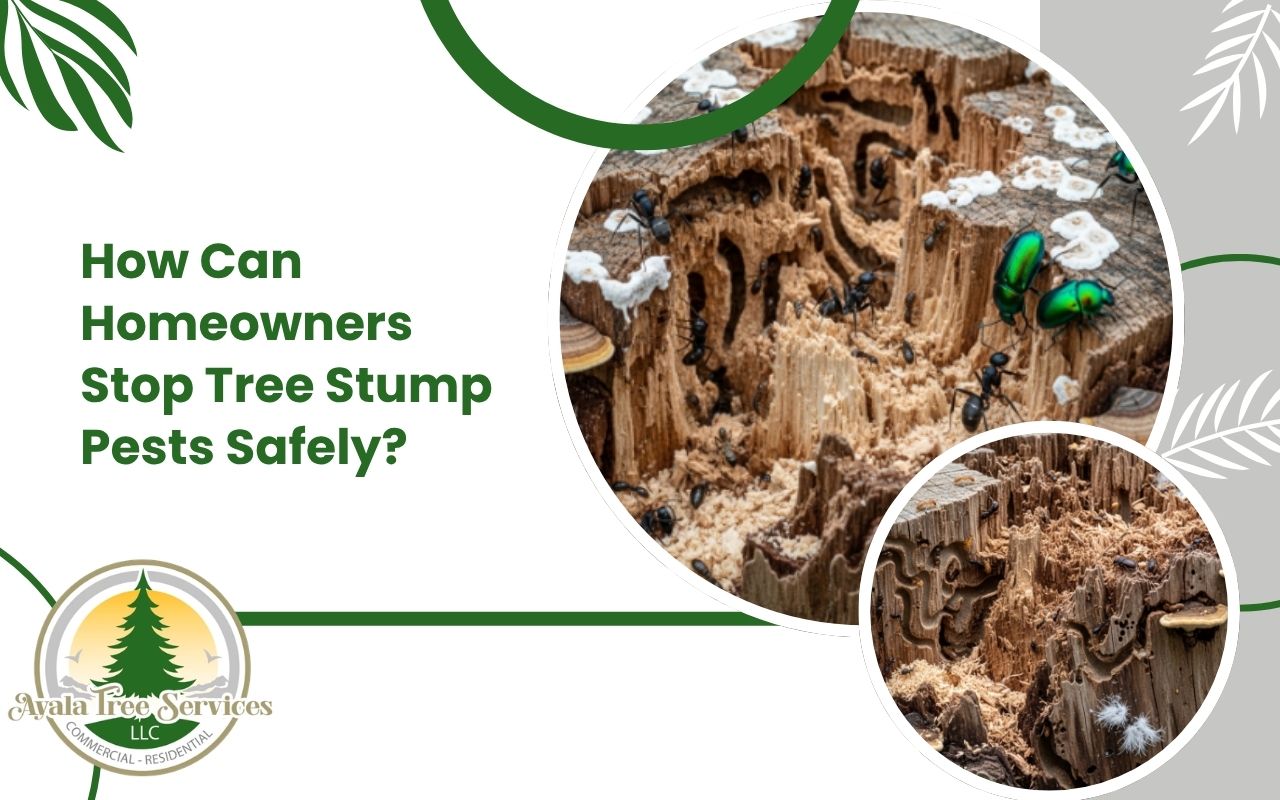
Old stumps often look harmless until insects, soft wood, and hidden moisture start changing the yard. When tree stump pests appear, the problem can spread into nearby soil, plants, fences, and outdoor spaces. Simple inspection, natural control steps, and safe removal planning can help protect your landscape.
How Can Homeowners Stop Tree Stump Pests Safely?
Homeowners can stop tree stump pests by reducing moisture, removing debris, checking for insects and decay, and planning stump grinding when damage spreads. Early action helps prevent nesting, rot, trip hazards, and pest movement toward nearby plants or wood structures.
A pest-prone stump is leftover wood that holds moisture after a tree is cut. Homeowners with shaded yards, soft soil, or older stumps often need help because the wood can attract insects, fungi, and small animals. The service solves safety, appearance, and spreading decay concerns.
Early Inspection Reveals Insects, Decay, And Stump Problems
Careful inspection helps you find active insects, decay, and stump problems before the damage spreads. At Ayala Tree Services LLC, we check the stump surface, nearby soil, bark cracks, and soft areas so homeowners understand whether simple care or stump grinding is the safer step.
Small signs can point to a larger issue. Fresh sawdust, tiny holes, loose bark, and soft wood often show that pests are using the stump for food or cover. Mushrooms and spongy spots usually point to moisture and active wood breakdown.
- Look for sawdust-like material near the stump base.
- Check for ants, beetles, termites, or other insects.
- Press gently for soft, hollow, or crumbling wood.
- Watch for mushrooms, dark streaks, or wet patches.
- Notice nearby burrows, droppings, or nesting material.
Tree stump pests become easier to manage when warning signs are caught early. A stump with soft wood, insect holes, and fungal growth should be reviewed before nearby landscape materials are affected.
Moisture Control Reduces Pest Shelter Around Old Stumps
Dryer stump conditions make the area less inviting for pests and fungi. Moisture control cannot fix every infestation, but it can slow decay, reduce insect shelter, and make the yard easier to inspect after rain, irrigation, or seasonal leaf buildup.
Water trapped under bark and leaves creates a steady shelter for pests. Because of that, trimming nearby plants and clearing debris can help the stump dry faster. Keep mulch away from the stump base, since packed mulch can hold water and hide fresh pest activity.
Penn State Extension notes that termites feed on old roots, tree stumps, fallen limbs, and similar wood materials. That is why damp leftover wood should not be ignored near fences, decks, sheds, or home foundations.
- Clear leaves, sticks, and loose bark around the stump.
- Redirect sprinklers away from the stump area.
- Trim low branches to improve sunlight and airflow.
- Keep soil and mulch from covering the stump sides.
- Check shaded stumps after heavy rain or storms.
For more risk details, read our stump hazard guide. It can help you decide whether the stump is only unattractive or already unsafe.
Natural Treatments Limit Activity Without Harsh Yard Chemicals
Natural treatments can reduce mild pest activity when the stump is still stable. These methods work best as short-term support, not as a full solution for severe decay, deep tunneling, or repeated insect movement around the same stump.
Some homeowners start with boiling water, vinegar mixes, neem oil, or diatomaceous earth. However, natural products should be used carefully. Wear gloves, avoid breathing dust, and keep children and pets away during application. The goal is safer pest pressure reduction, not careless treatment.
- Pour boiling water slowly into visible holes when safe.
- Use vinegar and water on exposed insect pathways.
- Brush neem oil on soft areas affected by fungal decay.
- Apply diatomaceous earth lightly to dry exposed wood.
- Use beneficial nematodes in nearby soil when appropriate.
The EPA describes integrated pest management as a common-sense approach that combines inspection, prevention, and control methods. In a yard, that approach means you first identify the problem, then choose the least risky useful step.
Natural treatments may not reach deep tunnels inside the stump. If insects return after repeated care, the remaining wood may still be feeding the infestation. At that point, professional grinding may be the better long-term answer.
Clear Booking Steps Prepare Your Yard For Service
A clear service process helps homeowners know what happens before stump work begins. When customers contact Ayala Tree Services LLC, we ask about the stump, visible pests, yard access, nearby structures, and safety concerns so the next step fits the property.
Photos can help us understand the stump size, surface condition, and possible access limits. During the visit, we review the area, explain practical options, and point out nearby risk zones such as fences, walkways, roots, and planting beds.
- First, tell us where the stump is located.
- Next, share photos of holes, decay, or insects.
- Then, explain whether pets or children use the area.
- During the review, we check access and visible hazards.
- Before work begins, we explain the safest service option.
With Ayala Tree Services LLC, you get clear guidance before the work begins. We do not need to guess from one sign alone. We look at pest activity, wood condition, moisture, and how the stump affects your yard.
To start the process, visit contact our tree care team. Share the stump location and any signs you have noticed.
Smart Yard Habits Prevent New Stump Problems
Regular yard habits can prevent stump problems from returning after treatment or grinding. Simple cleanup, moisture checks, and plant care help reduce insect shelter, slow decay, and keep outdoor spaces easier to use throughout the year.
Weekly yard checks are useful after rain, storms, or heavy leaf fall. Remove wet debris quickly, and avoid stacking firewood or garden waste near an old stump. These small steps reduce food, cover, and shade that pests often need.
Our team at Ayala Tree Services LLC, after reviewing the stump area, can explain whether prevention is enough or removal is smarter. A stump that keeps attracting tree stump pests may need more than surface care.
- Keep the stump area open and visible.
- Remove fallen fruit, branches, and wet leaves.
- Check for insects every few weeks.
- Watch for new mushrooms or soft wood.
- Plan grinding when decay keeps spreading.
Stump maintenance is easier when the area stays clean and dry. A hidden, damp stump can become a steady shelter for insects, fungi, and rodents over time.
Frequently Asked Questions
How do I know if insects are inside my stump?
You may see tiny holes, sawdust-like material, loose bark, ants, beetles, or soft tunnels. These signs suggest insects are using the wood. For more details, review our stump risk guide.
When should I call for help with decay?
Call when the stump feels soft, smells damp, grows mushrooms, or keeps attracting pests after cleanup. Decay can weaken the wood and create hidden yard hazards, especially near walkways or play areas.
What happens if tree stump pests are ignored?
Tree stump pests can spread into nearby soil, plants, mulch, fences, or stored wood. The stump may also become softer, messier, and more difficult to manage as decay advances.
Why is stump grinding often better than surface treatment?
Surface treatment may reduce visible pests, but grinding removes much of the leftover wood source. That lowers shelter, food, and moisture pockets. Learn more in our yard safety guide.
How should I prepare before a stump service visit?
Clear toys, tools, loose branches, and yard items near the stump. Also, share photos of insects, decay, and access points when you contact our tree care team.
Prompt Action Protects Your Landscape Before Problems Spread
Fast action keeps a small stump issue from becoming a bigger yard concern. At Ayala Tree Services LLC, we can review the stump, explain practical options, and help you choose a safer next step. For guidance, contact our tree care team today.