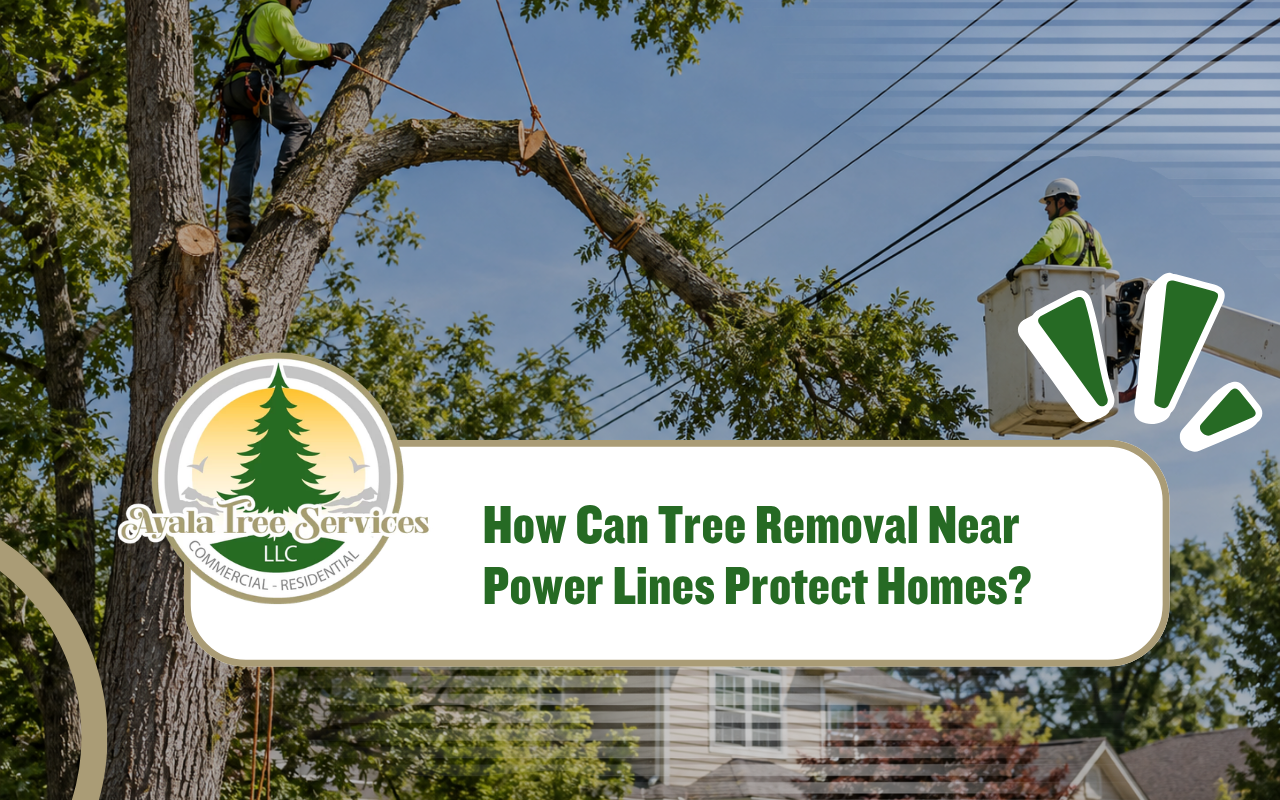
Tree removal near power lines can protect homes by reducing falling branches, electrical dangers, fires, and outages. However, homeowners should never start cutting beside electrical wires. Instead, inspect the area from a safe distance and seek professional help when branches approach utility equipment.
Moreover, trees can become unstable because of decay, storm damage, weak roots, or heavy growth. Therefore, early action can prevent a manageable problem from becoming an emergency. Our team at Ayala Tree Services LLC helps property owners understand visible risks before tree work begins.
Early Warning Signs Reveal Unsafe Trees Near Power Lines
First, homeowners should visually inspect trees near power lines without touching branches or electrical equipment. Several visible conditions can show that professional attention may be needed.
- Branches hang over, approach, or appear to touch electrical wires.
- Dead limbs remain above areas used by people or vehicles.
- The trunk has cracks, cavities, missing bark, or visible decay.
- Roots appear lifted, exposed, damaged, or disturbed around the tree.
- The tree leans toward wires, buildings, driveways, or nearby property.
Additionally, storms can quickly change a tree’s condition. Therefore, inspect trees from the ground after strong winds or heavy rain. Dangerous trees near power lines may look stable while weakened branches remain hidden above.
For more warning signs, homeowners can review our hazardous tree safety guide. At Ayala Tree Services LLC, we encourage early assessment instead of waiting for visible failure.
Professional Planning Reduces Risks Around Live Utility Lines
Removing trees near utility lines involves more than choosing where a trunk should fall. Electrical lines can change the entire work plan. Therefore, the tree condition, wire location, nearby structures, and available access must be considered together.
Professionals can determine whether a tree needs trimming, controlled removal, or another approach. Moreover, they can identify when coordination with a utility provider may be necessary. Homeowners should never assume a branch is safe because it appears separated from a wire.
At Ayala Tree Services LLC, we plan around the surrounding property before work begins. Consequently, our approach considers people, buildings, fences, landscaping, access areas, and safe debris zones.
Homeowners can also read our professional removal planning information before scheduling service.
Safe Work Practices Prevent Electrical Tree Removal Accidents
Safety begins before any cutting takes place. Therefore, homeowners should keep children, pets, vehicles, and visitors away from a hazardous tree.
Most importantly, never touch a tree, branch, tool, or object that is contacting an electrical line. Likewise, never climb a tree close to electrical equipment. Electricity can create danger even when the situation appears calm.
Qualified crews assess drop areas and choose equipment based on site conditions. Additionally, controlled lowering methods can help manage branches where open space is limited. However, the exact method depends on the tree and surrounding property.
Accordingly, homeowners should leave high-risk cutting to trained professionals. Tree removal near power lines is not a suitable DIY project when electrical contact is possible.
Simple Steps Guide Safe Responses To Electrical Tree Hazards
When a tree appears too close to electrical lines, homeowners can follow a simple response process. However, these steps focus on safe observation and professional assistance instead of DIY cutting.
- Observe the tree and wires from a safe ground-level location.
- Keep people and pets away from the suspected hazard area.
- Look for leaning trunks, broken branches, decay, or storm damage.
- Never touch branches that contact or closely approach electrical wires.
- Contact the utility provider when electrical equipment may be affected.
- Arrange a professional tree assessment before pruning or removal begins.
If a power line is down, stay away and treat it as energized. Additionally, keep others away from the area. Then, notify the appropriate utility or emergency service.
When professional tree work is needed, our Roswell tree care services page explains available removal support.
Smart Pruning Limits Future Tree Hazards Near Power Lines
Proper pruning can sometimes reduce future interference before complete removal becomes necessary. However, branches near electrical lines require special care and should not become a homeowner cutting project.
For trees located safely away from electrical hazards, selective pruning can support stronger branch structure. Furthermore, removing damaged growth may reduce the weight carried by weak limbs.
However, excessive cutting can stress a tree and encourage weak future growth. Therefore, pruning should focus on tree health as well as clearance and safety.
Storms can also cause healthy-looking branches to break without much warning. Ice, heavy rain, and strong winds can increase branch weight or movement. Consequently, routine inspections can identify developing concerns before severe weather arrives.
At Ayala Tree Services LLC, we consider the tree’s condition before recommending the next step. Sometimes careful maintenance is suitable, while severely damaged or unstable trees may require removal.
Local Coordination Clarifies Permissions Before High-Risk Tree Work
Rules can differ by location, property, utility provider, and type of work. Therefore, homeowners should confirm requirements before starting work near electrical infrastructure.
Additionally, utility companies may have specific responsibilities for vegetation near their equipment. Property owners can also have responsibilities for trees located on private land. Because each situation differs, confirming the correct process first can prevent delays.
Moreover, a utility provider may need to inspect conditions before nearby tree work begins. This step can be especially important when branches already contact electrical equipment.
Professional planning can also clarify access needs and safe working areas. Consequently, homeowners can avoid starting work before important site questions are answered.
When you need guidance, you can contact us to discuss your property and next steps.
Responsible Cleanup Reuses Tree Debris Without New Hazards
After removal, branches, logs, leaves, and wood chips must be managed safely. Therefore, cleanup should form part of the project plan from the beginning.
Some wood chips can be reused as mulch when appropriate. Likewise, suitable logs may have useful purposes around the property. However, debris should not block driveways, sidewalks, drainage areas, or access to utility equipment.
Additionally, loose branches should not remain where wind could move them toward electrical lines. A clean work area also makes the property easier to inspect after removal.
Large pieces of wood should remain in stable locations until they are removed or reused. Furthermore, homeowners should check that cleanup does not create new trip or access hazards.
At Ayala Tree Services LLC, we understand that the work does not end when the tree reaches the ground. Accordingly, cleanup is an important part of responsible site care.
Long-Term Care Keeps Trees Clear Of Electrical Infrastructure
Prevention remains one of the simplest ways to reduce tree hazards near power lines. Therefore, homeowners should consider mature tree size before choosing new planting locations.
- Choose locations that provide enough space for future tree growth.
- Inspect mature trees regularly for cracks, decay, and broken branches.
- Check trees again after strong winds, storms, or heavy rainfall.
- Arrange maintenance before branches grow into hazardous locations.
- Keep utility access areas clear of branches and landscaping debris.
Additionally, healthy trees still require monitoring as they mature. Growth patterns can change, while storms can create new weaknesses. Consequently, regular observation helps homeowners respond before a small concern becomes more serious.
Tree placement also matters when planning future landscaping. Smaller species can reduce conflicts when planted in suitable locations near utility areas.
Tree removal near power lines may sometimes be unavoidable. However, thoughtful planting and routine care can reduce the chance of repeated conflicts.
Timely Professional Action Strengthens Property And Electrical Safety
Trees and electrical infrastructure can share the same landscape when risks are managed early. Therefore, homeowners should watch for decay, leaning trunks, broken branches, and growing clearance problems.
Furthermore, tree removal near power lines should prioritize safety over speed. Attempting high-risk cutting without suitable training can expose people, homes, and electrical equipment to danger.
Early action can also make planning easier. For example, a manageable branch problem may become more difficult after severe weather damages the tree.
At Ayala Tree Services LLC, you can discuss visible concerns before deciding how to proceed. Our team can evaluate the tree, surrounding space, and practical removal needs.
Therefore, proactive inspection and professional support can reduce unexpected tree hazards near power lines. When you see a concerning tree, schedule a tree safety assessment before the condition becomes an emergency.
Frequently Asked Questions
How do I know when a tree near wires is dangerous?
Look for dead branches, cracks, cavities, leaning trunks, damaged roots, or limbs approaching electrical wires. However, never inspect by touching the tree. Our hazardous tree warning signs guide explains common conditions to watch for.
Can I trim branches that grow close to power lines?
Homeowners should avoid DIY cutting where branches can contact electrical equipment. Instead, keep a safe distance and seek qualified help. Review our safer tree work guidance for more information.
Who should handle removing trees near utility lines?
Qualified tree professionals should assess high-risk work, while utility coordination may also be necessary. Therefore, begin with a site evaluation. Our professional tree removal services page explains how we approach removal needs.
What should I do when a tree touches a wire?
Stay away from the tree and treat the situation as an electrical hazard. Additionally, keep other people and pets away. Then, contact the appropriate utility and seek professional assistance through our tree service contact page.
Can regular maintenance prevent future power line problems?
Yes, early inspections and suitable maintenance can reduce some future conflicts. However, electrical clearance work requires special care. Learn more through our tree safety and maintenance information.
References:
- CBS News: Warren Family Says Tree Limbs Left on Power Lines Raise Safety Concerns
- AP News: Tens of Thousands in Indiana Are Still Without Power After Deadly Storms