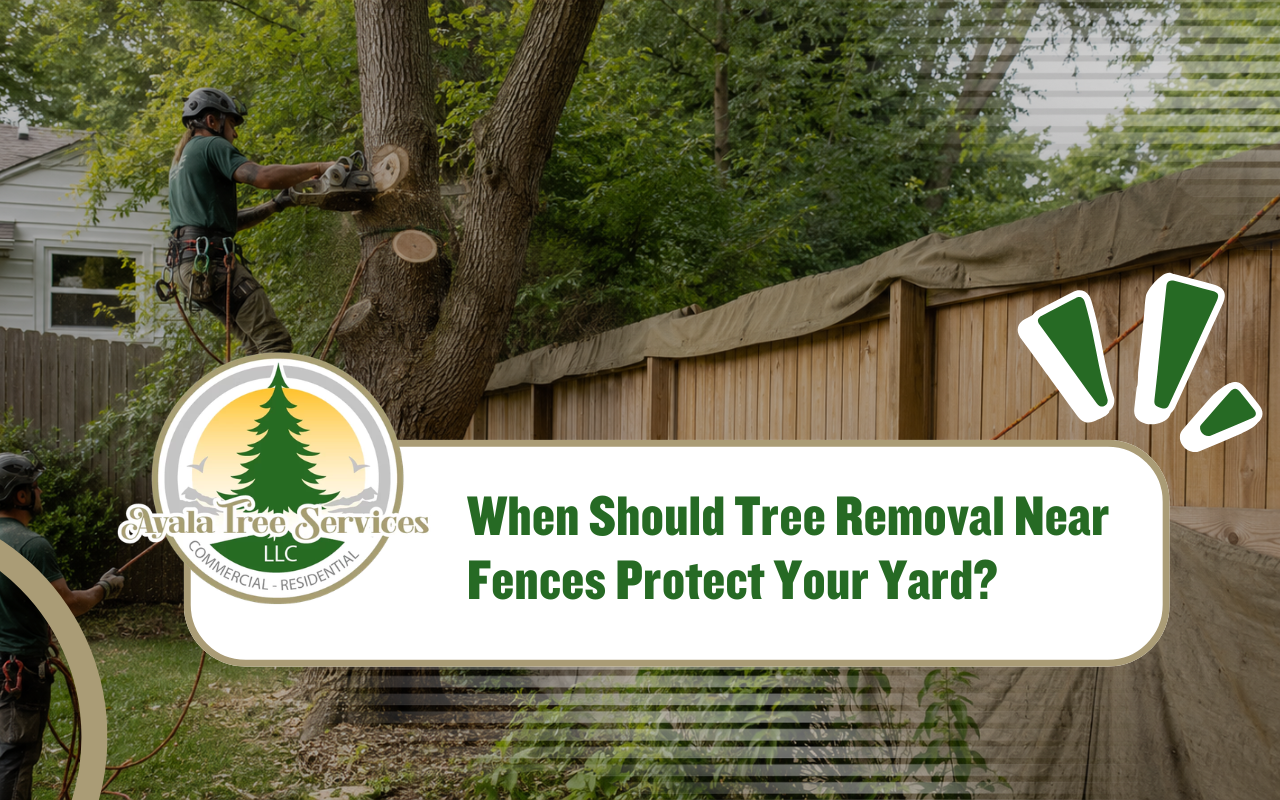
Tree removal near fences should protect your yard when trunks, limbs, or roots threaten posts, panels, gates, or nearby outdoor areas. The safest plan checks the tree, fence, fall path, and cleanup needs before any cutting begins.
If the tree is leaning, crowding posts, or lifting soil, our Tree Removal in Roswell GA page can help you understand your next step before damage spreads.
Fence Line Tree Removal Reveals Hidden Property Risks
A tree near a fence can look harmless until roots, wind, or branch weight begin stressing the structure. Careful inspection helps show whether the fence is only crowded or already at risk. At Ayala Tree Services LLC, we check the trunk, posts, soil, and overhead limbs first.
Common warning signs include:
- Leaning fence posts near the trunk
- Branches resting on panels or rails
- Bulging soil around the fence base
- Cracked boards under heavy limbs
- Roots growing around post footings
According to OSHA, tree care work includes hazards that require planning and recognition before work begins. That is why trees close to fence areas need a careful review, not guesswork. If the fence is already shifting, request help before the next storm adds pressure.
Backyard Tree Hazards Reduce Safety Around Tight Spaces
Backyard tree hazards become more serious when there is little room for branches or trunk sections to fall. Fences, sheds, play areas, and patios limit safe movement. A small mistake can damage boards, bend posts, or leave sharp debris near walking areas.
Before removal, we look for decay, weak limbs, split bark, and soil movement. These signs help us decide whether the tree can be cut in sections or needs extra control. When customers contact Ayala Tree Services LLC, we explain what we can see and what needs closer review.
Important safety concerns include dead limbs over the fence, unstable trunks, hidden root damage, and poor footing. The University of Minnesota Extension notes that storms can cause trees to lose branches, fall, or uproot. If a tree leans toward a fence, do not pull or cut it without a safe plan.
Trees Close To Fence Guides Smarter Removal Decisions
Trees close to fence lines need a different plan than trees in open yards. The work area is tighter, the fall path is shorter, and the fence must stay protected. The right decision depends on tree size, lean, branch spread, and access.
Homeowners usually need to compare:
- Sectional cutting for tight fence areas
- Rope control for larger limbs
- Careful branch lowering near panels
- Stump handling after the trunk is down
- Fence inspection after cleanup
Our team at Ayala Tree Services LLC, we review these details before recommending a removal approach. For a closer look at careful methods, visit our Safe Tree Removal guide. Tree removal near fences works best when every cut has a clear purpose.
Controlled Branch Cutting Prevents Fence Line Damage
Controlled cutting lowers risk because limbs are removed in planned sections instead of falling freely. This method helps protect fences from impact, scraping, and sudden weight shifts. It also keeps the work area clearer for safe movement.
We usually start by reducing branch weight from the outer canopy. Then larger limbs can be guided away from the fence with rope support when needed. Lowering heavy branches slowly is safer than letting them drop beside posts or rails.
Simple preparation also matters. Move furniture, toys, planters, and garden tools before work begins. Keep children and pets outside the marked area. A clean yard gives the crew better footing and helps prevent avoidable damage during tree removal near fences.
Our Removal Process Clarifies Every Customer Step
A clear process helps you know what happens before, during, and after the work. When you choose Ayala Tree Services LLC, you get simple explanations, careful preparation, and practical next steps. We do not guess when fences, roots, or tight spaces are involved.
The process may include:
- Initial contact to discuss the tree and fence location
- Review of lean, branches, roots, and access
- Explanation of safer cutting options
- Preparation of the work zone
- Branch and trunk removal in controlled sections
- Cleanup of limbs, chips, and loose debris
After the removal, check the fence for loose boards, bent posts, or fresh cracks. You can also read What To Expect Tree Removal to feel more prepared before booking.
Frequently Asked Questions
Can a tree damage my fence over time?
Yes, a tree can damage a fence when roots lift soil, branches rub panels, or a leaning trunk adds pressure. Early signs include loose posts, cracked boards, and branches resting on rails. For removal planning, review our Tree Removal in Roswell GA page.
Should I remove branches before cutting the trunk?
In many tight spaces, branches should be removed first to reduce weight and improve control. This helps prevent limbs from swinging into fence boards. Large or leaning branches need extra care because stored weight can shift fast during cutting.
What makes fence line tree removal more difficult?
Fence line tree removal is harder because there is less room for falling wood, tools, and cleanup. Posts, rails, gates, and neighboring property can limit movement. A controlled plan helps protect the fence while reducing avoidable property damage.
Is professional help safer for trees near fences?
Professional help is often safer when trees lean, have heavy limbs, or grow close to fence posts. A trained crew can inspect risk points and explain safer methods. Learn more through our Safe Tree Removal resource.
What should I do after the tree is removed?
After removal, inspect the fence, soil, and remaining stump area. Look for loose boards, holes, exposed roots, and uneven ground. Our What To Expect Tree Removal page explains what homeowners can expect before and after the work.
Careful Planning Secures A Safer Backyard Result
Tree removal near fences is easier to manage when the tree, fence, roots, branches, and cleanup plan are reviewed together. If your fence line feels crowded or unsafe, use our Contact Ayala Tree Services page to ask about the safest next step for your yard.