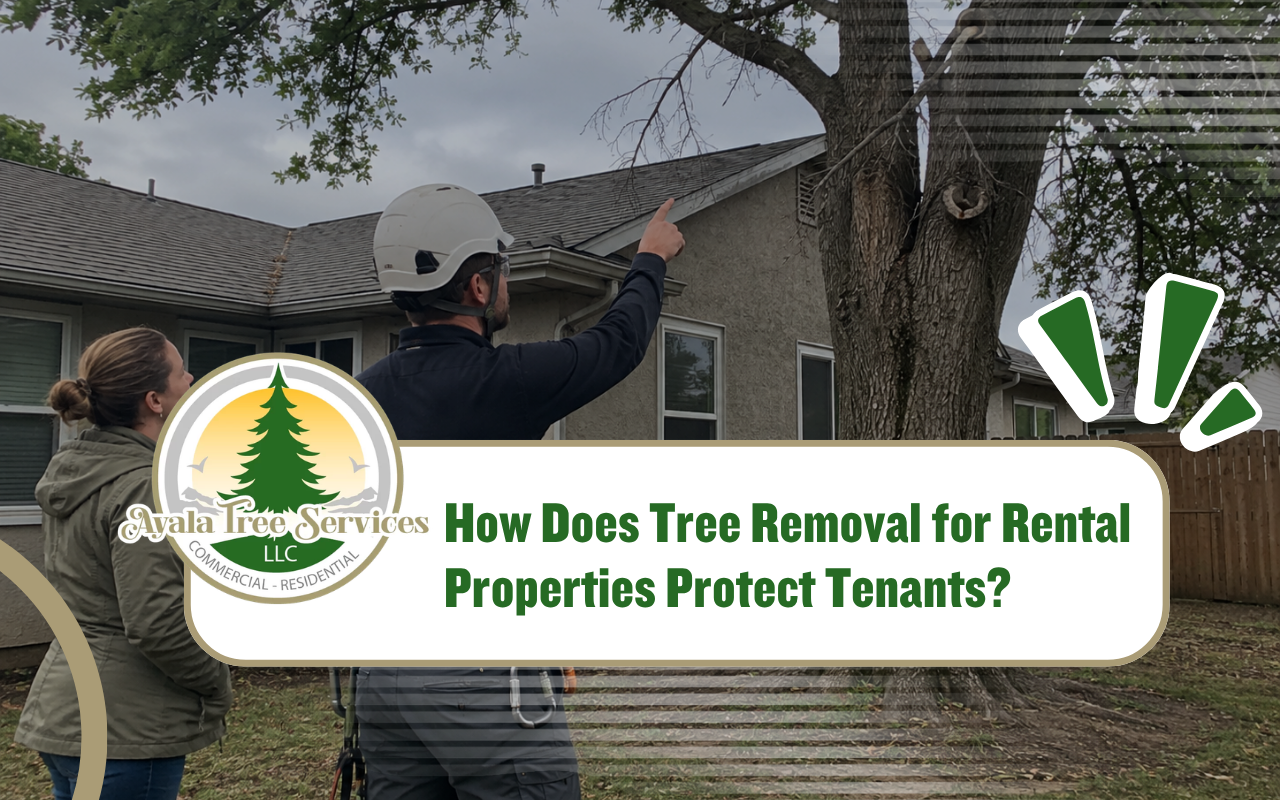
Tree removal for rental properties protects tenants by addressing unsafe trees before branches or trunks cause injuries or property damage. Moreover, planned removal helps landlords control work areas, communicate with occupants, and restore the grounds safely afterward. Therefore, early action can reduce disruption while protecting the property’s condition and everyday use.
At Ayala Tree Services LLC, we understand that rental properties need careful planning around occupied spaces. Consequently, we consider nearby structures, walkways, fences, vehicles, and other areas tenants regularly use.
Spot Early Warning Signs Before Trees Create Damage
First, landlords should inspect trees regularly for visible changes. Although some problems develop slowly, others can become serious after wind, rain, or ground changes. Therefore, recognizing rental property tree hazards early gives you more time to plan the right response.
- Look for dead, hanging, or cracked branches.
- Notice new leaning or movement near the tree base.
- Check for cracks, cavities, or visible trunk decay.
- Watch for fungus growing around trunks or major roots.
- Notice roots lifting sidewalks, soil, or nearby surfaces.
- Check branches growing near roofs, fences, or utilities.
Moreover, dense branches can rub buildings or block safe access around the property. Meanwhile, damaged roots can affect walkways and create possible trip hazards.
At Ayala Tree Services LLC, we can evaluate tree concerns alongside the property’s surroundings. Additionally, landlords can review our explore our complete tree care services when planning ongoing tree care.
Clarify Maintenance Duties Before Tree Problems Cause Conflict
Next, landlords should understand how tree maintenance responsibilities are divided. Generally, major tree work should never be assumed to be a tenant’s routine yard task. However, lease terms and local rules can affect individual responsibilities.
Therefore, rental agreements should clearly explain basic outdoor maintenance expectations. For example, tenants may handle simple leaf cleanup when their lease requires it. Meanwhile, larger pruning, inspections, and hazardous tree work may require professional attention.
Clear rules also support tenant safety trees without creating confusion after a problem appears. Furthermore, tenants should know how to report broken limbs, leaning trees, or storm damage quickly.
At Ayala Tree Services LLC, we encourage property owners to address reported hazards promptly. As a result, landlords can make informed decisions before a small concern becomes a larger property issue.
Check Local Rules Before Scheduling Any Tree Work
Before removal begins, landlords should check applicable municipal rules and property restrictions. Because requirements vary, some trees or locations may require permits or additional review.
Additionally, property owners should consider homeowners association rules when they apply. Certain communities can have separate landscaping requirements beyond city or county regulations.
Therefore, documentation matters during landlord tree removal. Keep inspection notes, photographs, permit records, contractor information, and tenant notices together. Consequently, these records create a clearer history of why the work was planned.
Rules can also change between nearby communities. Therefore, landlords should confirm current requirements for the property’s exact location instead of relying on assumptions.
Follow These Steps to Remove Risky Rental Trees
A clear process makes tree removal for rental properties easier to manage. Moreover, an organized approach reduces last-minute problems around tenants, contractors, vehicles, and shared spaces.
- Inspect the tree. First, identify visible damage, dead branches, leaning, root problems, and nearby structures.
- Document concerns. Next, take clear photographs and record when the problem was noticed.
- Review requirements. Then, check local rules, property restrictions, and any permit needs.
- Select professional help. Afterward, confirm the company has suitable experience, equipment, and insurance.
- Inform tenants. Next, provide the planned date, access details, and safety instructions.
- Secure the area. Before work starts, move vehicles and keep occupants outside established work zones.
- Complete cleanup. Finally, remove debris and inspect the property before reopening affected areas.
For rental properties near Marietta, our team at Ayala Tree Services LLC can discuss site conditions and removal needs. Therefore, you can plan safer tree work in Marietta before scheduling a project.
Select Qualified Crews for Safer Rental Property Work
Professional removal requires more than simply cutting a trunk. Instead, crews must consider falling sections, structures, access points, debris, and people around the property.
- Confirm appropriate licensing and insurance information.
- Ask how workers will control the work zone.
- Discuss buildings, fences, utilities, and nearby vehicles.
- Confirm whether debris removal is included.
- Ask how stumps or remaining wood will be handled.
- Review the planned scope before work begins.
Moreover, extremely low estimates deserve careful review if important work appears excluded. Likewise, landlords should understand exactly what happens before, during, and after removal.
With Ayala Tree Services LLC, you can discuss the property before the work begins. Therefore, clear planning can help reduce surprises and keep the project organized around occupied rental spaces.
Notify Tenants Early to Reduce Removal Day Disruption
Tenant communication is another important part of the process. Therefore, give occupants reasonable written notice before planned work whenever circumstances allow.
Explain the expected work area, access limits, parking changes, noise, and general schedule. Additionally, tell tenants where they should direct questions or report new concerns.
Before crews arrive, vehicles should be moved away from the work zone. Likewise, pets and children should remain safely inside or away from the area.
Good communication supports tenant safety trees while making the project easier for everyone involved. At Ayala Tree Services LLC, we value clear coordination before work starts on an occupied property.
Restore the Property After Tree Removal Work Ends
After removal, landlords should inspect the entire work area. First, check for branches, wood, holes, or other debris that could affect normal access.
Next, examine nearby lawns, driveways, fences, and walkways. If the project included stump grinding, also review how that area was left.
Additionally, ask whether remaining trees show concerns that may require future monitoring. Therefore, the final inspection becomes part of ongoing rental property maintenance rather than an isolated task.
Proper cleanup is especially important around tenant entrances and shared outdoor spaces. Consequently, completing these details helps restore both safety and appearance.
Maintain Remaining Trees to Preserve Long-Term Property Value
Tree removal for rental properties should be part of a broader maintenance plan. Therefore, landlords should continue watching remaining trees after one hazardous tree is removed.
Seasonal inspections can reveal broken branches, new leaning, root changes, or storm damage. Moreover, pruning may address some concerns before removal becomes necessary.
Routine attention can also keep branches away from roofs, walkways, and heavily used tenant areas. As a result, landlords can manage rental property tree hazards more proactively.
At Ayala Tree Services LLC, we work with property owners who need removal, trimming, stump grinding, debris cleanup, or other tree care. When you need guidance for an occupied property, request a rental property assessment so we can discuss the site and next steps.
Frequently Asked Questions
Who should handle hazardous trees at a rental property?
Responsibilities can depend on the lease and applicable laws. However, serious tree hazards deserve prompt attention from the property owner or manager. For available care options, review our complete tree care services.
When should a landlord consider removing a rental tree?
Removal may be considered when a tree has serious damage, decay, instability, or dangerous conflicts with structures. Therefore, an assessment can clarify the next step. Property owners near Marietta can plan safer tree work in Marietta.
Should tenants receive notice before planned tree removal?
Yes, advance communication is useful whenever the situation allows. Therefore, landlords should explain access restrictions, parking changes, noise, and safety boundaries. To discuss planning for your property, request a rental property assessment.
Can damaged branches be managed without removing the tree?
Sometimes, pruning may be appropriate when the whole tree does not require removal. However, the correct approach depends on its condition and surroundings. You can compare available options through our complete tree care services.
What happens after a rental property tree is removed?
Cleanup may include branches, logs, debris, and stump-related work, depending on the agreed scope. Afterward, landlords should inspect tenant access areas. For help planning the complete project, talk with our team.
References:
Care for Storm-Damaged Trees — University of Georgia Extension.
How to Know Whether Your Tree Will Fall During a Bad Storm — The Atlanta Journal-Constitution.