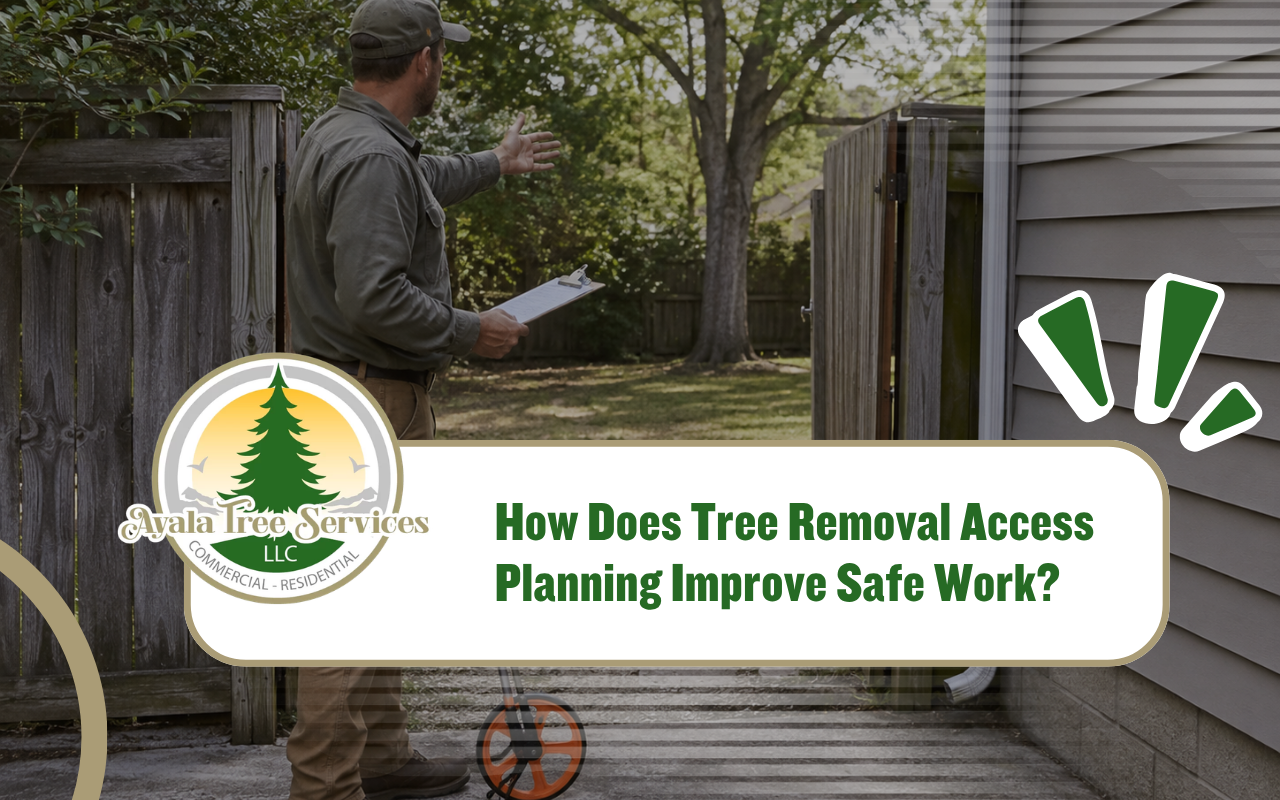
Tree removal can become difficult when gates, fences, slopes, homes, or gardens limit the work area. Therefore, good tree removal access planning matters before equipment arrives. At Ayala Tree Services LLC, we look at the full site first. Then, we build a clear route that protects people, property, and the work schedule.
Tree removal access planning creates a clear path for workers, tools, machines, and debris. Therefore, it reduces guesswork before cutting starts. It also helps the crew choose safer drop zones and equipment positions. At Ayala Tree Services LLC, we use this planning to match each removal method with the property. As a result, tight spaces become easier to manage.
Assess Site Conditions Before Equipment Enters Your Property
First, we study the ground around the tree. We look for slopes, wet soil, exposed roots, soft areas, and narrow turns. Also, we note fences, sheds, patios, gardens, driveways, and nearby buildings. These details shape the safest equipment route.
Next, we check the width and height of each access point. Therefore, we can compare those limits with the machines needed for the job. Proper equipment access tree removal planning can prevent damaged gates, lawns, and hard surfaces.
- Measure gates, paths, turns, and working areas.
- Check soil firmness before heavy machines enter.
- Mark fragile landscaping and surfaces that need protection.
- Identify safe staging areas for logs and branches.
For more preparation ideas, review our guide to preparing your property safely. It explains practical steps before a removal crew begins work.
Identify Hidden Hazards Around Trees Before Work Begins
However, clear ground does not always mean a simple job. Overhead wires, buried utilities, weak branches, and nearby structures can change the plan. Therefore, these hazards must be identified before machines or ropes move into place.
- Locate overhead and underground utility concerns.
- Keep people, pets, and vehicles outside the work zone.
- Check nearby roofs, fences, sheds, and other targets.
- Plan clear worker routes before debris starts moving.
Select Compact Equipment That Fits Limited Access Areas
Next, the equipment should fit the property instead of forcing the property to fit the equipment. Smaller machines can work well when large trucks cannot enter safely. Meanwhile, ropes and controlled lowering systems may reduce the need for wider access.
For a narrow yard removal, compact machines may pass through gates and between landscape features. Therefore, careful machine selection can reduce lawn disturbance. It can also make cleanup easier after sections reach the ground.
At Ayala Tree Services LLC, we match the tree removal setup to the available space. Also, we consider tree size, branch spread, ground condition, and debris movement. That approach keeps the work organized from start to finish.
Guide Narrow Yard Removal With Controlled Movement Techniques
In tight areas, controlled movement becomes especially important. Therefore, crews may remove a tree in smaller sections instead of dropping large pieces. Ropes can help guide limbs away from roofs, fences, gardens, or nearby trees.
How to prepare a narrow access route
- First, clear movable items from gates and pathways.
- Next, confirm the narrowest point along the planned route.
- Then, protect soft ground or delicate surfaces when needed.
- Afterward, mark safe zones for workers and debris.
- Finally, test the route before cutting or lowering begins.
If you want a clearer picture of service day, read our overview of what happens during removal. It explains how preparation connects with the removal and cleanup process.
Protect Work Zones Through Clear Safety Boundaries Daily
Meanwhile, a well-planned route still needs a controlled work zone. Barriers, warning markers, and clear entry points help separate the crew from visitors. Therefore, homeowners, children, pets, and neighbors should remain outside active areas.
- Set visible boundaries around active work zones.
- Keep access routes free from parked cars and loose items.
- Use a spotter when machines move through limited spaces.
- Review emergency routes with the crew before work starts.
Coordinate Utility Clearances Before Heavy Equipment Moves Onsite
Before digging, driving stakes, or moving heavy equipment, utility locations should be understood. Therefore, buried gas, electric, water, or communication lines may need marking. Overhead lines also require careful planning around branches and equipment.
When utility concerns exist, the work plan may need a different route or removal method. Also, some situations require coordination with the proper utility provider. This step can prevent delays and avoid dangerous contact.
Because access conditions affect timing, planning early can make scheduling more realistic. For related details, see our guide to factors that affect removal timing.
Prepare Backup Routes For Weather And Equipment Changes
Even a strong plan can face unexpected changes. For example, rain may soften soil that was firm during the first visit. Therefore, ground mats, another machine, or a different route may become necessary.
Emergency planning matters too. Therefore, first-aid supplies, emergency contacts, and clear exit paths should be available. When roles are understood early, the crew can respond more calmly if conditions change.
Review Final Access Details Before Tree Cutting Starts
Finally, the access plan should be checked again before cutting begins. We walk the route, review machine positions, and confirm work zones. Also, we look for new obstacles that appeared after the first site visit.
At Ayala Tree Services LLC, customers can also discuss access concerns before the scheduled work. If your property has tight gates or difficult terrain, connect with us. We can review the site and explain practical next steps.
Frequently Asked Questions
Why does access matter before tree removal starts?
Access determines how workers, equipment, and debris move safely through the property. Therefore, good planning can reduce delays and surface damage. Our property preparation guide for removal day explains useful steps before service.
Can trees be removed from a narrow backyard?
Yes, many tight spaces can be managed with sectional cutting, ropes, or compact equipment. However, the exact method depends on the site. Our answers about complex access and tight backyards explain how we approach limited spaces.
What should homeowners clear before the crew arrives?
Generally, move vehicles, furniture, toys, and other loose items away from access routes. Also, keep pets and people clear. Our checklist for preparing the work area covers these steps in more detail.
How can access conditions affect removal time?
Tight gates, slopes, utility concerns, and extra protection can add setup steps. Therefore, timing depends on both the tree and property. Read our explanation of tree removal timing factors for more context.
How do I discuss a difficult access problem?
Start by sharing the property location and the access concern. Photos may also help explain gates, slopes, or nearby structures. Then, use our contact page for tree service questions to reach our team.
Build Safer Removal Results With Better Access Preparation
In the end, strong planning makes complicated tree work easier to organize. Tree removal access planning connects site conditions, equipment choices, safety zones, and backup options. Therefore, it supports a smoother process around homes and landscapes.
At Ayala Tree Services LLC, we plan around the property before we plan around the machine. As a result, narrow access and difficult terrain can be handled with clearer steps. When you are ready, our team can review your space and explain a suitable setup.
References:
- How To Know When It’s Time To Cut Down A Tree — Southern Living
- Chainsaw Safety: The Five Step Tree Felling Plan — University of Georgia Cooperative Extension