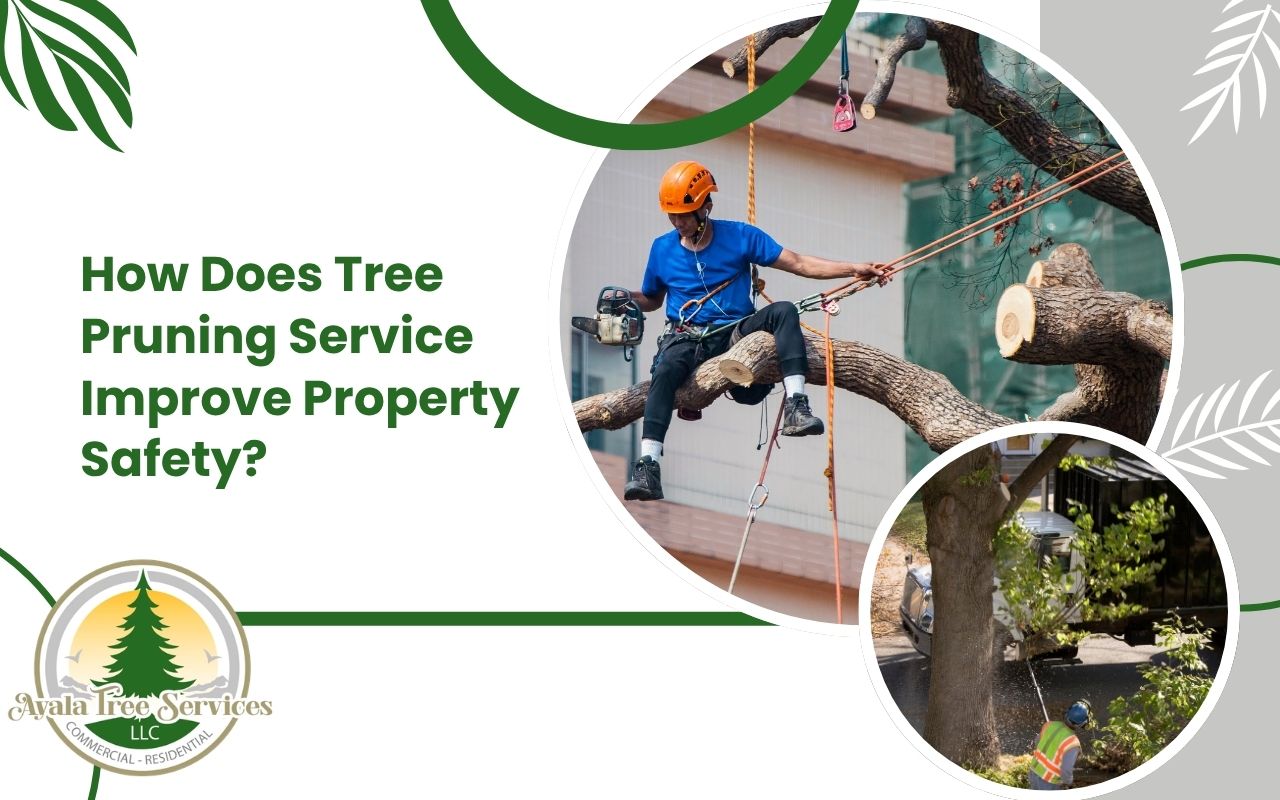
Commercial properties need safe, clean outdoor spaces that do not create risks for visitors, staff, tenants, or nearby vehicles. Overgrown branches can block views, scrape buildings, or break during storms. At Ayala Tree Services LLC, we help property owners plan careful pruning before small branch problems become larger hazards.
How Does Tree Pruning Service Improve Property Safety?
A tree pruning service improves property safety by removing weak limbs, shaping overgrown canopies, and supporting healthier tree growth. Professional pruning also helps reduce storm risks, protect buildings, and keep commercial grounds easier to maintain.
Professional pruning is a planned tree care service that removes unsafe, dead, crowded, or poorly placed branches. Property managers, business owners, and homeowners need it when trees affect safety, visibility, curb appeal, or long-term health. The service solves branch hazards while helping trees keep a stronger, balanced form.
Strengthen Tree Health With Professional Pruning Care Plans
Healthy pruning removes problem branches while protecting the living parts of the tree. A careful plan gives the canopy more room for air, sunlight, and balanced growth. It also helps reduce stress from crowded limbs, disease, and heavy branch weight.
When customers contact Ayala Tree Services LLC, we look for signs that pruning can protect the tree without removing more than needed. Deadwood, rubbing branches, and broken tips can weaken the canopy over time. Proper cuts also help the tree close wounds in a healthier way.
- Dead or diseased branches are removed before problems spread.
- Crowded limbs are thinned to improve air movement.
- Low branches are raised when they block access or visibility.
- Heavy limbs are reduced when they place stress on the tree.
According to TreesAreGood.org, pruning landscape trees requires care because each cut can affect growth. That is why professional guidance matters for both safety and tree health.
Reduce Weak Limbs Before Storm Damage Starts Nearby
Weak limbs can fall without much warning, especially during wind, rain, or heavy seasonal growth. Pruning helps identify unstable branches before they damage roofs, signs, fences, parked cars, or walkways. Early removal can lower risk around busy commercial areas.
Branches with cracks, decay, poor attachment points, or dead tips need close review. These issues are not always easy to see from the ground. With Ayala Tree Services LLC, you get a practical review before pruning begins, so the safest next step is clear.
- Choose pruning when the tree is healthy but has unsafe branches.
- Consider removal when the trunk, roots, or main structure is failing.
- Request an inspection when branches hang over people, vehicles, or buildings.
- Act before storms when deadwood or cracks are already visible.
Weak limbs are easier to manage before they break, split, or pull healthy branches down with them. For more seasonal guidance, read our storm preparation guide.
Support Tree Structure Through Careful Seasonal Pruning Decisions
A stronger tree structure begins with balanced branch spacing, clear attachment points, and reduced canopy weight. Pruning can guide growth away from buildings, lights, and paths. Over time, this care helps trees stand better under normal weather stress.
Tree structure matters on commercial properties because one failing limb can affect customers, employees, and daily operations. Our team at Ayala Tree Services LLC can review branch angles, crossing limbs, and canopy weight before recommending cuts.
Seasonal timing also matters. Many trees respond well to pruning during dormancy, while some flowering trees need different timing. The University of Georgia Extension notes that pruning is both art and science because timing and cut placement affect plant response.
- Young trees may need shaping to guide future branch strength.
- Mature trees may need selective cuts to reduce heavy limbs.
- Flowering trees may need pruning after bloom to protect seasonal flowers.
- Storm-damaged trees may need faster review for safety reasons.
Prioritize Pruning Safety During Every Service Visit Onsite
Pruning safety protects people, buildings, equipment, and the tree itself during the work. Safe pruning starts with a site check, proper equipment, clear work areas, and careful branch handling. It also helps prevent damage from falling limbs.
Before work begins, we check access points, nearby structures, ground conditions, and overhead concerns. Large branches need controlled cuts, not guesswork. Safe work zones help keep tenants, customers, and workers away from falling debris.
Professional crews use the right tools for branch size, tree height, and site conditions. This helps avoid torn bark, unsafe ladder use, and uncontrolled branch drops. For many properties, hiring a trained crew is safer than asking staff to handle sharp tools or climb near unstable limbs.
Choose Tree Pruning Service For Safer Commercial Grounds
A commercial tree pruning service helps businesses keep outdoor areas safe, neat, and welcoming. It supports curb appeal while reducing branch risks near entrances, parking lots, sidewalks, and signs. Regular care also helps avoid rushed decisions after storm damage appears.
After Ayala Tree Services LLC reviews your trees, we explain what should be pruned and why. Commercial properties often need pruning for clearance, sightlines, building protection, and customer access. Clear walkways and visible signs can improve the daily experience for everyone on site.
Professional pruning also protects your property investment. Healthy trees can add shade, soften hard surfaces, and make business grounds feel cared for. For more helpful advice, visit our tree care tips.
Prepare For Service With Simple Booking Steps Today
The booking process should help you understand what happens before a crew arrives. We ask about the tree, location, visible damage, access, and nearby risks. Then we review the site needs and explain the pruning plan clearly.
When you reach out, share photos if possible. Photos help us see branch size, roof clearance, parking areas, and possible hazards. During the visit, we inspect the tree from the ground and explain the safest practical options before work starts.
- Contact us with your property address and tree concerns.
- Share photos of weak limbs, overgrowth, or blocked areas.
- We review access, hazards, and pruning goals.
- Before work begins, we explain the recommended cuts.
- Once pruning is complete, we review cleanup and next care steps.
For scheduling help, use our contact our team page and send the details that matter most.
Frequently Asked Questions
How do I know when my tree needs pruning?
Your tree may need pruning when you see dead branches, weak limbs, crowded growth, low clearance, or branches touching buildings. A professional review can confirm whether pruning, trimming, or removal is safer.
When should I schedule pruning for a commercial property?
Schedule pruning before branches block signs, walkways, lights, roofs, or parking areas. Many trees respond well during dormant seasons, but storm-damaged or hazardous branches should be reviewed sooner.
What happens if weak limbs are not removed?
Weak limbs can break during wind, rain, or normal branch stress. Falling branches may damage vehicles, roofs, fences, signs, or outdoor seating areas. Early pruning helps reduce those risks.
Why is pruning safety important for business properties?
Pruning safety matters because branch work can affect customers, employees, buildings, and nearby vehicles. Proper equipment, clear work zones, and trained crews help reduce avoidable hazards.
How can I prepare before a pruning visit?
Clear access near the tree, move vehicles when possible, and share photos of the concern. You can also review our tree care tips before the visit.
Schedule Safer Tree Care Before Branch Problems Spread
Commercial tree care is easier when pruning is planned before damage happens. Contact us through our contact our team page to request a review and keep your outdoor space safer, cleaner, and more welcoming.