
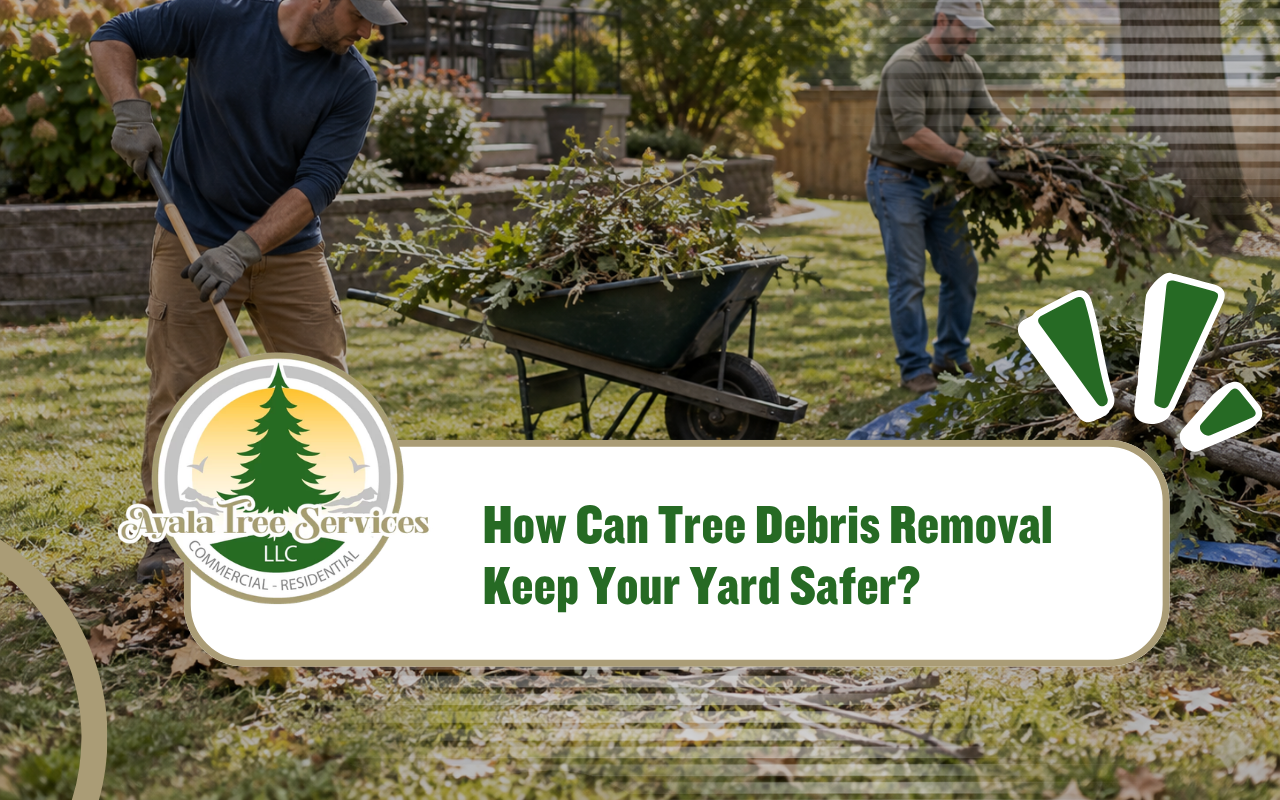
Tree debris removal keeps a yard safer by clearing loose branches, leaves, and other natural waste from active areas. It also reduces tripping hazards and opens walkways, lawns, and driveways. Moreover, sorting debris before moving it makes the job faster. When heavy limbs or risky conditions appear, professional help can also reduce unnecessary lifting and cutting.
Choose Simple Tools That Make Yard Cleanup Easier
First, gather the tools you need. A sturdy rake works well for leaves, twigs, and light yard tree debris. Work gloves protect your hands from rough bark and sharp edges, while loppers or hand pruners can handle smaller branches that need trimming.
Next, move the material with a wheelbarrow or garden cart to reduce trips across the yard. Keep safety glasses nearby when cutting or moving branches. For heavier work, sturdy shoes and long pants provide added protection.
- Rake up leaves and small twigs.
- Wear gloves for grip and hand protection.
- Cut smaller branch sections with loppers or pruners.
- Haul debris across the yard in a cart.
At Ayala Tree Services LLC, we often remind customers that simple preparation can reduce wasted effort. For more ideas, review our practical cleanup methods before beginning.
Prepare Your Work Area Before Moving Fallen Branches
Before lifting anything, inspect the area carefully. Look for uneven ground, hidden holes, sharp sticks, and hanging limbs. Also, move hoses, toys, tools, and other objects away from the work zone. Therefore, you will have more room to walk and carry material safely.
Wear long sleeves, durable pants, gloves, and closed-toe shoes. Moreover, use eye protection when cutting wood or handling brittle branches. If power lines, unstable limbs, or storm-damaged trees are nearby, avoid handling the area yourself.
- Clear walking paths before hauling debris.
- Keep children and pets away from the cleanup zone.
- Check branches for cracks before lifting them.
- Stop if debris is near wires or unstable trees.
With Ayala Tree Services LLC, you can also request a cleanup estimate when the work looks unsafe or too heavy.
Sort Yard Debris Early To Save Cleanup Time
Next, divide debris by size and type. Put leaves and small twigs in one area. Then, place medium branches together. Finally, keep large limbs separate until you decide how they should be handled.
This simple system makes tree debris cleanup more efficient. It also helps you choose the correct tool for each pile. For example, small material may only need a rake. However, branch debris removal may require loppers, a saw, or professional support.
At Ayala Tree Services LLC, we find that organized piles also make hauling easier. Our guide to yard waste handling options explains common materials that can be collected after outdoor work.
Follow A Safe Process For Large Branch Removal
Large limbs need more care because weight can shift without warning. Therefore, do not rush tree branch removal. First, check whether the branch is stable on the ground. Then, decide whether it can be moved safely without cutting.
- Stand on firm, clear ground before lifting.
- Ask for help when a branch feels too heavy.
- Cut long branches into smaller sections when safe.
- Move each section into a cart or collection area.
- Stop if the branch is under tension or near hazards.
Additionally, avoid twisting your back while carrying heavy wood. Bend your knees and keep the load close to your body. If the limb is very large, professional tree debris removal may be the safer choice.
When customers contact Ayala Tree Services LLC, we review the debris size, access, and possible hazards first. Then, we explain a practical next step before work begins.
Reuse Natural Debris To Support A Healthier Yard
Not every natural material needs to become trash. For example, small branches can sometimes be chipped for mulch. Leaves can also support compost when they are free from harmful material. Therefore, recycling part of the cleanup can reduce waste.
However, avoid keeping diseased branches in garden piles. Also, do not reuse wood that may spread pests or plant problems. Instead, separate questionable material from clean organic debris. This step keeps reuse simple and safer.
- Chip clean branches for mulch when appropriate.
- Add healthy leaves to compost in manageable amounts.
- Keep mixed trash separate from natural yard waste.
- Remove diseased or unsafe material from reuse piles.
For larger amounts, our property cleanup service guide explains how organized hauling can simplify the process.
Prevent Future Buildup With Regular Seasonal Yard Care
Regular care makes future cleanup easier. In spring, remove winter-damaged twigs and branches. During summer, rake small piles before they spread. In fall, collect leaves regularly instead of waiting for deep piles. Finally, inspect the yard after strong weather.
Routine branch debris removal also keeps walkways and lawn areas easier to use. Moreover, light pruning can reduce some weak growth before storms. However, damaged or high branches may require professional attention.
At Ayala Tree Services LLC, we encourage simple seasonal habits instead of waiting for one large cleanup. As a result, yard tree debris stays easier to manage throughout the year.
Schedule Professional Cleanup When Debris Becomes Too Much
Some jobs grow beyond basic yard tools. Heavy limbs, large piles, storm damage, or limited access can make cleanup harder. In those cases, professional tree debris removal can reduce physical strain and shorten the process.
At Ayala Tree Services LLC, you get clear guidance before cleanup starts. We can review branch size, pile location, access, and hauling needs. Therefore, you can understand the next step before moving heavy material.
If your yard is difficult to clear safely, ask our team for cleanup support. We can help you plan a cleaner and more usable outdoor space.
Frequently Asked Questions
What is the easiest way to clear tree debris?
Start by sorting small, medium, and large material. Then, clear one section at a time. For added guidance, use our step-by-step cleanup guidance.
When should I get professional help with branches?
Get help when branches are heavy, unstable, elevated, or near wires and structures. You can reach our cleanup team to discuss the situation.
Can leaves and small branches be recycled?
Yes, clean organic material may be composted, chipped, or reused when suitable. Our yard waste service information explains common handling options.
How do I make branch cleanup more manageable?
Work in sections, cut safe branches into manageable pieces, and use a cart for hauling. Also, review our easy debris handling tips.
What should I do with a large debris pile?
Keep the pile away from walkways and separate natural material from trash. Then, review our organized hauling and cleanup options.
References:
How to Cut Down a Tree Safely — This Old House
The Extreme Weather Prep Most Homeowners Don’t Think About Until It’s Too Late — Bob Vila