Summer brings shade, beauty, and outdoor joy. However, trees can hide weak spots after heat, rain, wind, or decay. At Ayala Tree Services LLC, we help property owners notice summer tree hazards early, so safer choices become easier before branches fall or trunks shift.
What Makes Summer Tree Hazards Dangerous for Outdoor Safety?
Summer tree hazards can become dangerous when heat, storms, weak roots, or heavy branches reduce tree strength. Therefore, a tree that looks calm can still create risk. Ayala Tree Services LLC encourages early checks, simple safety steps, and fast help when warning signs appear.
Recognize Clear Warning Signs Before Trees Become Unsafe
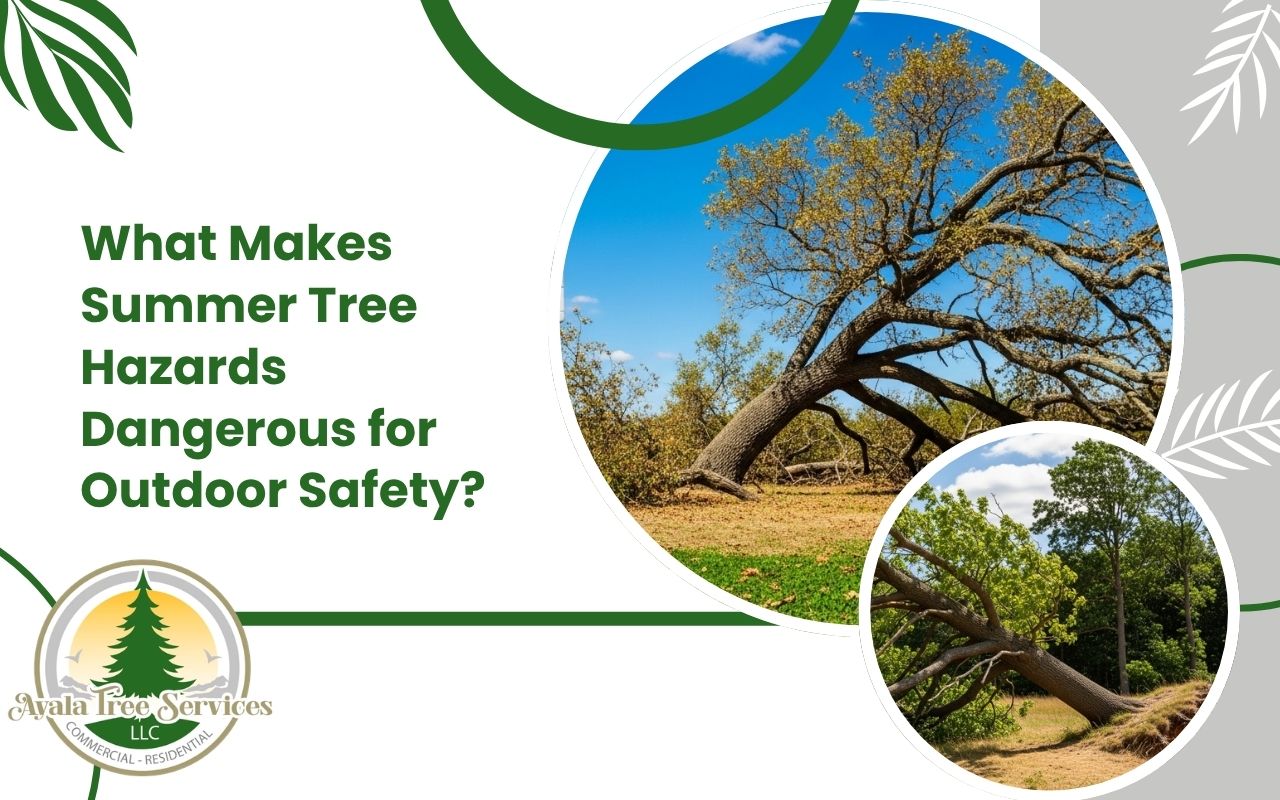
First, look for a trunk that leans more than before. Also, watch for soil lifting near the base. These signs may point to unstable trees.
Next, check for cracks, splits, missing bark, or soft wood. Fungi near the trunk may also show decay. Because decay can spread inside, the outside may still look normal.
- Fresh cracks in the trunk or large limbs
- Dead branches with no green growth
- Roots lifting from the soil
- Heavy branches hanging over walkways or roofs
- Mushrooms or soft spots near the base
At Ayala Tree Services LLC, we suggest staying away from the fall zone. Then, take photos from a safe place. For more guidance, read our page on Are Leaning Trees Dangerous.
Understand Weather Changes That Increase Tree Risk Fast
Summer weather can change a tree quickly. For example, heavy rain can soften soil around roots. As a result, the tree may lose support.
In addition, long dry spells can stress trees. Branches may dry, weaken, and break under their own weight. Strong wind can then turn small damage into a serious danger.
- Rain can loosen root support.
- Drought can make limbs dry and brittle.
- Lightning can damage the trunk inside.
- Wind can break weak branch unions.
After storms, avoid standing below damaged trees. Even quiet branches can fall later. Therefore, fast checks help reduce summer tree hazards around homes, trails, and gathering areas.
Identify Heavy Branches That May Fall Without Warning
Heavy branches need close attention in summer. They may look strong, yet they can hide cracks or decay. Also, they can fail after heat, wind, or rain.
Look for branches that hang low, cross other limbs, or grow from tight angles. These spots often carry more stress. Because of this, tree risks may rise when people sit or park below them.
Ayala Tree Services LLC can inspect risky limbs and suggest safe pruning. When damage looks urgent, visit Signs Your Trees Need Emergency Attention for clear next steps.
Check Tree Age Alongside Soil and Root Health
Tree age matters, but it is not the only factor. Older trees may carry storm damage from past years. Meanwhile, young trees may still fail if roots are weak.
Soil also affects safety. Compacted soil can hurt roots. Poor drainage can reduce oxygen. Then, roots may stop holding the tree well.
Because several problems can work together, a full check is best. At Ayala Tree Services LLC, we look at the trunk, canopy, soil, and root area. This helps us find unstable trees before they become emergencies.
Schedule Routine Inspections That Protect Outdoor Spaces
Regular inspections make outdoor areas safer. They also help protect trees when problems are still small. Therefore, check trees often during summer.
- Walk around trees after heavy rain.
- Look up for broken or hanging limbs.
- Check the base for soil movement.
- Keep people away from damaged trees.
- Call trained help when signs are serious.
Ayala Tree Services LLC recommends extra checks after storms. This is important because hidden damage may not show right away. A safe inspection can reduce tree risks before they affect your home or family.
Follow Simple Steps To Lower Tree Dangers
You can lower danger with simple care. First, remove dead branches before they fall. Also, keep seating, play areas, and parking away from risky trees.
Next, water trees during long dry periods. Mulch can also help soil stay cool and moist. However, keep mulch away from the trunk to prevent rot.
Do not cut large limbs by yourself. Large cuts can be unsafe and may hurt the tree. Instead, contact Ayala Tree Services LLC through our Contact Our Team page for safe help.
Frequently Asked Questions
How can I tell if a leaning tree is unsafe?
A leaning tree may be unsafe when the lean grows after rain or wind. Also, lifted soil, exposed roots, or trunk cracks are warning signs. For a deeper guide, visit Are Leaning Trees Dangerous.
When should I ask for emergency tree help?
Ask for help when you see hanging limbs, fresh cracks, sudden leaning, or storm damage. These signs may become serious fast. Ayala Tree Services LLC explains more at Signs Your Trees Need Emergency Attention.
Can green trees still create summer tree hazards?
Yes, green trees can still create summer tree hazards. Roots may be weak, or heavy branches may be cracked inside. Therefore, do not rely on leaves alone to judge safety.
What should I do after a summer storm?
Stay away from damaged trees first. Then, check for broken limbs from a safe distance. If you see danger, contact Ayala Tree Services LLC through Contact Our Team.
How often should trees be inspected in summer?
Check trees every few weeks during summer. Also, inspect them after strong wind, lightning, or heavy rain. Regular checks can reduce summer tree hazards and support healthier trees.
Prepare Emergency Actions For Sudden Tree Accidents
If a tree accident happens, move everyone away first. Then, call emergency services if someone is hurt. Also, avoid touching limbs near power lines.
Keep a small first-aid kit ready for outdoor plans. In addition, choose a meeting spot before storms arrive. This helps people act calmly during tree risks.
After the area is safe, document the damage. Photos can help during service calls or insurance steps. Then, reach out for professional support before more branches move or fall.
References:
Sacramento’s iconic tree canopy turns destructive in storms
Hot Temperatures Can Weaken Trees and Cause Sudden Branch Drop Syndrome