Storms can leave your yard unsafe, messy, and stressful. At Ayala Tree Services LLC, we help homeowners understand damage signs, protect their property, and choose safe recovery steps. However, not every damaged tree needs removal. Therefore, a careful inspection can help save strong trees and prevent new hazards.
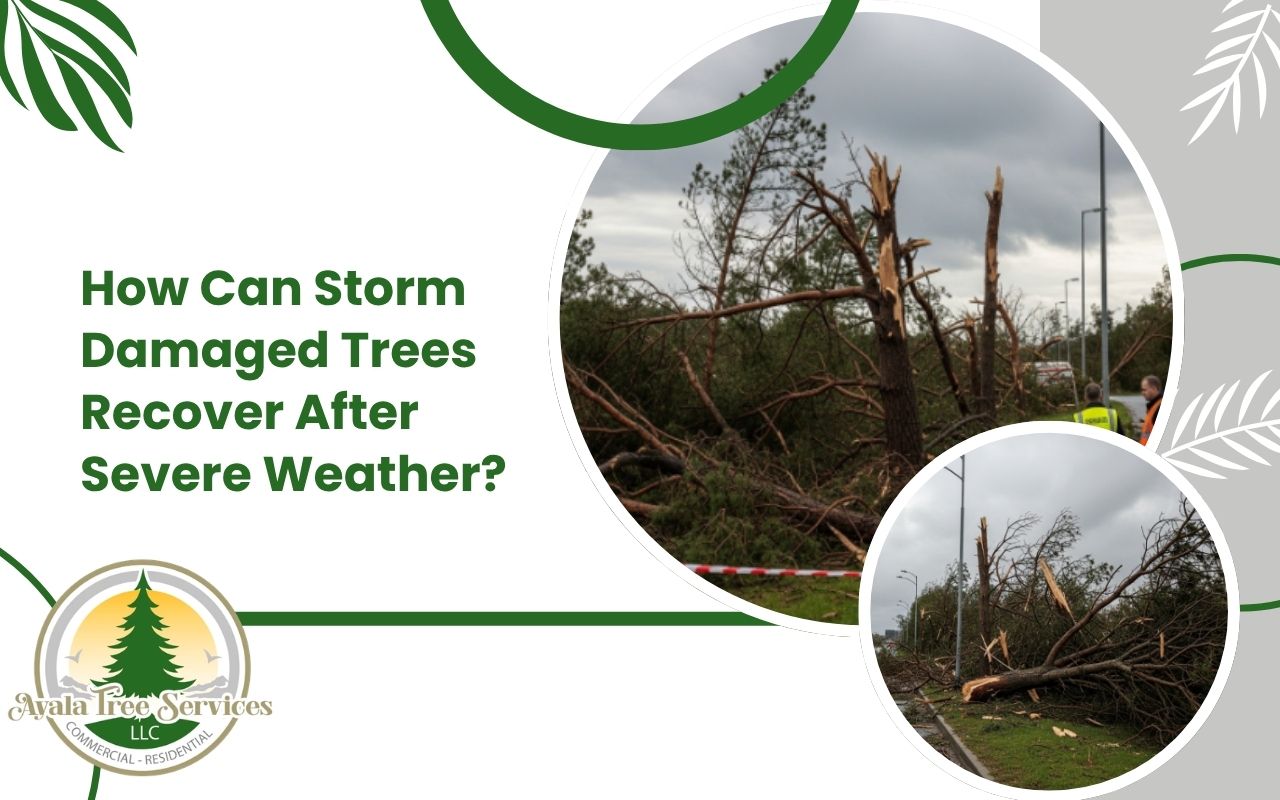
How Can Storm Damaged Trees Recover After Severe Weather?
Storm damaged trees can recover when the damage is inspected early, unsafe limbs are removed, roots are protected, and weak areas are monitored. However, trees with major cracks, fallen trunks, or utility risks need professional help before cleanup begins.
Storm damaged trees are trees harmed by wind, rain, lightning, or falling debris. Homeowners need this guidance when they see broken limbs, fallen trees, leaning trunks, or root movement. The goal is to reduce hazards, support healthy recovery, and decide when expert help is safer than DIY work.
Storm Damaged Trees Inspections Reveal Safer Yard Recovery Choices
Early inspection helps you see which trees may recover and which trees may be unsafe. First, look for split bark, fresh cracks, leaning trunks, lifted roots, and hanging branches. Then, keep people away from areas where wood could fall or shift.
Start from a safe distance. Also, do not stand under broken limbs or leaning trunks. Walk around the tree slowly, and check the canopy, trunk, and soil near the base.
According to the Billion-Dollar Weather and Climate Disasters report, the United States had 403 confirmed billion-dollar weather and climate disaster events from 1980 through 2024.
- First, check for branches hanging over roofs, cars, fences, and walkways.
- Next, look for cracks where large branches meet the trunk.
- Also, watch for loose soil, exposed roots, or a raised root plate.
- Then, mark danger areas with cones, tape, or visible objects.
- Finally, take photos before moving debris for records and planning.
Ayala Tree Services LLC checks tree structure, access points, nearby targets, and visible safety risks before recommending the next step. Therefore, you get a clear plan instead of guessing.
Safe How-To Steps Organize Light Yard Cleanup
Light cleanup should begin with small, stable debris on the ground. However, you should stop when branches are heavy, tangled, high, or under pressure. Also, avoid ladders and power lines because storm debris can shift without warning.
Use gloves, eye protection, sturdy boots, and a helmet when working near debris. Then, clear walking paths before cutting anything. If a branch binds, cracks, or moves suddenly, leave the area and ask for help.
- First, remove loose sticks and small branches from open ground.
- Then, stack debris away from driveways, doors, and unstable trees.
- Next, cut only small branches that rest fully on the ground.
- Also, keep children and pets away from the cleanup zone.
- Finally, call for help when fallen trees block access or threaten property.
The Billion-Dollar Weather and Climate Disasters report lists 203 severe storm events with losses above $1 billion from 1980 through 2024.
For extra safety guidance, read our local safety guide. Also, use professional help when cleanup needs saws, ropes, climbing, or heavy equipment.
Key Takeaway: Early inspection and light cleanup help reduce risk. However, unstable trunks, hanging limbs, and blocked access need trained support.
Careful Pruning Supports Healthier Growth After Strong Storms
Proper pruning helps damaged trees close wounds and direct energy into healthy growth. First, remove torn or cracked branches near the next healthy branch. However, avoid cutting into the branch collar because that area helps natural healing.
Broken limbs should be trimmed with clean, smooth cuts. Also, heavy limbs should be removed in sections. This lowers the chance of bark tearing and branch snapping.
| Damage Sign | Safer Next Step |
|---|---|
| Small broken limbs near the ground | Prune cleanly near healthy growth when the branch is stable. |
| Large hanging branches | Keep the area clear and request professional removal. |
| Split trunk or deep crack | Schedule an inspection before pruning or bracing. |
| Fallen trees across paths or driveways | Use emergency cleanup support instead of pulling or cutting alone. |
The University of Minnesota Extension states that, for every 3 inches of branch or stem diameter, solid wood should measure at least 1 to 1.5 inches for better strength.
Ayala Tree Services LLC removes unsafe wood carefully and explains whether pruning, bracing, or removal makes sense. Therefore, the tree gets support without needless cutting.
Practical Support Systems Stabilize Recoverable Leaning Trees
Support systems can help some leaning or split trees recover. However, they must match the tree’s size, damage, and structure. Therefore, cables, braces, and stakes should be used carefully to reduce stress without choking the trunk.
Some small trees may be straightened when roots remain moist and covered. However, large trees, deep cracks, and split leaders need trained handling. Poor support can damage bark and make decay worse.
- Use wide, padded contact points near any trunk or branch.
- Check cables and stakes after wind, rain, and soil movement.
- Keep roots covered and moist after minor uprooting.
- Do not wrap thin wire directly around the trunk.
- Ask for help when the tree is tall, heavy, or near a structure.
Healthy support should reduce dangerous movement while still allowing natural sway. Also, supports should be checked often because growing trunks can outgrow tight materials.
Key Takeaway: Pruning removes unsafe damage, while support systems can help select trees recover. However, wrong cuts or tight braces can create long-term problems.
Simple Soil Care Strengthens Roots During Tree Recovery
Healthy soil helps stressed trees rebuild after wind, rain, and root movement. First, protect the root zone from heavy traffic. Then, add mulch correctly and water deeply during dry periods so roots can grow stronger.
Compacted or saturated soil can limit oxygen around roots. Therefore, avoid parking, dragging debris, or piling heavy branches over the root area. Also, keep mulch away from the trunk to reduce rot.
The University of Minnesota Extension recommends a 3-6 inch layer of coarse mulch spread in a 4-6 foot diameter circle while keeping mulch away from the trunk.
Ayala Tree Services LLC looks at soil, root exposure, mulch depth, and canopy stress before suggesting care steps. As a result, recovery focuses on the whole tree, not only the visible damage.
Ongoing Monitoring Guides Better Decisions After Tree Damage
Storm recovery takes time, so weekly monitoring helps you catch problems early. Look for fresh leaf growth, stable branches, closing wounds, and fewer damage signs. However, yellowing leaves, loose supports, or spreading cracks need attention.
Keep a simple yard note after each check. Also, record dates, photos, water changes, and new symptoms. This helps you see whether the tree is improving or declining.
- First, check for new buds and normal leaf color.
- Next, watch for fungus, soft wood, or oozing wounds.
- Also, inspect braces, cables, and stakes after storms.
- Then, review mulch depth and soil moisture each month.
- Finally, schedule service if cracks spread or the lean increases.
Storm damaged trees may need months or years to recover, depending on age, species, health, and injury level. Therefore, steady care matters more than quick over-treatment.
Key Takeaway: Root care and regular monitoring help trees regain strength. Also, small changes in leaves, cracks, and soil can signal bigger recovery needs.
Professional Help Protects Families During Complex Tree Emergencies
Professional help is the safest choice when fallen trees, high broken limbs, power lines, or structural damage are present. Also, trained crews can control heavy wood, protect nearby property, and decide whether recovery or removal is safer.
Do not touch trees near downed wires. Also, do not climb unstable trees or cut wood under tension. The National Weather Service advises people to avoid downed power lines and report them after high wind events.
Call for emergency cleanup support when a tree blocks access, leans toward a structure, or has large hanging limbs. Fast action can prevent extra property damage.
Ayala Tree Services LLC helps homeowners decide whether pruning, bracing, cleanup, or removal is the best next step. Therefore, you can move forward with safety and less stress.
Frequently Asked Questions
How do I know if broken limbs are dangerous?
Broken limbs are dangerous when they hang overhead, rest on a roof, touch wires, or crack near the trunk. For safer next steps, read our local safety guide.
When should I call for help after fallen trees?
Call when fallen trees block driveways, damage structures, press against fences, or sit near power lines. You can request emergency cleanup support for urgent cleanup.
What happens if storm damaged trees are left alone?
Storm damaged trees can worsen when cracks spread, pests enter wounds, or weak limbs fall later. A prompt inspection helps confirm whether pruning, support, or removal is needed.
Why is checking damage signs important before cleanup?
Checking damage signs helps you spot hidden cracks, unstable roots, and tensioned branches before cutting. This protects people, structures, and nearby healthy trees during cleanup.
How do I schedule tree help after severe weather?
You can share photos, describe the damage, and ask for a visit through our request help from our team page.
Prompt Tree Support Restores Confidence After Harsh Storms
Storm recovery is easier when you inspect early, avoid unsafe cutting, and choose the right support. Ayala Tree Services LLC is ready to help you protect your yard, so request help from our team when your trees need safe attention.