Healthy trees add shade, privacy, and curb appeal, but they can quickly become dangerous when structural problems or storm damage go unnoticed. Learning to spot the early Signs Your Trees Need Emergency Attention helps you protect your family, roof, and power lines. This guide walks you through practical red flags, professional help, and prevention for safer yards in every season.
What Are Signs Your Trees Need Emergency Attention?
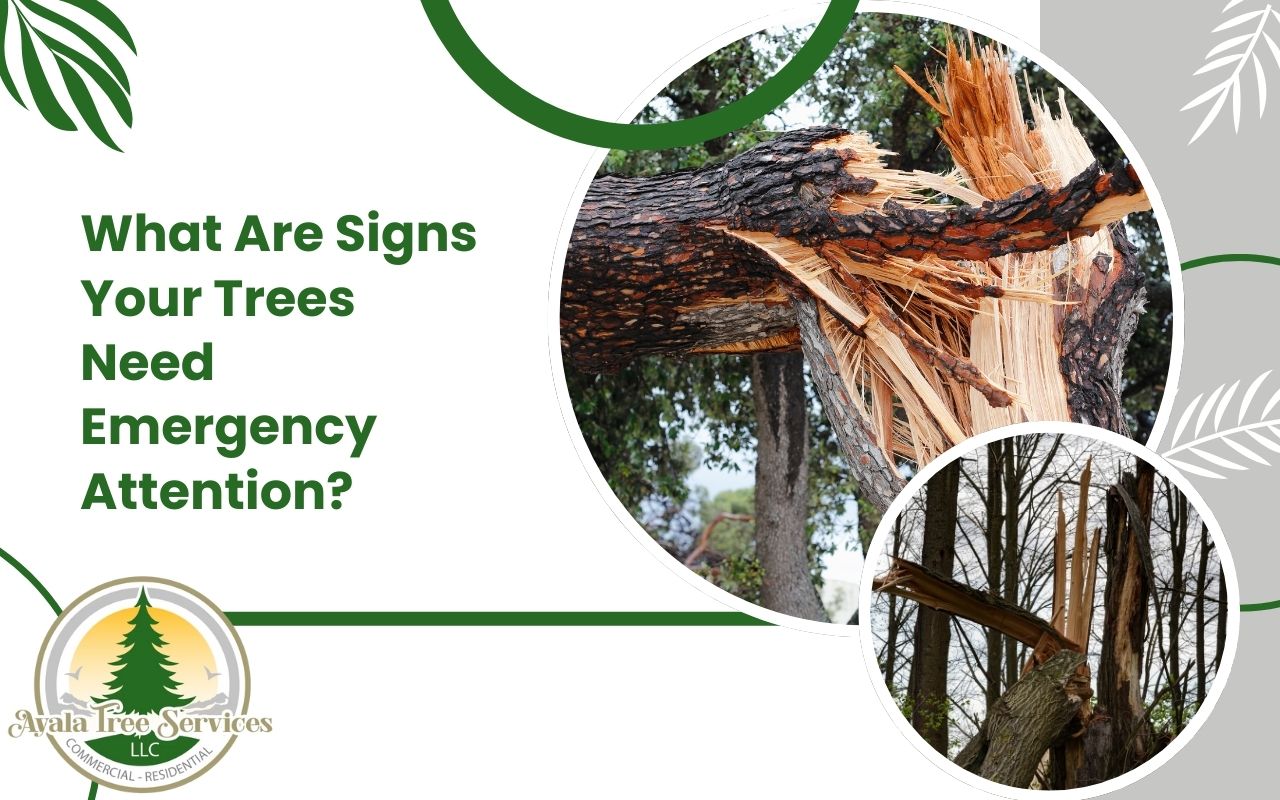
Urgent warning signs include sudden leaning, cracked or heaving soil, hanging or broken limbs, uprooted trees, and branches touching roofs or power lines. If a tree changes quickly after a storm, leans toward your home, or drops large limbs, treat it as an emergency and call a certified arborist immediately.
Recognizing Signs of Tree Instability
Tree instability is often easiest to spot at ground level. Sudden leaning tree signs, especially after heavy rain or wind, suggest the root system may be failing. Cracks in the trunk or a twisting, bowed trunk also indicate stress that can lead to sudden failure without warning.
Watch the soil around the base. If you see raised earth, exposed roots, or gaps opening on the opposite side of a lean, the tree’s anchoring system is shifting. Combine that with hanging or snapped limbs and the broken limbs risk increases dramatically, particularly during the next storm.
- Sudden lean: Trunk tilting more than before, especially toward a structure.
- Heaving soil and exposed roots: Ground lifting or roots pulling out of the soil.
- Hanging or cracked branches: Limbs partially attached that could drop at any time.
- Uprooted trees: Root plate lifting or visible separation from the ground.
Identifying Tree Diseases and Infestations
Diseases and pests quietly weaken wood from the inside out. Discolored, wilting, or prematurely dropping leaves are early red flags, especially when only one side of the canopy is affected. Fungal growth, such as mushrooms or conks at the trunk base, suggests internal decay that can compromise stability.
Insects like borers and beetles often leave pin-sized exit holes, sawdust-like frass, or winding galleries beneath loose bark. Over time, this hidden damage raises the broken limbs risk, even when branches still look solid on the outside.
- Leaf changes: Unusual spotting, yellowing, curling, or early leaf drop.
- Fungal signs: Mushrooms, conks, or dark cankers on the trunk or major limbs.
- Insect evidence: Small holes, frass piles, or peeling bark sections.
- Deadwood pockets: Branches that don’t leaf out while the rest of the tree thrives.
Assessing Tree Damage Severity After Storms
After severe weather, walk your property cautiously and examine trees from a safe distance. Look for deep cracks running along major limbs or the main trunk; fractures deeper than an inch often signal serious structural damage. Fallen branches scattered across the yard can be a preview of bigger failures higher in the canopy.
Uprooted trees are not the only concern. A partially lifted root ball or a tree that shifted in the soil may still be standing but dangerously unstable. In these situations, a professional storm response assessment is crucial before you park vehicles nearby or allow children to play under the tree.
Understanding Risk Factors Associated with Tree Hazards
Some trees are naturally more vulnerable than others. Age, species, and prior pruning practices all influence failure risk. Older specimens may have hidden cavities or decayed heartwood. Trees that were topped or over-pruned in the past often develop weakly attached regrowth that breaks more easily in storms.
Site conditions matter too. Poor soil, restricted root zones near driveways or foundations, or past construction damage can undermine stability. A tall tree standing alone in an open, windy area may be more likely to fail than one sheltered by a group of healthy neighbors.
Evaluating Proximity to Structures and Power Lines
Trees don’t have to fall completely to cause serious damage. Branches rubbing on shingles, scraping gutters, or hanging over decks can lead to leaks, structural issues, and safety risks. In strong winds, long limbs can whip against siding or break and fall onto roofs, cars, or playsets.
Power lines introduce an even higher level of danger. Branches touching or close to energized lines can spark fires, cause outages, or create electrocution hazards. As a practical guideline, tall trees should ideally be far enough from structures that, if they fell, they would not hit the building or utility lines.
Importance of Prompt Response in Emergency Tree Situations
When you notice clear Signs Your Trees Need Emergency Attention, waiting “to see what happens” can turn a manageable problem into a crisis. Cracks spread, roots shift, and decayed limbs continue to weaken. A small limb over a sidewalk today may become a full branch failure tomorrow, increasing injury and liability risks.
Having a trusted 24/7 storm response team ready makes decisions easier. If you suspect an imminent hazard, reach out through the 24/7 emergency tree service contact form so certified professionals can prioritize your situation, secure the area, and remove dangerous debris safely.
The Role of Professional Arborists in Tree Emergency Services
Professional arborists combine scientific tree knowledge with specialized equipment to handle high-risk situations safely. They can identify hidden decay, evaluate root damage, and determine whether pruning, cabling, or removal is the safest option. This expertise is especially important when trees threaten homes, driveways, or power lines.
When removal is the only safe choice, crews experienced in professional tree removal services in Roswell, GA can dismantle trees in tight spaces without damaging surrounding structures. For ongoing care and non-emergency work, partnering with full-service tree care in Roswell, GA helps keep your landscape healthier and more resilient long-term.
Steps to Take When Noticing Signs of Tree Distress
Once you spot worrying changes in a tree, your priority is safety. Keep people and pets away from the danger zone, especially beneath hanging or cracked limbs. Never attempt to climb, cut, or pull on unstable branches yourself, and stay clear of any tree that might be near power lines.
- Back away from hazards: Establish a safe perimeter under leaning crowns or hanging limbs.
- Document what you see: Take clear photos of leaning tree signs, broken branches, and disturbed soil.
- Check for utility conflicts: If branches touch or threaten power lines, contact your utility before any cleanup.
- Protect property access: Keep driveways and walkways clear of vehicles and foot traffic near unstable trees.
- Call emergency tree experts: Share your notes and photos so crews can prepare the right storm response equipment.
Minimizing Future Tree Emergencies Through Regular Inspections
Routine inspections are one of the best defenses against sudden tree failures. Ideally, have your trees evaluated at least once or twice a year and after major storms. An arborist will look at the canopy, trunk, and root zone to catch issues early, before they become emergencies.
Preventive maintenance such as structural pruning, mulching, and soil aeration improves tree strength and resilience. When a tree is beyond saving, choosing the best tree removal services in Roswell, GA ensures hazardous trees are removed safely, making room for healthy replacements.
Ensuring Safety and Health of Your Trees
By learning the Signs Your Trees Need Emergency Attention and pairing that knowledge with regular inspections, you dramatically reduce the risk of surprise failures. Watching for leaning tree signs, monitoring broken limbs risk, and acting quickly when uprooted trees appear helps protect your home and neighborhood.
Combined with expert guidance from certified arborists and a clear storm response plan, these habits keep your trees healthier and your property safer. The result is a landscape that offers shade and beauty without compromising the safety of the people who enjoy it.
Frequently Asked Questions
What are the most urgent Signs Your Trees Need Emergency Attention?
Emergencies include sudden leaning, uprooted trees, hanging or cracked limbs over driveways or walkways, and branches contacting power lines or your roof. If you see any of these, keep everyone away from the area and use the emergency contact page to reach a certified arborist as soon as possible.
Should I call a tree service or the power company first?
If power lines are involved, always contact your utility company before anyone touches the tree. Once the utility has secured the lines, an emergency tree service can safely remove damaged wood and complete the cleanup. For hazards away from lines, calling an arborist directly is usually the best first step.
Is a leaning tree always dangerous?
Not every lean is an emergency, but sudden or increasing lean is a serious concern, especially when combined with cracking soil, exposed roots, or recent storms. If the tree leans toward a structure, driveway, or play area, have an arborist assess it quickly rather than waiting to see if it worsens.
How quickly can emergency crews respond after a storm?
Response times depend on how widespread the storm damage is, but most emergency teams triage calls based on immediate safety risks. Sharing photos and details through the emergency tree service request form helps crews prioritize your case and bring the right equipment.
Will my insurance cover emergency tree removal?
Policies vary, but homeowners insurance often helps when a fallen tree damages a covered structure or blocks an access point. It may not pay for removing healthy trees that are simply “dangerous.” Document damage with photos and speak with both your insurer and your tree service to understand coverage before work begins.
How to Check Your Trees for Emergency Warning Signs
Building a simple inspection habit makes it easier to spot trouble early. A quick, seasonal walk-through can reveal changes that might otherwise go unnoticed until after a storm.
- Walk your property line: Look at each tree from multiple angles, including from a distance.
- Scan the canopy: Note dead branches, bare sections, or limbs hanging over roofs and driveways.
- Inspect the trunk: Check for new cracks, cavities, missing bark, or oozing sap.
- Examine the root zone: Look for heaving soil, exposed roots, mushrooms, or standing water.
- Schedule professional follow-up: If anything concerns you, arrange an inspection with a certified arborist for a detailed risk assessment.
References
- How to Help Storm-Damaged Trees in Your Yard – Better Homes & Gardens.
- Tree Storm Damage Guide: Assessment, Removal, When To Hire a Pro & More – Today’s Homeowner.