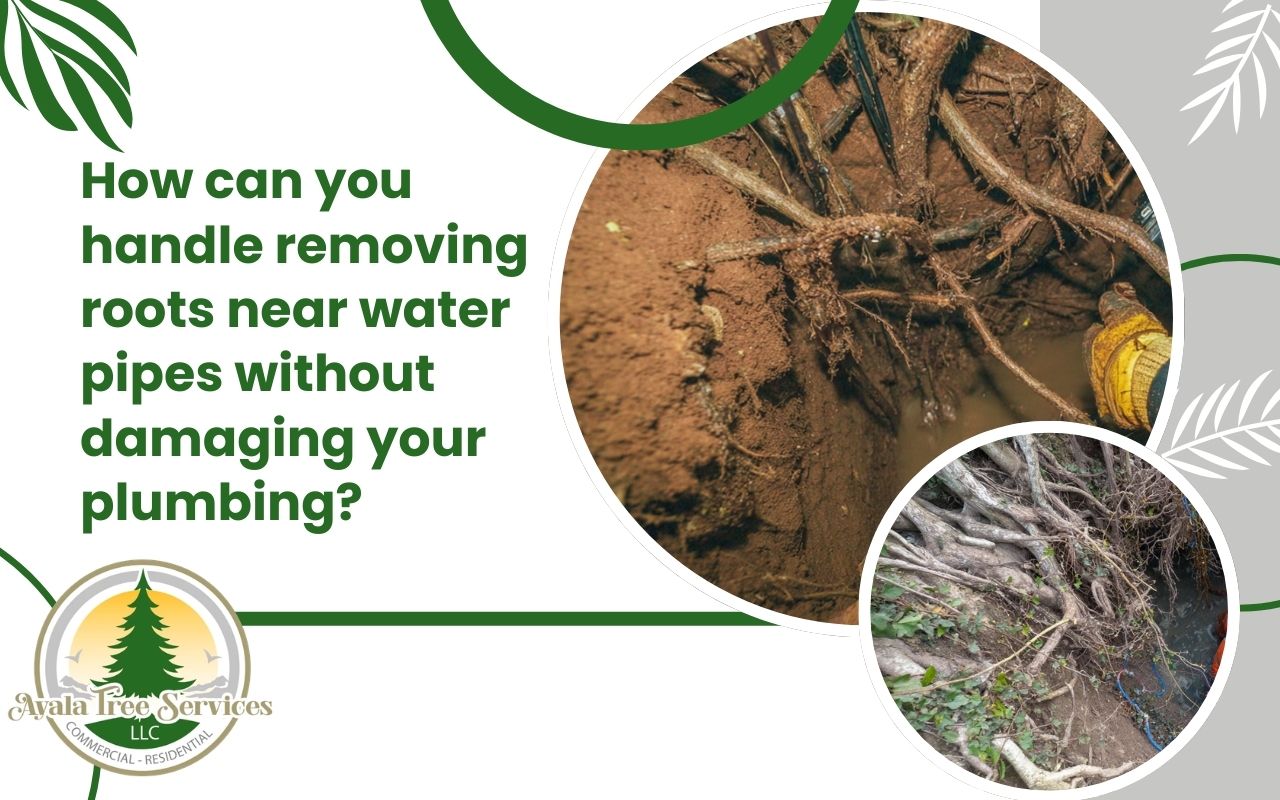
Tree roots love moisture, so they often drift toward buried water lines. However, that growth can trigger clogs, leaks, and messy yard damage. With the right checks, you can respond early and avoid major repairs. This guide shares practical steps for removing roots near water pipes while protecting your plumbing, trees, and property.
How can you handle removing roots near water pipes without damaging your plumbing?
Start by confirming root intrusion with clear warning signs, then choose low-risk removal methods. Next, use careful root cutting, targeted treatments, or professional cleaning to restore flow safely. Finally, install barriers and improve drainage, so roots stop returning. Ayala Tree Services LLC can also inspect, plan, and support long-term protection when the issue is advanced.
Signs that suggest roots are invading your water lines
First, watch for changes that show pressure or flow is restricted. Then, act quickly, because early work makes removing roots near water pipes much easier.
- Slow drains or recurring clogs, especially after basic snaking.
- Gurgling sounds, because air gets trapped behind debris.
- Foul odors near drains, so you notice problems sooner.
- Wet patches in the yard, because a leak may be feeding roots.
- Sudden water-bill spikes, so wasted water does not continue.
Meanwhile, if you see soggy soil near a known line path, document the spot. Then, limit heavy traffic above it, because compaction can worsen breaks and pipe cracking risks.
Root intrusion can become a bigger home issue
Roots expand steadily, so a small entry point can widen over time. Therefore, pipe cracking risks rise as roots press into joints and weak sections. Also, leaks can wash out soil, so settling and uneven ground may follow. As a result, foundation prep becomes more important, especially near slabs and retaining edges.
Moreover, standing water around a leak can attract more roots, so the cycle accelerates. However, prompt intervention reduces damage and disruption. Ayala Tree Services LLC often coordinates with plumbing pros, so tree health and pipe safety stay balanced.
Tools and methods work best for safe removal
Choose methods that match the severity and pipe condition. Also, avoid aggressive pressure on older lines, because brittle materials can fail.
- Hand tools for exposed roots, because you can control each cut.
- Mechanical cutters for light intrusions, so roots are trimmed cleanly.
- Foaming root treatments for regrowth control, because foam coats root hairs.
- Camera inspection for confirmation, so you fix the right location.
- Professional hydro-jetting for heavy buildup, because flow is restored fast.
However, always protect yourself with gloves and eye protection. Also, keep cuts small and precise, because trees rely on stable root zones. When removing roots near water pipes, this careful approach lowers stress on the tree and the line.
How to reroute roots away from pipes without harming the tree
Root rerouting works best when you guide growth, instead of simply cutting everything back. Therefore, focus on redirecting future growth paths while keeping the tree stable.
- First, map the suspected line route, so digging stays targeted.
- Next, excavate a narrow trench carefully, because wide digging can destabilize soil.
- Then, prune only the problem roots, so major structural roots remain intact.
- After that, install a vertical barrier, because it forces roots deeper or sideways.
- Finally, backfill with healthy soil, so roots prefer the new direction.
Meanwhile, pair barriers with improved drainage, because saturated soil pulls roots toward pipes. With consistent care, root rerouting reduces repeat intrusions and supports long-term tree health.
A simple homeowner plan for quick action
Use this workflow when you suspect a problem, because it limits guesswork. Also, keep notes, so you can explain the timeline to a pro.
- First, note symptoms and locations, so patterns are clear.
- Next, pause heavy irrigation near the line, because extra water attracts roots.
- Then, schedule a camera check with a plumber, so you confirm the entry point.
- After that, remove the blockage using the safest method for your pipe type.
- Finally, apply prevention steps, so removing roots near water pipes is not repeated.
However, if backups are severe, stop using fixtures right away, because overflow can damage floors and walls. In that case, professional help is the safest next move.
How to prevent roots from returning near water pipes
Prevention works best when you combine drainage, spacing, and protection. Therefore, treat the cause, not only the clog.
- Maintain even soil moisture, so roots do not hunt for leaks.
- Improve grading and drainage, because standing water invites growth.
- Add pipe sleeves where accessible, so penetration is harder.
- Plan smart planting distances, because space reduces conflict.
- Schedule periodic checks, so small intrusions stay small.
Also, consider foundation prep improvements near the home, because stable, well-drained soil reduces movement and stress. As a result, pipe cracking risks drop and repairs become less likely.
FAQs
How do I know if the problem is roots and not a normal clog?
Normal clogs usually clear and stay clear for a while. However, root issues return quickly, because roots keep catching debris. If symptoms repeat, arrange an inspection and then review guidance like Discover Effective Techniques for Root Removal Near Pipes for helpful context.
Can removing roots harm my tree’s stability?
Yes, it can if too many structural roots are cut at once. Therefore, use selective trimming and plan root rerouting with barriers when possible. If you’re also seeing soil movement, explore Tree Root Removal Near Foundation Safe Methods to understand safer strategies.
What should I avoid when removing roots near water pipes?
Avoid uncontrolled digging, because you can strike the line. Also, avoid high-pressure cleaning on fragile pipes, because it can worsen pipe cracking risks. If the situation feels uncertain, contact Ayala Tree Services LLC early, so the plan stays low-risk.
Do barriers really help with root rerouting over time?
Yes, barriers can guide growth away from the line path, especially when combined with better drainage. Therefore, they support root rerouting without constant cutting. If you want a site-specific plan, use Contact Us for Expert Tree Services, Tree Removal, and Tree Care to request an evaluation.
When should I bring in professionals instead of doing it myself?
Call a pro if backups are frequent, if the yard is sinking, or if you suspect leaks under concrete. Also, call a pro if you need trenchless repair coordination, because it reduces disruption. For related property safety work, you can also review Tree Removal in Roswell, GA—Fast and Reliable Service to understand how site protection is handled.
Next steps for lasting protection and local support
If you want fewer surprises, set a simple maintenance schedule and stick to it. Therefore, plan seasonal checks and quick responses to slow drains. If you need hands-on help, Ayala Tree Services LLC can coordinate root control and site care, so your yard stays healthy and your plumbing stays reliable. To get started, reach out through Contact Us for Expert Tree Services, Tree Removal, and Tree Care for a professional evaluation.
Also, if our tips helped, consider sharing your experience, because local feedback supports other homeowners. You can post your thoughts here: Leave a Review on Google.