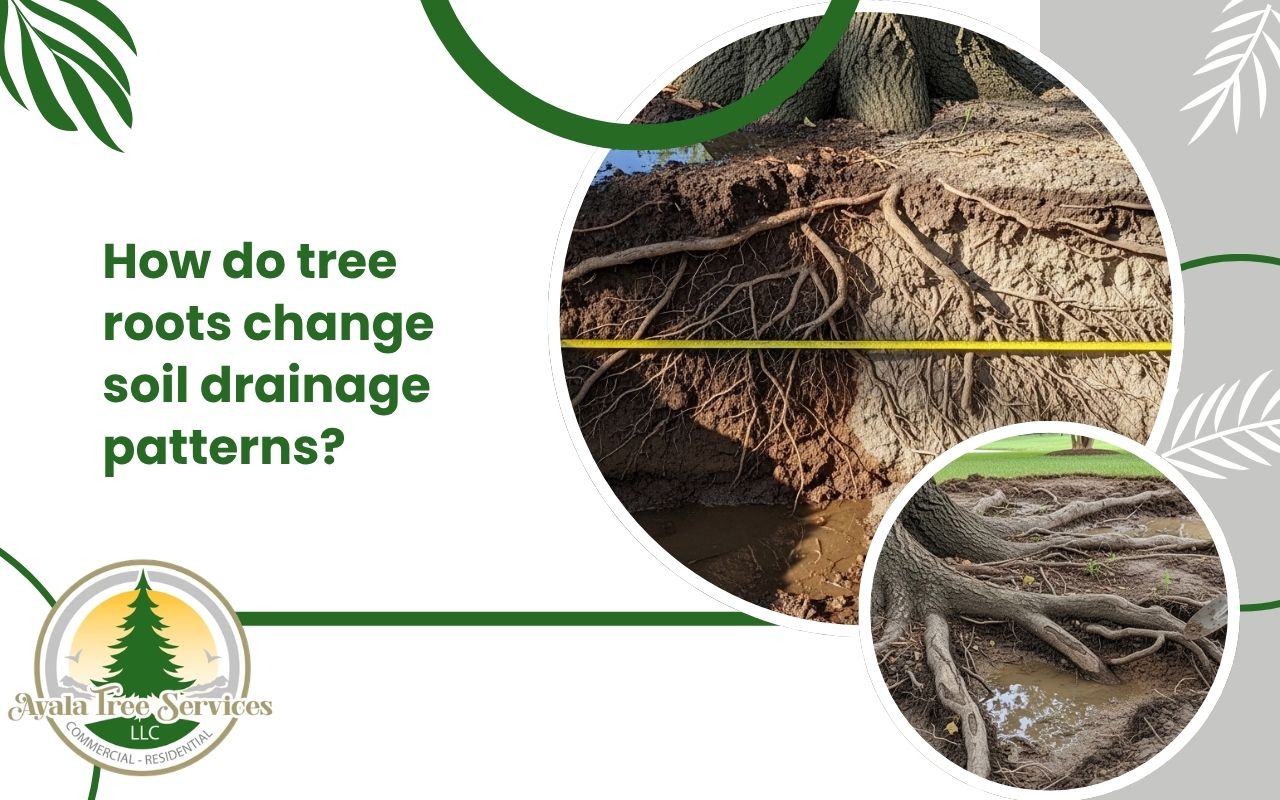
Tree roots can help soil breathe, yet they can also trap water. When you understand how tree roots affect soil drainage, you can reduce wet spots, protect plants, and keep your landscape healthier with simpler choices.
How do tree roots change soil drainage patterns?
Tree roots change drainage by opening channels in some areas and blocking water in others. As a result, how tree roots affect soil drainage depends on root depth, soil type, and tree location. At Ayala Tree Services LLC, we help homeowners spot clogged soil, correct moisture imbalance, and reduce compacting problems before they spread.
Recognize root traits that shape water movement below
Roots do more than hold a tree in place. They also guide water through the ground. Therefore, how tree roots affect soil drainage often starts with the kind of root system in your yard.
Deep roots may create paths that move water downward. However, shallow roots can crowd the top layer and slow infiltration. In clay-heavy ground, that crowding may lead to clogged soil and standing water.
- Taproots often help water move deeper.
- Fibrous roots often spread near the surface.
- Large root mats may worsen moisture imbalance.
- Tight soil around roots may increase compacting problems.
We usually inspect both the tree and the wet area together. That way, we can see whether the root pattern is helping or hurting drainage.
Prevent soggy yard zones with early drainage checks
Small signs often appear before serious damage. For that reason, early checks can save time, money, and plant health. If you notice puddles after light rain, the soil may already be struggling.
Yellow leaves, slow growth, moss, and mushrooms can also point to poor drainage. Moreover, soft ground near patios, walkways, or foundations may show that roots are holding water too close to the surface.
- Puddles that stay for many hours
- Soggy patches near large trees
- Cracks near hardscape or foundation edges
- Uneven growth in nearby grass or plants
If roots are close to structural areas, read Tree Root Removal Near Foundation with Effective Methods. It explains safe next steps when roots move toward sensitive parts of the property.
Improve wet soil using simple landscape fixes today
Good drainage often improves with small changes. Even so, each yard needs a practical plan. When homeowners ask us about how tree roots affect soil drainage, we usually start with the least invasive fix first.
How to improve drainage step by step
- Check where water collects after rain.
- Loosen the topsoil without cutting major roots.
- Mix in compost to reduce clogged soil.
- Add a shallow swale or French drain if needed.
- Recheck the area after the next storm.
These steps can ease moisture imbalance and reduce compacting problems. However, severe cases may need professional root work. If the area stays wet near a driveway, slab, or utility line, Ayala Tree Services LLC can inspect the site and suggest the safest solution.
When you need the right equipment, visit Best Tools for Tree Root Removal That Get the Job Done Right. It helps you understand which tools fit small jobs and which ones should stay in trained hands.
Choose watering methods that support deeper rooting naturally
Watering style changes root behavior. Therefore, it also changes drainage. Deep, slow watering encourages roots to grow lower, while frequent shallow watering keeps roots near the surface.
Surface roots often compete with the soil for space. Then, the top layer stays tighter and wetter. That is one reason how tree roots affect soil drainage becomes more obvious in lawns that receive light daily watering.
- Water deeply instead of lightly every day.
- Use drip irrigation when possible.
- Pause irrigation after steady rainfall.
- Check soil moisture before watering again.
We often recommend this simple change before larger drainage work. In many yards, it improves balance quickly.
Apply mulch carefully to steady ground moisture levels
Mulch can protect soil, yet too much mulch can trap moisture. So, placement matters. A light layer helps the ground stay even, while a thick packed layer may hold water and reduce airflow.
Keep mulch a few inches away from the trunk. Also, choose loose organic material that breaks down naturally. This helps reduce moisture imbalance without smothering the surface.
When mulch is used well, it can soften compacting problems and slow surface crusting. That gives water a better path into the soil instead of across it.
Know when expert help protects soil and trees
Some drainage issues need more than home care. If water keeps pooling, roots may be too dense, too close to a structure, or tied to a declining tree. In those cases, timely service protects both the yard and the home.
Ayala Tree Services LLC can assess root spread, soil condition, and the safest correction. We may suggest pruning, drainage changes, or removal when a tree creates long-term risk. If removal becomes the best option, see How to Handle Safe Tree Removal in Roswell, GA for a clear overview of what careful service should include.
If you want direct guidance for your yard, contact Contact Us for Expert Hardscaping, Sod, and Tree Services. At Ayala Tree Services LLC, we work to solve drainage concerns before they become larger property problems.
Frequently Asked Questions
Can tree roots improve drainage in some areas?
Yes, they can. Deep roots may open channels that move water downward. However, shallow roots may also create clogged soil near the surface. If you want help reading those signs, start with Contact Us for Expert Hardscaping, Sod, and Tree Services.
Why does water pool around large trees after rain?
Pooling often happens when surface roots become dense and the soil gets tight. That pattern can lead to moisture imbalance and compacting problems. If roots are near a slab or home edge, review Tree Root Removal Near Foundation with Effective Methods.
What soil types show drainage problems faster with roots?
Clay soils often show trouble sooner because they hold water longer. As a result, how tree roots affect soil drainage is usually easier to notice in heavy clay than in loose sandy soil. Ayala Tree Services LLC often sees this in yards with repeated wet patches.
Can I fix minor drainage issues without removing roots?
Often, yes. Better watering, light aeration, compost, and mulch can help. Still, tool choice matters if you need to expose or trim small roots. For safe equipment guidance, read Best Tools for Tree Root Removal That Get the Job Done Right.
When should I call a tree professional for wet soil?
Call when puddles stay for days, the ground sinks, roots reach structures, or the tree looks stressed. In those cases, Ayala Tree Services LLC can inspect the yard and recommend the safest path. You can request help through Contact Us for Expert Hardscaping, Sod, and Tree Services.
Understanding how tree roots affect soil drainage helps you make better choices for watering, planting, and yard care. With the right steps, you can limit clogged soil, avoid moisture imbalance, and reduce compacting problems. At Ayala Tree Services LLC, we are ready to help you protect your landscape and keep drainage working the way it should.
References:
10 Drainage Solutions for Your Yard
12 Ways to Fix a Soggy Yard