Storms can drop limbs fast, and confusion follows. However, Georgia rules often surprise homeowners. This guide explains fallen tree liability in Georgia in plain terms. You will learn how negligence works, what insurance may cover, and how to reduce conflict. You will also see practical steps to document damage and move forward safely with neighbors.
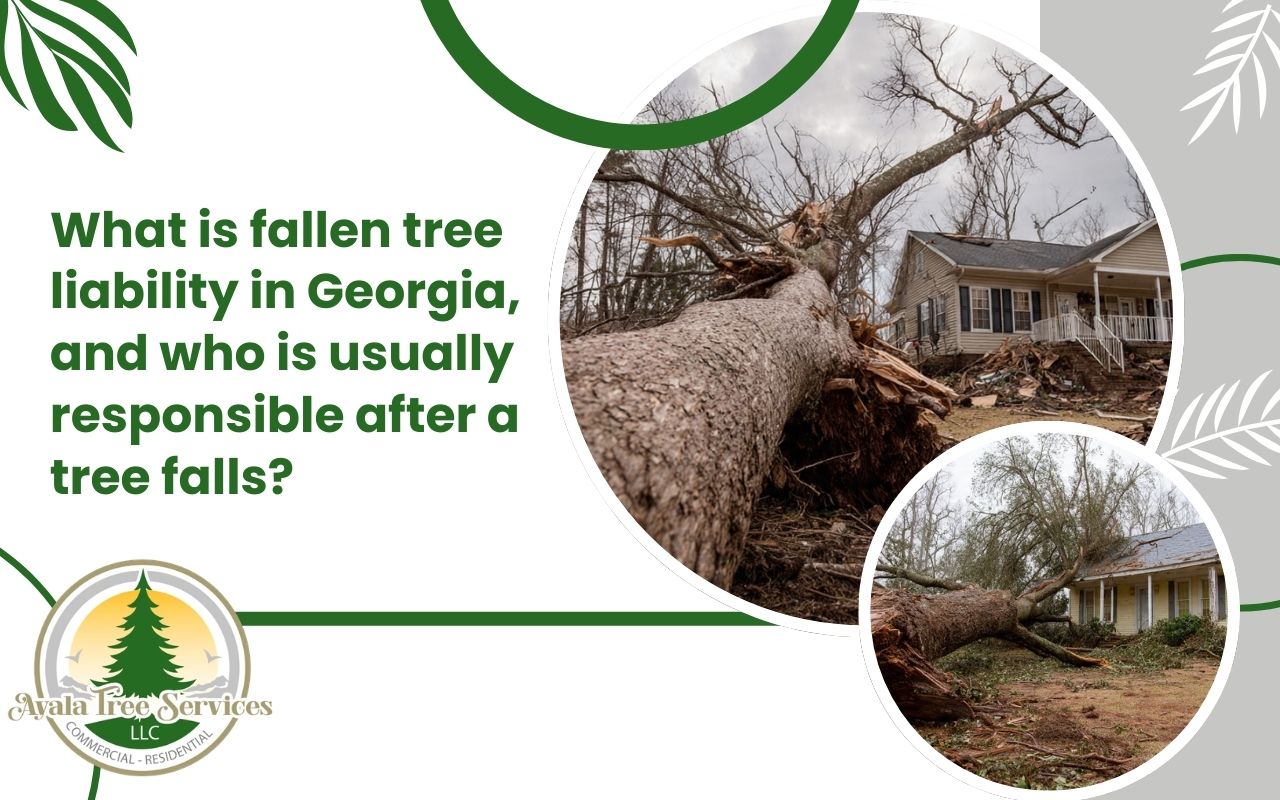
What is fallen tree liability in Georgia, and who is usually responsible after a tree falls?
In most cases, fallen tree liability in Georgia depends on whether the fall was unavoidable or preventable. If a healthy tree falls during an extreme storm, the event is often treated like an “act of God.” Then, the owner of the damaged property often starts with their own claim. However, if a tree showed clear warning signs and the owner ignored them, legal responsibility may shift through negligence.
How Georgia liability is decided after a tree falls
First, fallen tree liability in Georgia usually turns on negligence. Therefore, a key question is whether a reasonable owner would have acted sooner. For example, obvious rot, major leaning, or repeated limb failures can be strong warning signs. Meanwhile, a sudden tornado may leave no time to react.
Ayala Tree Services LLC often sees that documentation changes outcomes. So, take photos early and keep written notes. Also, save any prior messages about risk, because they can matter later.
- Act of nature events can limit fault when there was no warning.
- Visible defects can support claims that a hazard was foreseeable.
- Maintenance records can show care and reduce conflict.
- Local ordinances may require removal of dead or dangerous trees.
As a result, fallen tree liability in Georgia is rarely solved by guesswork. Instead, it is solved by evidence, timing, and clear communication.
Property lines matter for neighbor damage
Next, confirm where the trunk stood before the fall. Typically, the owner of the land under the trunk owns the tree. However, boundary errors are common, so a survey can help. Additionally, some trees straddle lines, which can create shared duties.
When neighbor damage happens, stay calm and share facts. Then, decide whether cleanup must happen immediately for safety. Ayala Tree Services LLC can also help you assess risk before you touch a saw.
- Check county plat maps or a recent survey for the boundary line.
- Photograph the stump location and the direction of the fall.
- Note any shared trunk placement if it crosses the line.
- Keep texts and emails that show prior safety concerns.
Therefore, neighbor damage disputes often improve once both sides agree on the tree’s location. Ayala Tree Services LLC encourages written summaries after every conversation, because clarity prevents escalation.
Home insurance usually responds to fallen trees
Home insurance often covers sudden tree damage to covered structures. However, coverage varies by policy, deductible, and cause of loss. For example, wind damage may be covered, while long-term neglect can complicate a claim. Also, tree removal coverage can be limited when the tree did not hit a structure.
Because fallen tree liability in Georgia can involve two households, insurers may investigate cause. Then, they may seek reimbursement through subrogation when negligence is clear. Still, many situations start with each owner contacting their own carrier.
- Call your insurer quickly and ask what documentation they need.
- Take wide photos and close-ups before debris is moved.
- Request an adjuster visit if structural damage is suspected.
- Save receipts for temporary repairs and safety measures.
Ayala Tree Services LLC often helps homeowners document conditions safely. Consequently, you can support your claim while reducing risk on site.
Handle a fallen tree situation step by step
First, focus on safety. Then, move to documentation and coordination. This approach reduces stress and supports fair outcomes. It also lowers the chance of legal disputes later.
- Stay back and check for downed power lines or gas smells.
- Call emergency services if anyone is at risk.
- Photograph the whole scene, then the trunk, then the damage.
- Notify your neighbor in writing and share key photos.
- Contact your home insurance carrier and follow their instructions.
- Schedule professional removal, especially for hung-up limbs.
If the tree is blocking access or threatening structures, use a qualified crew. For urgent hazards, review Emergency Fallen Tree Removal: When to Call for Help. Also, if a tree hit a roof, follow What to Do if a Tree Falls on Your House for immediate next steps.
Ayala Tree Services LLC can help stabilize hazards fast. Moreover, Ayala Tree Services LLC can assist with photos and cleanup planning that supports insurance workflows.
FAQs about responsibility, disputes, and prevention
When is my neighbor legally responsible if their tree falls on my property?
Your neighbor may be responsible when there were clear warning signs and no reasonable action was taken. For example, visible decay, repeated failures, or a known lean can suggest neglect. However, sudden severe storms can change the analysis. For planning and prevention, consider a routine assessment through Safeguard Your Property with Tree Services in Atlanta, GA.
What should I do if a tree falls on my house during a storm?
First, prioritize safety and leave the home if needed. Then, document damage and contact your insurer. After that, use a professional team for removal, especially near power lines or roofs. For a clear checklist, follow What to Do if a Tree Falls on Your House.
Does home insurance cover removal if the tree only falls in the yard?
Sometimes, coverage is limited when no covered structure is hit. However, policies differ, and storm-related debris may still qualify in certain cases. Therefore, call your insurer and ask about debris removal limits. If the tree is hazardous, use Emergency Fallen Tree Removal: When to Call for Help to understand safe options.
How can I reduce future disputes about trees near the property line?
Start with routine inspections and written records. Then, share concerns early, before storms arrive. Also, keep photos of visible defects over time. If you want general service support, review Safeguard Your Property with Tree Services in Atlanta, GA and create a maintenance plan both sides understand.
When should I contact a professional instead of cutting the tree myself?
Call a pro when the tree is large, tangled, elevated, or near utilities. Also, call when the trunk is under tension or the root plate is lifted. These situations can shift suddenly and cause injury. To request help, use Contact Us for Expert Tree Services, Tree Removal, and Tree Care and share photos for faster guidance.
When to call Ayala Tree Services LLC for help with risk and cleanup
Even with good intentions, fallen trees can be dangerous to handle. Therefore, professional removal is often the safest option. Ayala Tree Services LLC can assess hazards, support documentation, and remove debris efficiently. Additionally, Ayala Tree Services LLC can help you reduce risk before storms. If you want ongoing care, start with Safeguard Your Property with Tree Services in Atlanta, GA. Then, reach out through Contact Us for Expert Tree Services, Tree Removal, and Tree Care to schedule an inspection.
Because fallen tree liability in Georgia often depends on preventable risk, proactive care matters. As a result, Ayala Tree Services LLC recommends routine inspections, timely pruning, and quick action after storms. This reduces neighbor damage and protects home insurance outcomes. Most importantly, it supports safer neighborhoods.
References
- When a Tree Falls, Who Pays for the Damage? (Consumer Reports)
- If Your Neighbor’s Tree Falls on Your Yard, Who Has to Clean It Up? Here’s What to Know (Better Homes & Gardens)