
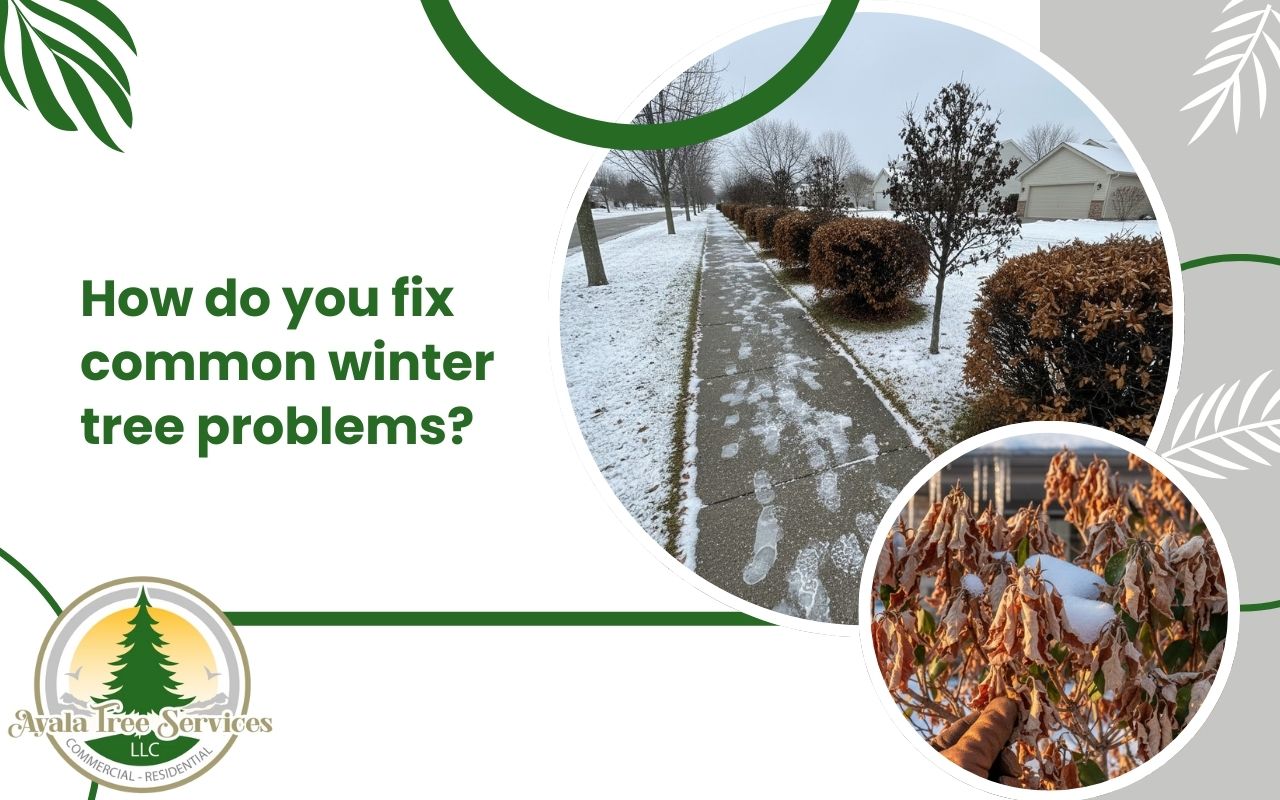
Winter can be tough on your landscape, especially on trees that quietly absorb months of freezing temperatures, wind, ice and snow. Understanding Common Tree Problems in Winter and How to Fix Them helps you prevent cracked bark, broken limbs and hidden root damage. With a few practical habits, you can protect your trees and keep them thriving until spring.
How do you fix common winter tree problems?
You fix them by combining prevention and quick action. Start with mulch to protect roots, smart pruning to limit snow damage, and wraps to reduce bark cracking. Add regular inspections and gentle pest control in winter. Together, these simple steps address Common Tree Problems in Winter and How to Fix Them effectively.
Key winter tree problems to watch for
Cold weather stresses trees in more ways than most homeowners realize. Freeze–thaw cycles, drying winds and heavy snow can weaken branches, injure bark and strain roots just when trees are least able to repair themselves. Spotting trouble early gives you time to step in before minor issues become expensive hazards.
- Frozen roots and frost heaving – shallow-rooted or newly planted trees can lift out of the soil, leaving frozen roots trees exposed and unstable.
- Snow and ice damage – heavy, wet snow and glaze ice cause serious snow damage trees, bending or snapping branches under the extra weight.
- Bark cracking and sunscald – dramatic day–night temperature swings lead to bark cracking that opens the door to decay and insects.
- Hidden insect and disease pressure – many pests overwinter in bark crevices, ready to flare up in spring if pest control in winter is ignored.
- Winter drought stress – frozen or compacted soil limits water uptake, especially for evergreens that keep losing moisture through foliage.
- Structural weakness – pre-existing cracks, poor branch angles or decay become more dangerous when storms and ice add extra load.
Walk your property after cold snaps, storms and thaws. Look for raised soil around trunks, sagging limbs, fresh cracks and discolored bark. Keeping simple notes and photos through the season helps you compare changes and decide when to bring in a professional for a closer look.
Frozen roots and compacted winter soil
When soil repeatedly freezes and thaws, it expands and contracts. This movement can push small trees upward, loosening the root ball and exposing new roots to bitter air. Compacted soil from snow piles or foot traffic makes it even harder for roots to access oxygen and water once temperatures moderate.
Snow and ice loading on branches
Large, horizontal limbs collect the most weight. Evergreen branches bend and may not spring back, while brittle hardwood limbs can split suddenly. Ice is especially damaging because it sticks to every twig and cannot be safely knocked off without risking more breakage.
Why bark cracking matters
Winter bark cracking typically appears on the south or southwest side of trunks, where low sun warms the bark in daytime before temperatures plunge at night. The sudden shift ruptures cells, leaving elongated wounds. Without protection, these wounds become long-term entry points for decay fungi and boring insects.
Simple fixes for winter tree damage
Most winter problems can be reduced with a few simple, consistent habits. Focus on protecting roots, reducing extra weight on branches, shielding bark and supporting overall tree health. These small actions cost far less than repairing storm damage or removing a failing tree later.
- Insulate roots with 3–4 inches of organic mulch spread over the drip line.
- Prune weak, dead or crossing branches before major storms arrive.
- Gently remove heavy snow but allow ice to melt naturally.
- Wrap thin-barked trunks to limit bark cracking and sunscald.
- Use targeted, low-toxicity pest control in winter on problem trees.
- Check soil moisture on mild days and water deeply when needed.
Protecting roots from freezing
Apply a ring of shredded bark, wood chips or pine straw a few inches away from the trunk and out toward the edge of the canopy. This mulch blanket keeps soil temperatures steadier and shields frozen roots trees from exposure. On the coldest nights, burlap or frost blankets around the root flare add an extra layer of protection.
For valuable or mature trees, consider professional help installing protection and assessing root health before hard freezes. For long-term resilience, our dedicated tree health preservation services can keep stressed trees from declining over multiple seasons.
Preventing snow and ice damage
Before winter, remove dead, diseased or rubbing limbs with clean, sharp tools. Focus on branches that hang over driveways, roofs or play areas. During storms, use a soft broom to push snow upward and off branches instead of pulling it down, which can snap them. Never beat or shake ice-covered limbs—this can cause more severe snow damage trees.
If you are unsure where to start, explore our seasonal checklist in winter tree care tips for health and safety and adapt it to the specific species in your yard.
Recognizing and treating common pests
Even in cold weather, scale insects, mites and aphids may hide under loose bark or on twigs. Look for sticky residue, sooty mold and tiny bumps clustered along branches. Dormant-season horticultural oils can smother overwintering eggs when applied under the right conditions, minimizing the need for stronger chemicals later.
Focus first on the most vulnerable trees—young plantings, stressed specimens or high-value ornamentals. A strategic approach to pest control in winter helps you protect both tree health and beneficial insects in your landscape.
Dealing with bark cracking
Inspect trunks after clear, cold nights. When you see fresh splits, avoid picking at the wound. Lightly trim only loose, ragged edges with a clean knife to prevent peeling, then protect the area by shielding it from further sun extremes using breathable tree wrap or pale burlap during the coldest months.
Remove wraps in early spring so moisture does not build up under the material. Combine this with good watering and mulching to help trees compartmentalize damage and reduce repeat bark cracking in future winters.
Importance of adequate hydration
On mild days when soil is not frozen, check moisture a few inches below the surface. If it is dry and crumbly, water slowly at the drip line until the top 8–12 inches of soil are moist. Evergreens benefit most, since they lose water through needles all winter.
Snow can also be an ally. Spread clean, plowed snow evenly under trees so it melts gradually over the root zone instead of piling against trunks or on branches. Combined with mulch, this slow-release moisture keeps roots more stable through late winter.
Monitoring tree health throughout winter
Plan a quick inspection every few weeks. Look for new cracks, leaning trunks, hanging branches and changes in foliage color on evergreens. Simple tools like a moisture meter and a small thermometer help you understand what is happening at root level, not just above ground.
Documenting what you see—especially after storms—builds a history for each tree. If you encounter serious issues such as extensive splitting or multiple large broken limbs, it’s time to bring in a trained crew for a detailed evaluation and safe corrective work.
How-to: prepare your trees for extreme cold
Use this step-by-step checklist each fall and early winter to give your trees the best chance of staying healthy through freezing weather.
- Inspect each tree. Note dead or rubbing branches, cracks, leaning trunks and root exposure, prioritizing trees near structures, driveways and power lines.
- Add mulch around the root zone. Spread 3–4 inches of organic mulch from a few inches away from the trunk outward, keeping it off the bark to prevent rot.
- Water before the ground freezes. On a mild day, water slowly and deeply, especially for young trees and evergreens that are more prone to winter drought.
- Prune safely. Remove small dead or weak branches you can reach from the ground. Save larger cuts for professionals with the right equipment and training.
- Protect trunks and root flares. Wrap thin-barked trunks and use burlap or frost cloth around exposed root flares in windy or sun-exposed locations.
- Plan winter monitoring. Schedule quick check-ins after storms and severe cold snaps so you can respond quickly if new problems appear.
- Call a professional for high-risk trees. If a tree leans, is close to buildings or power lines, or shows significant cracking, contact our team for a safe assessment.
Frequently Asked Questions
Is winter a good time to prune my trees?
For many species, late winter is an ideal time to prune. Trees are dormant, leaves are off, and pruning cuts typically heal more efficiently. Limit yourself to small branches you can safely reach from the ground. For larger limbs or trees near homes and lines, hire a professional crew with proper training.
When should I call a professional about winter tree damage?
Call a professional whenever safety or property is at risk. Signs include large hanging branches, deep trunk splits, leaning trees, roots lifting from the soil or damage close to utilities. In these cases, it is safer and more cost-effective to contact our team for an inspection than to wait for a failure.
Can I remove a damaged tree myself in winter?
DIY removal is rarely safe for larger or compromised trees. The risks of DIY tree removal include unpredictable falls on icy ground, hidden decay inside the trunk and branches under tension that can snap back. Professional crews arrive with the specialized equipment needed, appropriate safety gear and knowledge of local regulations that govern tree removal.
How can I protect young trees from frozen roots?
Young trees need insulation and consistent moisture before hard freezes. Water them deeply in late fall, then apply a generous mulch ring to buffer temperature swings. Consider using tree wraps and simple windbreaks for exposed sites. Regular checks after storms help you catch frost heaving and correct leaning early.
How do I schedule a winter tree inspection?
Scheduling is as simple as sending a quick message with your concerns. Share what you are seeing—cracks, leaning, broken limbs or pest issues—and when the damage started. Use the form on our contact our team page to request a convenient time for a professional evaluation during the winter months.
Local winter tree safety and regulations
Winter tree work connects directly to local safety rules and permitting requirements. Many cities and counties—often including communities like Roswell, GA—have ordinances about removing large trees, especially near streets, streams or property lines. Ignoring these local regulations can result in fines or disputes with neighbors.
Complex removals demand more than a basic chainsaw. The equipment needed often includes rigging gear, ropes, climbing saddles, lowering devices and powerful saws. Matching this with the right safety gear—helmets, eye and ear protection, chainsaw chaps, gloves and, for climbers, certified harness systems—is essential.
Because the risks of DIY tree removal increase on icy, uneven ground, it is usually safer to rely on an insured, well-trained crew. Learn more about safe tree removal in Roswell, GA before deciding how to handle a compromised tree near your home. If you are unsure what your local regulations require, you can always contact our team for guidance.
When you understand Common Tree Problems in Winter and How to Fix Them, you protect your landscape, your family’s safety and your budget throughout the coldest months of the year.
References
- 9 Smart Ways to Winter-Proof Newly Planted Trees and Shrubs
- 8 Ways to Protect Your Lawn and Garden from Salt Damage in Winter