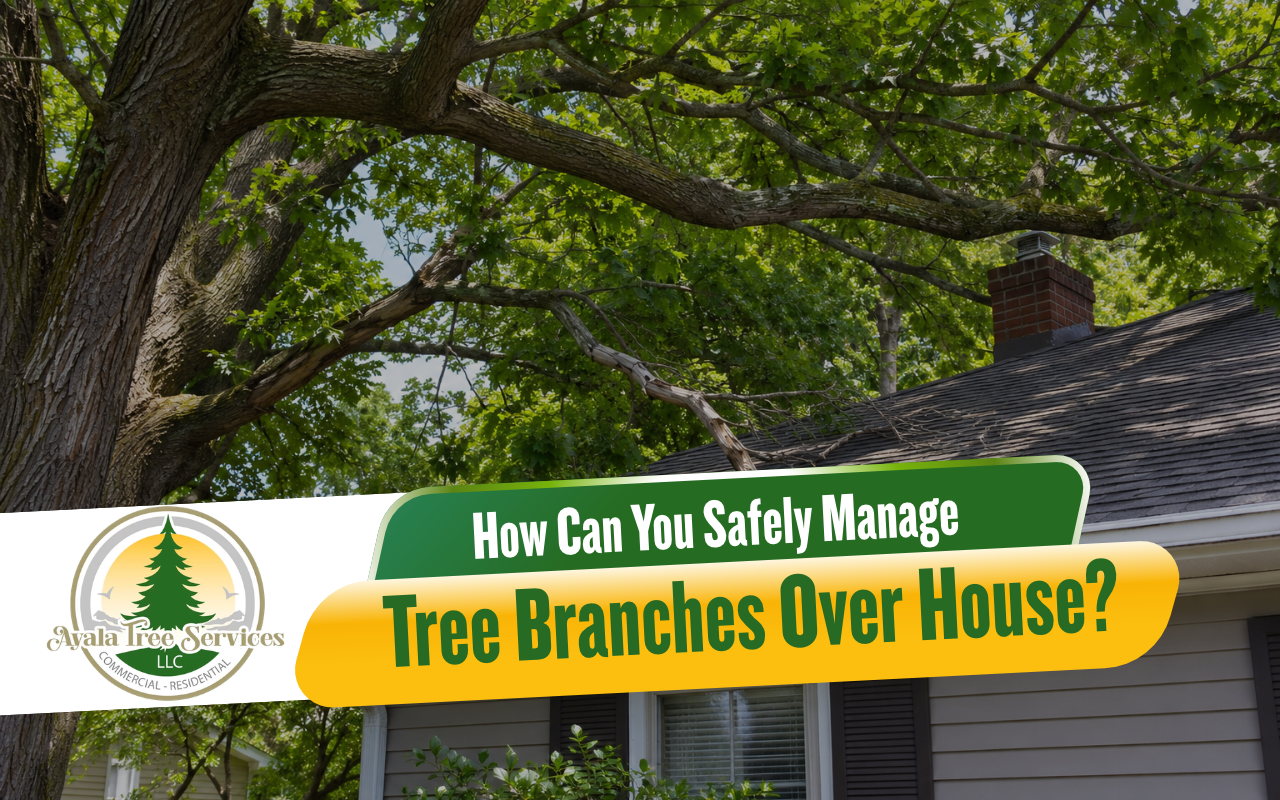
You can manage tree branches over house areas through regular inspections, proper pruning, and professional care for large limbs. First, identify branches touching the roof or showing signs of weakness. Next, keep the area clear and avoid cutting heavy limbs yourself. Finally, schedule professional trimming when branches threaten your home’s safety.
At Ayala Tree Services LLC, we understand that healthy trees add beauty and shade. However, branches growing too close to your home need careful attention. With the right approach, you can protect your property without removing healthy trees unnecessarily.
Identify Overhanging Branch Risks Before They Cause Roof Damage
Overgrown branches can create problems even during calm weather. For example, branches rubbing against shingles may slowly damage their protective surface. Additionally, falling leaves and twigs can block gutters and prevent proper drainage.
When rainwater cannot flow away, moisture may collect near roof edges. As a result, your home could develop leaks, damaged wood, or water stains.
Furthermore, tree limbs over roof areas can become dangerous during strong winds. Heavy branches may break suddenly, especially when decay or existing cracks weaken the wood.
Watch for these common risks:
- Branches scraping shingles or touching gutters.
- Heavy limbs extending directly above living areas.
- Dead branches hanging near windows or entrances.
- Leaves and debris collecting around roof drains.
- Cracked branches moving heavily during strong winds.
For additional prevention advice, explore our roof branch safety guide. It explains how nearby growth can affect your roof.
At Ayala Tree Services LLC, we encourage early action because small warning signs can become serious safety concerns.
Recognize Weak Tree Limbs Through Simple Visual Safety Checks
Tree damage is not always easy to notice. However, several warning signs can help you identify branches needing professional attention.
First, look for dead branches with missing leaves during the growing season. Next, inspect visible areas for cracks, peeling bark, or unusual growth.
Additionally, mushrooms growing near the trunk or major branches may suggest decay. Yet, not every fungus means the tree must be removed.
Look for these warning signs:
- Deep cracks where branches connect to the trunk.
- Broken limbs hanging above the house.
- Dead leaves on otherwise healthy trees.
- Branches leaning heavily toward the roof.
- Visible decay or unusual growth around major limbs.
Moreover, branches hanging over house rooftops deserve attention when they show these problems.
Our team at Ayala Tree Services LLC can help assess whether pruning or another solution makes sense. Therefore, early checks support safer decisions without unnecessary cutting.
Prevent Costly Property Problems With Regular Branch Maintenance
Routine tree care can reduce roof damage while supporting healthy growth. However, maintenance should focus on safety rather than removing every overhanging branch.
For example, selective pruning removes weak growth while preserving the tree’s natural shape. Additionally, better branch spacing can improve airflow and sunlight throughout the canopy.
When dangerous branches over roof areas remain untreated, falling limbs may damage gutters, shingles, or nearby structures.
Therefore, a simple maintenance routine should include:
- Inspect trees during spring and fall.
- Check for damage after strong storms.
- Watch for branches touching roof surfaces.
- Keep gutters clear of leaves and twigs.
- Schedule pruning when branches become unsafe.
At Ayala Tree Services LLC, we encourage homeowners to plan maintenance before severe weather arrives.
Additionally, our professional tree trimming care information explains how careful cutting supports safer yards.
Remember that pruning needs depend on tree health, species, and seasonal conditions. Therefore, a professional assessment can help establish the right schedule.
Follow Safe Pruning Steps Without Putting Yourself At Risk
Small branches may be manageable from the ground with basic hand tools. However, branches near roofs, electrical lines, or unstable trees require professional attention.
Before starting, make sure the working area is clear. Also, never stand beneath a damaged or hanging limb.
How to Handle Small Branches Safely
- First, inspect the branch from a safe position on the ground.
- Next, confirm that no power lines or structures are nearby.
- Then, wear gloves, sturdy footwear, and eye protection.
- Afterward, use clean hand pruners for small, reachable branches.
- Finally, cut just outside the branch collar without damaging the trunk.
Never climb a ladder while operating a chainsaw. Likewise, avoid cutting branches that could fall onto your house.
Large branches need controlled removal because their weight can shift unexpectedly. Furthermore, improper cuts may tear bark and weaken healthy sections.
For this reason, our team at Ayala Tree Services LLC recommends professional assistance whenever cutting involves height or heavy limbs.
If you are unsure about a particular branch, ask us about your tree concerns before attempting removal.
Choose Professional Tree Care For Safer Roof Clearance
Professional trimming becomes important when heavy branches extend above your home. These situations require careful planning, suitable equipment, and knowledge of tree structure.
For instance, cutting a large limb without controlling its movement can damage roofing materials. Additionally, falling sections may threaten fences, vehicles, and people below.
At Ayala Tree Services LLC, we assess branch conditions and surrounding hazards before recommending suitable work.
Our approach considers the tree’s health, roof clearance, and nearby structures. Consequently, the goal is to lower risk while preserving healthy growth whenever possible.
Before hiring a tree service, check its insurance coverage, experience, and safety practices. Also, discuss how workers will protect your property during trimming.
A reliable plan should explain which branches need attention and why. Moreover, homeowners should understand whether pruning can solve the problem or removal requires consideration.
For additional guidance, explore our tree trimming and safety planning information.
Prepare Your Home For Unexpected Storm Branch Emergencies
Storms can weaken trees without immediately causing visible damage. Therefore, preparation helps families respond safely when branches fall unexpectedly.
Before severe weather, inspect nearby trees from the ground. Additionally, keep outdoor areas clear and identify safer places inside your home.
If a large branch falls onto your roof, avoid entering damaged areas. Also, never climb onto the roof or attempt to pull the branch away.
When electrical lines are involved, stay far away and contact the utility company. If there is immediate danger, call emergency services.
After reaching safety, document visible damage from a secure location. Then, contact your insurance provider and arrange professional help.
Our fallen tree emergency response guide explains important steps following serious tree damage.
At Ayala Tree Services LLC, we understand how stressful storm damage can be. Therefore, we encourage homeowners to address hazardous tree conditions safely.
Protect Your Roof Through Consistent Tree Care Decisions
Healthy trees can improve your home’s appearance and provide welcome shade. However, their branches need enough space to grow safely.
Regular inspections, careful pruning, and timely professional care can reduce many common risks. Additionally, keeping branches away from roofing materials helps limit rubbing and debris buildup.
Remember that tree branches over house areas do not always require full tree removal. Instead, a careful assessment may identify safer trimming options.
At Ayala Tree Services LLC, you can discuss practical solutions for branches threatening your property.
If heavy limbs are growing too close to your home, discuss safer roof clearance options with our team. Together, we can consider the next steps for your trees and property.
Frequently Asked Questions
How close can tree branches grow to my roof?
Branches should have enough clearance to avoid touching roofing materials during normal movement. However, the proper distance depends on tree size and growth. Our roof clearance and branch safety tips explain what homeowners should watch for.
Can damaged branches fall even without strong winds?
Yes. Dead or weakened branches may break without severe weather. Therefore, inspect visible cracks, decay, and hanging limbs. If you notice these signs, ask our team about unsafe branches before attempting any cutting.
When should homeowners schedule professional tree trimming?
Schedule trimming when branches touch structures, show damage, or create safety concerns. Additionally, seasonal inspections can identify developing problems. Our seasonal tree trimming and maintenance advice offers further guidance.
What should I do after a branch damages my house?
First, move away from damaged areas and watch for electrical hazards. Next, document damage safely and notify your insurer. Then, review our steps after tree damage to your home for additional guidance.
Can professional pruning help preserve a healthy tree?
Yes. Selective pruning can remove unsafe growth while preserving healthy branches. However, every tree needs an individual assessment. Our tree care and maintenance information can help you explore available services.
References: