
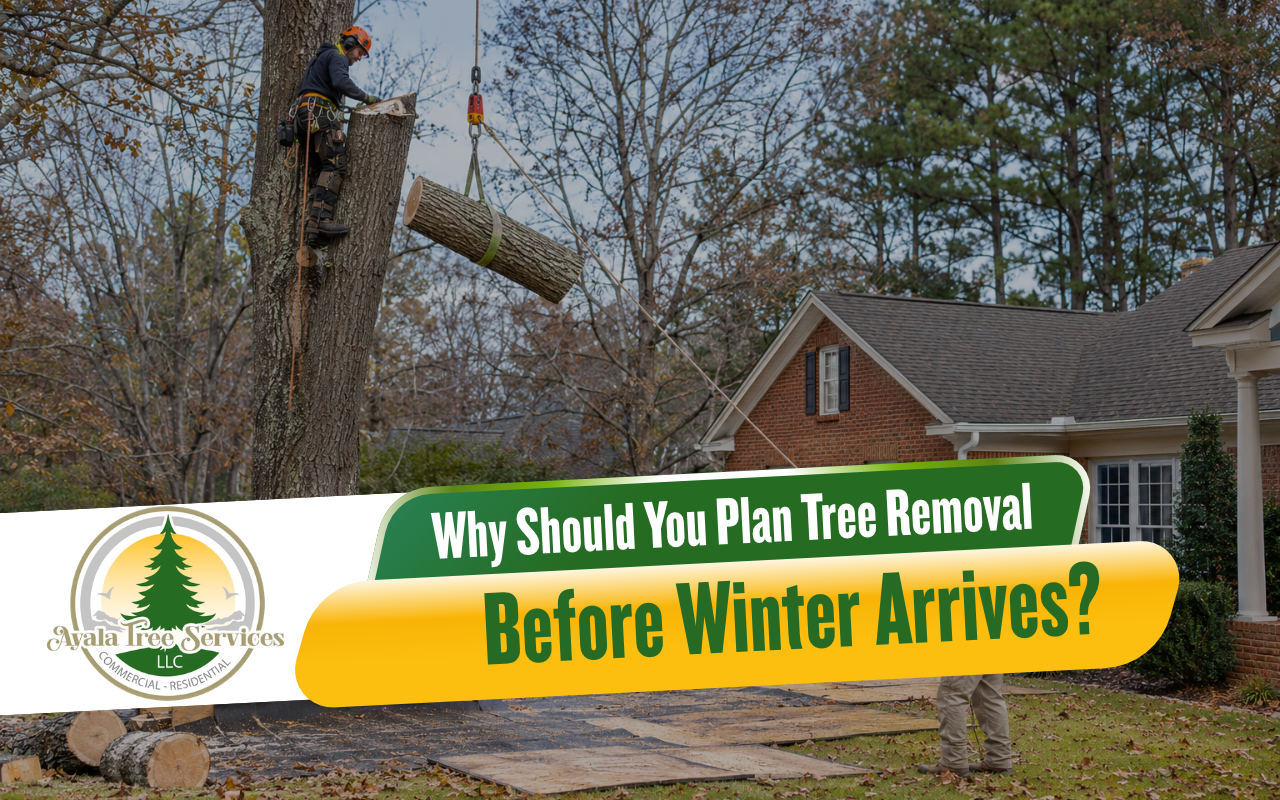
Tree removal before winter is important because damaged trees can fail during strong winds, freezing rain, and ice storms. Removing hazardous trees early reduces the risk of falling branches, blocked driveways, and property damage.
However, not every damaged tree needs removal. Some trees only require careful pruning. Therefore, a professional inspection helps determine the safest option while preserving healthy trees whenever possible.
Identify Dangerous Tree Conditions Before Cold Weather Creates Problems
First, inspect your trees from the ground before winter storms arrive. Look for visible damage, unusual leaning, and weak branches. Additionally, pay attention to trees near your roof, driveway, fences, and outdoor gathering areas.
Common warning signs include:
- Large dead branches hanging above your property.
- Deep cracks or splits along the trunk.
- Mushrooms or visible decay near the tree base.
- Exposed roots or soil lifting around the trunk.
- Sudden leaning or major changes in tree position.
Although these signs deserve attention, they do not always mean removal is necessary. Instead, they suggest that a professional inspection may be needed.
At Ayala Tree Services LLC, we carefully consider tree condition, location, and surrounding risks. For additional guidance, explore our article about signs a tree needs removal in Georgia.
Understand Seasonal Weather Risks and Protect Your Property
Winter conditions can place extra pressure on already weakened trees. For example, ice adds weight to branches, while strong winds increase movement. As a result, damaged limbs may break without warning.
Although Georgia often experiences milder winters than northern states, freezing rain and severe storms remain possible. Therefore, homeowners should not overlook trees simply because heavy snowfall is uncommon.
Furthermore, trees near homes and power lines require special attention. Even a small branch failure may create serious problems when it affects important structures.
At Ayala Tree Services LLC, we encourage early inspections instead of waiting for visible storm damage. Consequently, homeowners can identify possible hazards while conditions remain suitable for planned work.
Choose Professional Removal Services for Safer Winter Preparation
Next, select an experienced tree care team to evaluate your property. Professional removal requires careful planning, suitable equipment, and clear safety procedures.
When comparing tree removal professionals, consider these important factors:
- Verify business credentials and insurance coverage.
- Review experience with large or damaged trees.
- Ask about protective equipment and work areas.
- Confirm which cleanup services are included.
- Request a written description of the planned work.
Additionally, explain any concerns about nearby buildings, underground utilities, or limited access. This information helps the crew choose a safer removal method.
At Ayala Tree Services LLC, we understand the importance of protecting your landscape during tree work. Homeowners can explore our professional tree removal services in Roswell to learn more about available options.
Check Local Tree Removal Rules and Avoid Delays
Before scheduling fall tree removal, review your local tree protection requirements. Some Georgia communities require permits for certain trees, especially when their size or location meets specific rules.
Therefore, contact the appropriate city or county office before approving the work. Rules may also apply to protected trees, shared property boundaries, or neighborhood developments.
Additionally, confirm who will handle any required paperwork. Keep copies of approvals and related documents for your records.
If a tree stands near a neighboring property, discuss access and boundaries before removal begins. Clear communication can prevent misunderstandings during the project.
At Ayala Tree Services LLC, we can help homeowners understand the next steps when local requirements affect their tree removal plans.
Schedule Fall Tree Removal Early for Better Planning
Timing matters when preparing your yard for colder weather. Although hazardous trees need prompt attention, planned removal allows more time to coordinate equipment, access, and cleanup.
For many homeowners, late fall offers improved visibility after deciduous trees lose their leaves. However, the safest schedule depends on tree condition, weather, and site access.
Consider the following planning steps:
- First, arrange a professional tree inspection.
- Next, confirm any required permits or permissions.
- Then, agree on a suitable removal date.
- Afterward, discuss equipment access and property protection.
- Finally, prepare an alternative date for unexpected weather.
Furthermore, avoid delaying work on a tree showing serious instability. Removing trees before winter is especially important when the risk already threatens people or structures.
Prepare Your Yard Carefully for Smooth Tree Removal
Once the removal date is confirmed, prepare the surrounding area. First, move vehicles, outdoor furniture, toys, and portable decorations away from the work zone.
Next, identify sprinkler heads, garden beds, and other features that need protection. Also, arrange for underground utilities to be marked when digging or stump work is planned.
At Ayala Tree Services LLC, we value clear preparation because it supports safer and more organized work. Therefore, homeowners should review our helpful tips for preparing your yard before the scheduled visit.
During removal, keep children and pets away from the work area. Likewise, avoid approaching workers or moving equipment until the crew confirms it is safe.
Manage Stumps and Debris to Restore Your Landscape
After removing a tree, the remaining stump and wood require attention. Therefore, discuss cleanup options before the project begins.
Stump grinding can reduce the visible stump and make future landscaping easier. However, grinding does not automatically remove every underground root.
Additionally, branches and logs may be hauled away or processed into wood chips. The best approach depends on your landscape plans and the agreed service.
If you want to replant, consider available sunlight, nearby roots, and suitable tree species. Our complete tree care and stump grinding options explain additional services available for your property.
Finally, inspect the cleared area before starting major landscaping work. This helps identify exposed soil, remaining debris, or areas needing restoration.
Shield Remaining Plants and Improve Their Winter Protection
After winter tree removal, nearby plants may experience different sunlight and wind conditions. Therefore, check exposed garden beds and remaining shrubs.
Apply suitable mulch around plants to help protect soil moisture and reduce temperature changes. However, keep mulch away from tree trunks to avoid moisture buildup.
Additionally, water plants when needed and when soil conditions allow. Tender shrubs may benefit from breathable protective covers during unusually cold weather.
Furthermore, avoid disturbing healthy roots while restoring the cleared area. If large equipment affected the lawn, inspect the soil before planting new grass.
With thoughtful aftercare, your landscape can recover while remaining plants receive the attention they need.
Maintain Healthy Trees and Reduce Future Storm Hazards
Tree safety should continue after winter ends. Therefore, inspect remaining trees during spring and fall, especially after strong storms.
Look for new cracks, dead branches, damaged bark, and changes around the roots. Additionally, record any concerns so you can discuss them during future inspections.
Proper pruning can help address weak branches before they become larger hazards. However, climbing trees or cutting heavy limbs without training creates unnecessary risks.
At Ayala Tree Services LLC, we support ongoing tree care through our practical tips for healthier and safer trees.
If a tree appears unstable, share your tree safety concerns with our team before the next storm. Together, we can discuss suitable next steps for your property.
Frequently Asked Questions
When is the best time to remove trees before winter?
Fall is often a practical time to plan tree removal because it allows preparation before colder weather. However, dangerous trees should receive prompt attention regardless of the season. For more details, read our guide to choosing the right tree removal time.
How can I tell whether my tree needs removal?
First, look for major cracks, dead branches, root movement, or sudden leaning. However, only a proper inspection can determine whether removal is necessary. Our tree removal services for hazardous trees explain how we approach these concerns.
What should I do before a tree removal appointment?
Move vehicles and personal belongings away from the work area. Additionally, keep pets indoors and point out sprinkler systems or nearby utilities. Our step-by-step tree removal preparation advice covers other useful precautions.
Can I remove a tree during the winter months?
Yes, winter tree removal can be possible when weather, ground conditions, and property access are suitable. However, storms and unsafe conditions may delay work. Our answers about seasonal tree removal services provide further guidance.
What happens to the stump after tree removal?
After removal, the stump may remain unless additional work is arranged. Fortunately, grinding can make the area easier to restore. Explore our information about stump grinding and root regrowth to understand the available approaches.
Build a Safer Landscape With Timely Tree Care
Ultimately, tree removal before winter is about reducing avoidable risks and protecting the people around you. Early inspections, thoughtful scheduling, and professional guidance make the process easier to manage.
At Ayala Tree Services LLC, we want homeowners to feel confident about their tree care decisions. Whether you need removal, pruning, or seasonal maintenance, planning supports a safer landscape.
Therefore, if you are concerned about a damaged tree, discuss your winter tree care needs with our team. Together, we can plan the right next step before colder weather creates additional challenges.
References:
- The Aftermath of the Snow at the Smithsonian — Smithsonian Magazine
- Snow Protects Your Garden Beds. Trees Might Need Some Help — Associated Press