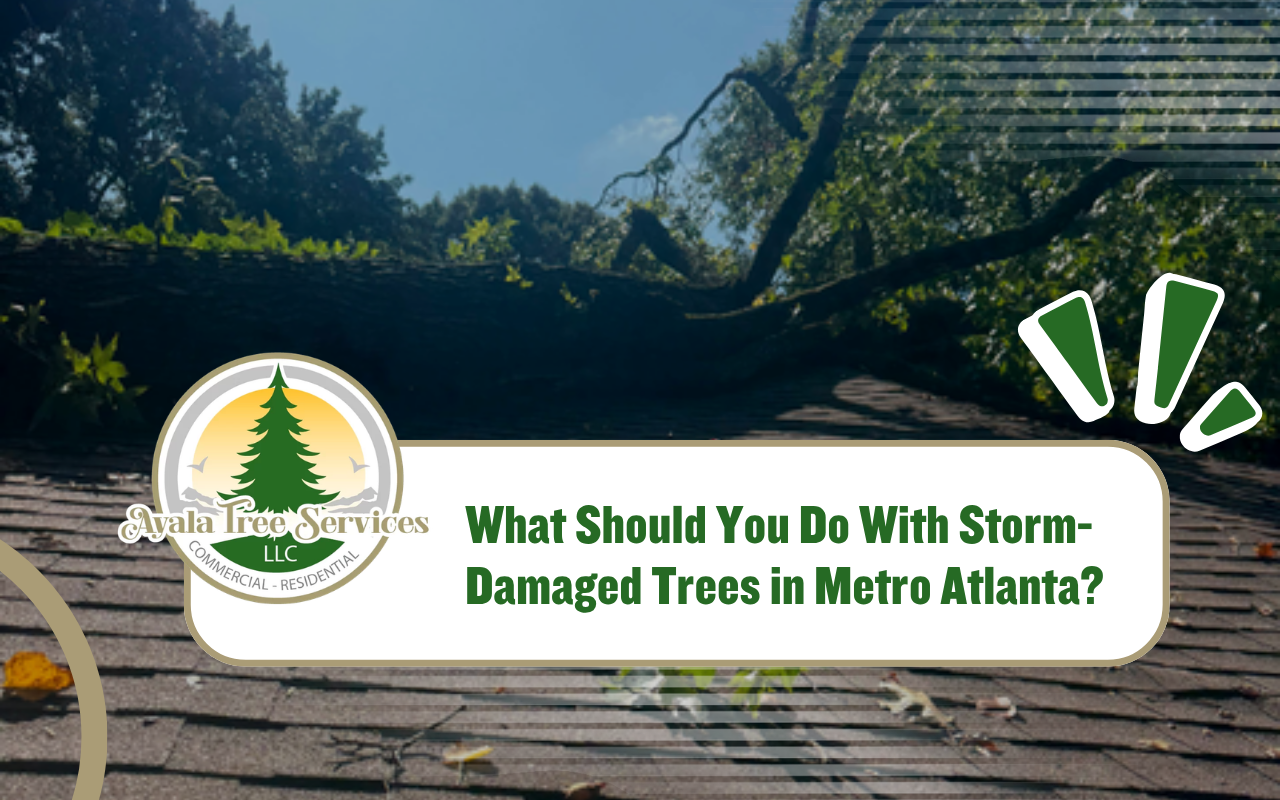
First, stay away from fallen power lines and unstable trees. Next, photograph visible property damage from a safe location and contact your insurance provider when needed. If large branches, exposed roots, or leaning trunks threaten your home, request professional help. Although some storm-damaged trees can recover, others require careful removal to protect people and property.
Why Do Trees Fall After Heavy Rain and Wind?
Heavy rain softens the ground, while strong winds place pressure on branches and trunks. Together, these conditions can uproot even mature trees.
When soil becomes saturated, it may lose some of its ability to hold roots securely. Consequently, powerful wind gusts can push the entire tree over, pulling roots from the ground.
Additionally, existing tree root damage increases the risk of falling. Trees growing in shallow soil or areas with poor drainage may be especially vulnerable.
Several conditions make trees more likely to fall:
- Waterlogged soil that weakens root support.
- Strong wind gusts pushing against large branches.
- Damaged or decaying roots below the ground.
- Soil erosion exposing important supporting roots.
- Heavy branches creating uneven pressure on trunks.
At Ayala Tree Services LLC, we encourage homeowners to check trees after heavy rainfall. Early attention can help prevent dangerous situations.
For additional guidance, explore our professional tree care services to understand available maintenance and removal options.
What Should You Do First If a Tree Falls on Your Property?
First, protect everyone nearby. A fallen tree may contain unstable branches, damaged roots, or hidden electrical hazards.
Therefore, keep family members and pets away until the area is safe. Never walk beneath hanging limbs or attempt to move heavy sections yourself.
Follow these steps after a tree falls:
- Keep everyone away from the fallen tree and damaged structures.
- Check for power lines without approaching the affected area.
- Take clear photographs from a safe location.
- Document damage to roofs, fences, vehicles, and driveways.
- Contact your insurance provider when property damage occurs.
- Request professional removal when large branches or trunks create hazards.
Additionally, save your photographs and relevant communications for insurance purposes. Clear records may help your insurer review the claim.
At Ayala Tree Services LLC, we understand that fallen trees can create stressful situations. Our emergency fallen tree removal guidance explains what happens during professional cleanup.
Most importantly, never use a chainsaw on a large fallen tree without proper training. Branches under pressure can move suddenly.
What Should You Do If a Tree Falls on a Power Line?
Stay away immediately. A fallen power line can remain energized even when it appears inactive.
Likewise, trees and nearby objects touching electrical wires may become dangerous. Never touch the tree, attempt removal, or approach the affected area.
Instead, follow these safety steps:
- Move away from the tree and any fallen electrical wires.
- Keep children, pets, and neighbors away.
- Call Georgia Power at 1-888-891-0938 to report the fallen line.
- Call 911 when emergency assistance is needed.
- Wait for utility workers or emergency responders to address the electrical danger.
- Contact our team only after the electrical hazard has been addressed and the area is cleared for tree work.
Importantly, Georgia Power or 911 must be contacted before our team at Ayala Tree Services LLC when electrical wires are involved.
Furthermore, never assume a line is safe because your electricity is off. Only qualified utility personnel should handle electrical hazards.
What Warning Signs Mean a Tree Could Fall After a Storm?
Storm damage is not always obvious. However, certain warning signs can reveal serious problems with tree stability.
For example, a tree leaning suddenly after strong winds may have damaged supporting roots. Likewise, lifted soil may indicate movement beneath the trunk.
Watch for these warning signs:
- A new or noticeably increased lean.
- Roots lifting from the ground.
- Cracks in the trunk or major branches.
- Large limbs hanging above nearby structures.
- Fresh soil gaps around the tree base.
- Wilting leaves or unexpected branch decline.
Many homeowners ask: Is a leaning tree dangerous after a storm? The answer depends on its stability and overall condition.
Additionally, signs of tree root damage may develop gradually. Changes in leaf growth, exposed roots, and damaged soil deserve attention.
At Ayala Tree Services LLC, we recommend professional assessment when these problems appear. Our article on warning signs requiring emergency tree attention explains additional hazards.
Does homeowners insurance cover a fallen tree in Georgia?
Homeowners insurance may cover certain fallen-tree damage in Georgia. However, coverage depends on your policy, the cause, and what was damaged.
For example, a tree damaging an insured home may qualify for coverage under applicable policy terms. Meanwhile, removing an undamaged fallen tree from an open yard may not be covered.
Therefore, photograph damage before cleanup whenever it is safe. Contact your insurance company promptly and ask about removal coverage.
Keep these details organized:
- Photographs of the fallen tree and property damage.
- The date and approximate time of the storm.
- Relevant insurance policy information.
- Written assessments and removal documentation.
- Records of conversations with your insurer.
Additionally, who is responsible for fallen tree removal depends on property boundaries and the circumstances. Responsibility should not be assumed based only on where the tree originally grew.
At Ayala Tree Services LLC, we can provide tree service information and relevant damage documentation. However, your insurance company determines coverage under your policy.
Who Provides 24/7 Emergency Tree Removal in Roswell, GA?
At Ayala Tree Services LLC, we provide 24/7 emergency tree removal assistance for hazardous storm damage in Roswell and surrounding communities.
Our service area extends approximately 28 miles around Roswell, including Alpharetta, Marietta, Atlanta, Sandy Springs, Brookhaven, Dunwoody, Chamblee, Smyrna, and Norcross.
Whether a fallen tree blocks your driveway or threatens your home, we can discuss the situation and suitable removal steps.
Our emergency services address fallen trees, dangerous branches, and storm-related debris. Furthermore, our crew uses professional equipment for challenging removal work.
For emergency tree assistance, call (770) 875-7909.
Alternatively, you can tell us about your emergency tree situation through our contact page.
However, if electrical lines are involved, contact Georgia Power or 911 first. Emergency response timing also depends on conditions and crew availability.
Support Tree Recovery Through Careful Pruning and Monitoring
Not every damaged tree needs removal. In fact, many trees recover when their trunks and supporting roots remain stable.
First, remove only small broken branches that are safely reachable from the ground. Next, protect the root area with mulch, keeping it away from the trunk.
Additionally, monitor soil moisture and avoid unnecessary watering when the ground remains saturated. Excess moisture can place more stress on weakened roots.
For larger damaged branches, professional pruning is safer. Finally, check tree growth over the following months and watch for new warning signs.
Our team at Ayala Tree Services LLC can help you understand whether continued care or removal is more suitable.
Frequently Asked Questions
Do tree services handle emergency storm damage in Atlanta?
Yes. We handle urgent tree concerns throughout Atlanta and nearby communities. For local assistance, explore our tree services available in Atlanta.
Who is responsible for fallen tree removal?
Responsibility varies according to property ownership, local rules, and damage circumstances. Therefore, confirm your obligations before arranging major work. Our professional tree removal process explains available removal services.
What are the signs of tree root damage?
Common signs include exposed roots, raised soil, wilting leaves, and unexpected leaning. Additionally, root damage may affect tree growth slowly. Learn more about tree roots and healthy soil conditions.
Can storm-damaged trees recover naturally?
Some trees recover when their roots and trunks remain healthy. However, severe structural damage may require removal. Our tree maintenance and pruning options outline available professional care.
How quickly should a dangerous tree be inspected?
Dangerous trees should receive attention as soon as safely possible. If a tree threatens a home or access route, seek urgent assessment. You can describe your tree safety concerns to our team.
References:
- Should You Save Trees Damaged by Storms? — Kansas State University News
- Care for Storm-Damaged Trees — University of Georgia Extension