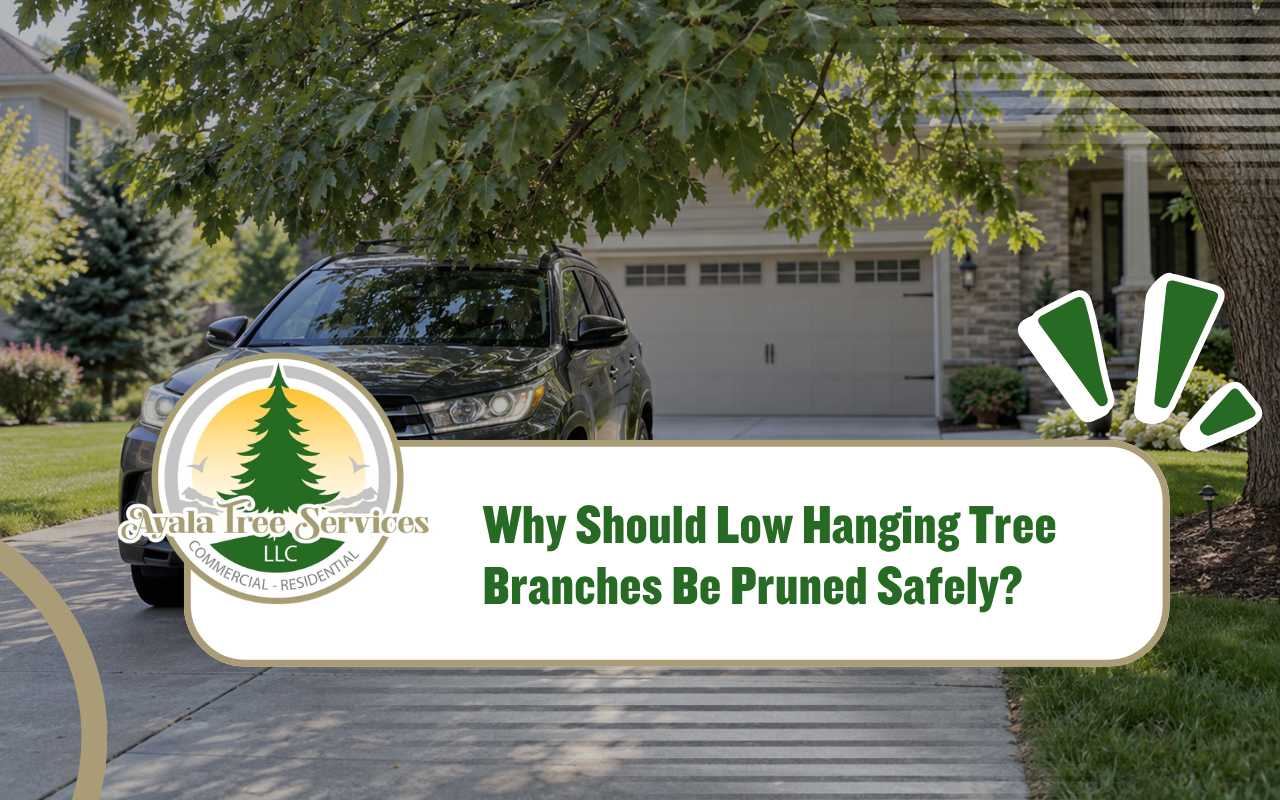
Low-hanging tree branches should be pruned when they block movement, rub vehicles, crowd walkways, or show damage. However, each cut should protect the tree’s natural shape. Proper trimming also removes weak growth before wind or rain makes it more dangerous. Therefore, a careful plan improves safety without removing more growth than necessary.
Identify Warning Signs Before Weak Branches Cause Damage
First, inspect the tree from several angles before touching any branch. Low tree branches may look harmless while still blocking paths or hiding damage. Also, hanging tree limbs can become heavier after rain. Therefore, look for changes after storms or strong winds.
- Check for cracks, splits, or peeling bark.
- Notice branches rubbing against another limb.
- Look for dead twigs or missing leaves.
- Watch for limbs sagging over busy areas.
- Mark branches that touch roofs, fences, or vehicles.
Dangerous tree branches often show clear warning signs before failure. However, decay can also be hidden inside larger limbs. At Ayala Tree Services LLC, we recommend professional review when a branch is large, high, damaged, or difficult to reach.
Protect Driveway Access While Keeping Trees Naturally Balanced
Branches over driveway areas deserve special attention because vehicles pass under them every day. Even small twigs can repeatedly brush paint, mirrors, racks, or glass. Therefore, the goal is useful clearance without leaving the tree uneven.
Our guide to vehicle clearance tree trimming explains how branch height, vehicle size, and turning space affect trimming choices. Also, it explains why selective cuts usually work better than removing every lower limb.
- Check clearance above car roofs and mirrors.
- Watch branches near parking and turning areas.
- Inspect sagging limbs after heavy rain.
- Plan for taller delivery or service vehicles.
At Ayala Tree Services LLC, we look at both movement and tree shape before recommending cuts. Therefore, homeowners can improve access while keeping healthy branches that support balance.
Choose Proper Tools And Safer Limits For Pruning
Small, reachable branches need clean and sharp tools. For example, hand pruners suit thin twigs, while loppers handle thicker growth. A pruning saw can manage larger reachable limbs. However, size is not the only safety concern.
Wear gloves and eye protection before starting. Also, keep both feet stable and keep people away from the work area. Never cut near power lines. In addition, avoid standing directly below a branch while cutting it.
Large or high-hanging tree limbs can move unexpectedly after a cut. Therefore, professional help is safer when ladders, heavy limbs, roofs, roads, or wires are involved. At Ayala Tree Services LLC, we use planned methods for tree trimming around homes, driveways, and active yard areas.
Follow Simple Steps To Prune Reachable Branches Safely
A safe approach starts with small, obvious problems. Therefore, begin with dead, broken, or rubbing growth within easy reach. Avoid rushing because one wrong cut can remove healthy structure that takes years to replace.
How to prune a reachable low branch
- Inspect the branch and the area below it.
- Remove small dead twigs before larger cuts.
- Keep the final cut just outside the branch collar.
- Use a three-cut method for a heavier limb.
- Stop if the branch feels unstable or difficult.
The three-cut method helps prevent bark from tearing on heavier branches. First, make a small cut under the limb. Next, make a second cut farther outward from above. Finally, remove the remaining stub near the branch collar.
For a broader overview, our professional tree trimming service page explains how planned trimming supports safer yards. Therefore, you can compare a simple DIY task with work that needs trained support.
Avoid Common Cutting Errors That Weaken Healthy Trees
Improper pruning can create new problems instead of solving old ones. For instance, topping removes major upper growth and often leaves poor structure. Also, flush cuts can damage the area where a branch meets the trunk.
- Do not remove large amounts of live growth at once.
- Do not leave long broken stubs.
- Do not tear bark with dull tools.
- Do not cut large limbs without a safe plan.
- Do not prune near electrical lines.
Our article about common tree trimming mistakes explains several problems homeowners should avoid. At Ayala Tree Services LLC, we prefer measured cuts that solve the concern while keeping the tree’s form.
Improve Tree Health Through Timely And Careful Trimming
Timing matters because trees respond differently during each season. In many cases, late winter is useful because branch structure is easier to see. However, tree type, condition, and local weather can change the best timing.
Dead, broken, or dangerous tree branches may need attention sooner. Therefore, safety concerns should not wait for a perfect season. Meanwhile, healthy low tree branches can often be planned as part of regular care.
Clean pruning can also open crowded areas and improve light movement through the canopy. However, more cutting is not always better. Removing only what is needed protects shade, balance, and the tree’s natural appearance.
Maintain Safer Gardens With Regular Branch Inspections Yearly
Regular checks make pruning easier because small issues are noticed earlier. Therefore, walk around your trees after major storms and during seasonal yard care. Look upward, but also check where branches affect daily movement below.
Pay close attention to walkways, play areas, roofs, and branches over driveway spaces. Also, take photos when a limb seems to sag or change. This simple record can help you notice movement over time.
At Ayala Tree Services LLC, we help homeowners decide which concerns need trimming now and which can be monitored. When low-hanging tree branches become difficult to manage safely, contact our tree care team for guidance.
Frequently Asked Questions
When should low branches around a driveway be trimmed?
Trim them when they reduce safe clearance, touch vehicles, or block normal movement. However, branch size and tree condition also matter. Review our driveway clearance trimming guide for practical signs to watch.
Can hanging branches damage vehicles during normal use?
Yes. Repeated contact can scratch paint or strike mirrors and roof areas. Therefore, early clearance work can prevent ongoing contact. See our vehicle access trimming advice for more details.
What pruning mistakes should homeowners avoid most?
Avoid topping, rough cuts, large DIY cuts, and removing too much healthy growth. Also, never work near electrical lines. Our tree trimming mistake guide explains these risks in simple terms.
When is professional tree trimming the safer choice?
Professional help is safer for large, high, damaged, or hard-to-reach limbs. It is also wise near homes, roads, or wires. Learn about our tree trimming service options before planning difficult cuts.
How can I request help with risky branches?
Start by describing the branch location, height, damage, and nearby structures. Photos can also help explain the concern. Then, request tree service guidance from our team at Ayala Tree Services LLC.
Low-hanging tree branches are easier to manage when homeowners inspect them early and prune with care. Therefore, regular checks can protect access, appearance, and tree structure. With Ayala Tree Services LLC, you can get clear guidance when a branch is too large, too high, or too risky for safe DIY work.
References:
- Here’s When Pruning Trees in Summer Is OK—and When It’s Not, According to an Arborist — Better Homes & Gardens
- How To Hand-Prune Trees — This Old House