Homeowners can prevent tree roots under concrete by watching for early damage and controlling root growth safely. Also, proper watering, smart planting, root barriers, and careful pruning can reduce future pressure. At Ayala Tree Services LLC, we recommend addressing the cause before repairing damaged concrete. Therefore, you can reduce the chance of the same problem returning.
Recognize Early Signs Before Roots Lift Concrete Surfaces
Root damage usually develops slowly. However, the first signs can be easy to miss. Small cracks may appear near trees. Then, one concrete edge may begin rising above another.
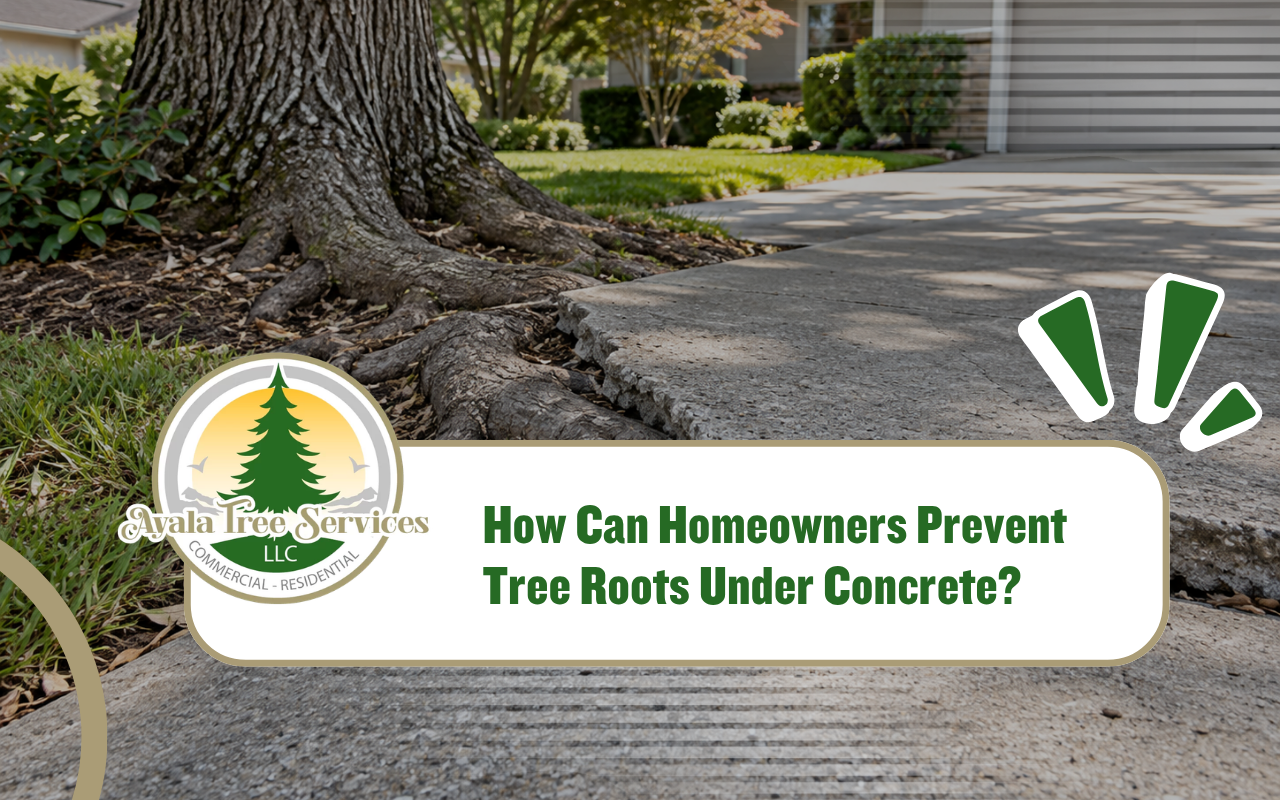
Tree roots lifting concrete can also create noticeable bumps across sidewalks or driveways. Meanwhile, nearby soil may become raised or uneven. These changes can indicate growing pressure below the slab.
Therefore, inspect areas near mature trees regularly. Common warning signs include:
- New cracks forming near a tree or planting area.
- Concrete sections that no longer sit at the same height.
- Small ridges forming across sidewalks or driveways.
- Visible surface tree roots moving toward paved areas.
- Repeated damage after earlier concrete repairs.
However, roots are not the only possible cause of concrete movement. Soil settlement and drainage can create similar signs. Therefore, confirming the cause before cutting roots is important.
For more detail, read our why roots damage driveways guide.
Reduce Root Pressure With Better Yard Care Habits
Healthy yard conditions can reduce unnecessary surface growth. Therefore, start by checking how water moves around the tree. Roots often grow where soil conditions support their needs.
At Ayala Tree Services LLC, we encourage homeowners to protect both the tree and nearby hard surfaces. Also, avoid making major changes around mature roots without understanding the possible effects.
Several simple habits can lower future risks:
- Water trees deeply and consistently during dry conditions.
- Keep mulch around suitable root zones without piling it against trunks.
- Avoid cutting visible roots simply to improve the lawn’s appearance.
- Keep heavy equipment away from important root areas.
- Plan new trees with enough space from concrete surfaces.
Additionally, avoid repeatedly adding thick soil over exposed roots. Surface tree roots need oxygen, and deep covering can stress some trees. Instead, choose a solution based on the tree, location, and nearby structures.
When roots approach a home, review our tree root removal near foundation safe methods before making major cuts.
Install Root Barriers To Redirect Future Growth Safely
Root barriers can help guide new growth away from sidewalks, patios, and driveways. Therefore, they may be useful when roots have a clear path toward concrete.
A barrier sits vertically in the soil between the tree and the protected surface. Consequently, new roots meet the barrier and grow in another direction. However, placement matters because existing structural roots may already occupy that area.
Also, digging too close to a mature tree can damage important roots. Therefore, barrier installation should begin with an assessment of the tree and site.
Roots under concrete can also extend farther than homeowners expect. For that reason, removing one visible root may not solve the entire problem.
At Ayala Tree Services LLC, we look at the surrounding conditions before suggesting root control. Therefore, the solution can address the source instead of only the visible concrete damage.
Follow Safe Steps When Concrete Damage Already Appears
Once lifting has started, identify the cause before repairing the slab. Otherwise, new concrete may move again as roots continue growing.
For a safer how-to approach, use these steps:
- First, inspect the full damaged area and nearby trees.
- Next, note raised edges, cracks, visible roots, and drainage patterns.
- Then, avoid digging until underground utility locations are understood.
- Afterward, determine whether root cutting could affect tree stability.
- Finally, address the root problem before completing concrete repairs.
Removing roots under concrete can become difficult when large roots support a mature tree. Therefore, avoid cutting a major root only because it is visible.
Instead, consider the root’s size, distance from the trunk, and role in tree stability. For additional guidance, see how to remove large tree roots safely.
Choose Professional Help When Root Cutting Raises Risks
Some root problems are suitable for simple monitoring. However, others involve large trees, heavy concrete, utilities, foundations, or major structural roots.
Professional guidance becomes especially useful when the tree’s stability may change after cutting. Also, large roots may affect more than one nearby surface.
At Ayala Tree Services LLC, we can evaluate the tree, visible damage, and surrounding property conditions. Therefore, homeowners can understand their options before major root work begins.
A professional assessment may also help determine whether selective pruning is practical. In other situations, another root-management approach may be safer.
Additionally, concrete repair and tree care should work together. Fixing only the slab can leave the original root pressure unchanged.
If your driveway, patio, or walkway is already moving, contact us for guidance based on your property.
Maintain Healthy Trees While Protecting Nearby Hard Surfaces
Prevention does not end after one repair. Instead, regular inspections can reveal new growth before serious lifting develops.
Check sidewalks, patios, and driveways several times each year. Also, pay attention after strong storms or noticeable soil changes.
Meanwhile, watch for new surface roots approaching the same area. Early changes are generally easier to manage than advanced damage.
At Ayala Tree Services LLC, we focus on protecting the property while considering tree health. Therefore, we avoid treating every visible root as something that must be removed.
Proper tree placement also makes a major difference. When planting new trees, consider their mature size instead of their current size. Also, leave suitable room around driveways, patios, foundations, and walkways.
Finally, keep drainage problems under control. Repeated wet or dry areas can influence soil conditions around roots and concrete.
Frequently Asked Questions
Frequently Asked Questions
Can tree roots really lift a concrete driveway?
Yes. As roots expand beneath a slab, they can contribute to uneven or lifted concrete. However, soil movement can cause similar damage. Therefore, identifying the cause first is important. Our why roots damage driveways guide explains the warning signs.
Should I cut roots growing beneath my concrete?
Not automatically. Cutting large roots can affect tree health or stability. Therefore, the safest choice depends on root size and location. Review how to remove large tree roots safely before taking action.
Can roots near concrete also threaten my foundation?
Root and soil conditions near a foundation deserve careful inspection. However, cracks can have several causes. Therefore, avoid assuming roots are responsible without an assessment. Start with tree root removal near foundation.
Do root barriers stop future concrete damage?
Root barriers can redirect some future growth when they are correctly placed. However, they do not repair existing damage. They also require careful installation near mature trees. For site-specific assistance, get in touch with us.
When should I request professional root removal help?
Professional help is sensible when large roots, structures, utilities, or tree stability are involved. Therefore, an assessment can reduce unnecessary cutting. At Ayala Tree Services LLC, we review tree condition and property risks before major work begins. Learn more about our professional tree care services and available options.
References:
How to Repair a Concrete Sidewalk in 5 Simple to Follow Steps — This Old House
How to Fix Cracks in Concrete Driveways, Patios, and Sidewalks — Bob Vila