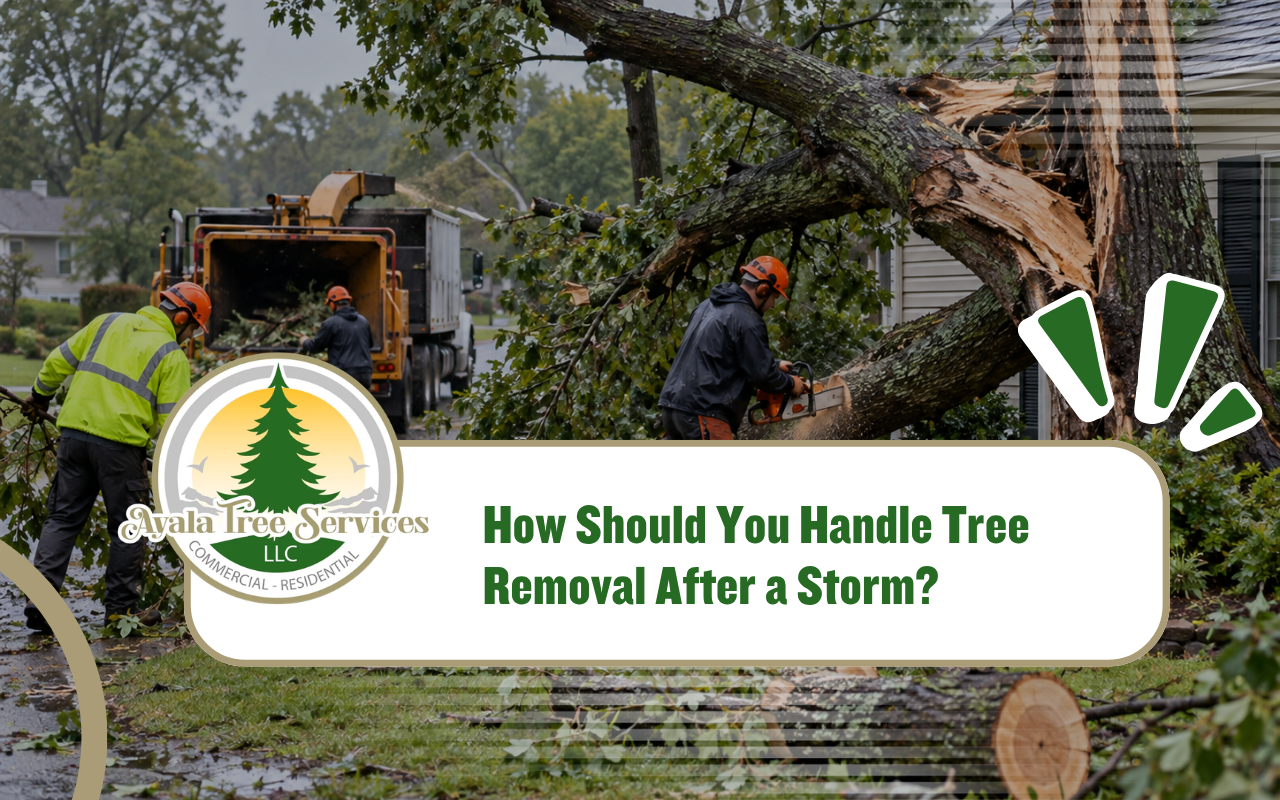
Damage from storms like Isaias can turn a normal yard into a dangerous area within minutes. Therefore, careful decisions matter before cleanup begins. Fallen trunks, hanging limbs, and exposed roots can threaten people and property. At Ayala Tree Services LLC, we focus on safe steps that help homeowners understand hazards, protect their property, and plan the right response.
Tree removal after a storm should begin with a safe inspection from a distance. First, look for fallen trees, broken limbs, leaning trunks, and damaged roots. Then, keep people away from unstable areas. Professional support is important when trees touch structures, block access, or stand near power lines.
Assess Storm Damage Early to Reduce Immediate Safety Risks
After severe weather passes, first inspect the property without entering dangerous areas. Storm-damaged tree removal should never begin with rushed cutting. Instead, identify what could move, fall, or cause more damage.
At Ayala Tree Services LLC, we recommend checking the entire area before cleanup starts. Therefore, look beyond the most obvious fallen tree. Nearby trees may also have loose branches or weakened roots.
- Look for trees leaning more than they did before.
- Check for large branches hanging above walkways or buildings.
- Notice exposed roots, lifted soil, or cracks near trunks.
- Keep away from trees touching utility lines.
- Photograph visible damage before moving debris.
Also, examine the direction of every damaged trunk or limb. A tree leaning toward a house can create an urgent risk. Likewise, a hanging branch may fall without warning.
Minor branch damage does not always require complete removal. However, severe trunk splits or major root movement need closer attention. When the situation is unclear, professional assessment can help determine the safest next step.
Prioritize Safe Boundaries Before Any Tree Cleanup Begins
Safety should come before fallen tree removal. Therefore, keep children, pets, neighbors, and visitors away from the affected area. Wet soil and scattered branches can also create slipping and tripping hazards.
Never approach a fallen tree that touches a power line. Instead, remain at a safe distance and contact the appropriate utility provider. Additionally, avoid standing below cracked or hanging limbs.
- Wear sturdy footwear around storm debris.
- Use gloves when handling small branches.
- Keep a wide space around unstable trees.
- Avoid climbing damaged trees or unstable ladders.
- Do not cut trunks that appear twisted or under pressure.
Damaged wood can shift suddenly when cut. Consequently, a branch that appears stable may release stored pressure without warning. Large trunks can also roll once their weight changes.
For this reason, our team at Ayala Tree Services LLC encourages homeowners to avoid risky cutting. You can review our emergency fallen tree removal guide when urgent hazards appear.
Choose Professional Support When Hazards After Storms Like Isaias Become Complex
Some cleanup tasks are simple, while others require trained crews and proper equipment. Therefore, the size and position of the tree should guide your decision.
Small loose branches on open ground may be manageable. However, damaged tree removal becomes more dangerous around roofs, vehicles, fences, or utility lines. Large trees can also contain hidden pressure that changes during cutting.
Storm tree hazards become more serious when a trunk leans over a structure. Similarly, uprooted trees may shift because the root system remains partly connected.
At Ayala Tree Services LLC, we understand that homeowners may want to restore access quickly. However, speed should never replace safety. Professional crews can evaluate the tree’s position before making controlled cuts.
If a tree has already struck your home, first move everyone away from damaged areas. Then, follow the steps in tree falls on house: emergency guide before cleanup begins.
Follow These Steps to Remove Storm Damage Safely
A clear sequence makes tree removal after a storm easier to manage. Therefore, work from immediate safety concerns toward final cleanup. Avoid beginning with the largest piece simply because it looks most urgent.
- First, inspect the area from a safe distance.
- Next, identify hanging limbs and damaged power connections.
- Then, photograph trees, structures, and visible property damage.
- Afterward, keep everyone outside the possible fall zone.
- Next, remove only small debris that is clearly safe.
- Then, arrange professional help for large or unstable trees.
- Finally, inspect nearby trees for hidden storm damage.
When professionals arrive, explain what changed during the storm. For example, mention new leaning, visible cracks, or exposed roots. Photos taken before cleanup can also provide useful context.
At Ayala Tree Services LLC, you can also review 24hr emergency tree services when the situation needs prompt attention.
Manage Fallen Debris Carefully to Restore Clear Outdoor Areas
After major hazards are removed, debris management becomes the next priority. Therefore, separate small branches from larger logs when conditions allow. Organized piles can make later cleanup easier.
Branches may sometimes be chipped for landscape use. Meanwhile, larger pieces may require hauling or specialized equipment. Root balls and heavy trunk sections can be especially difficult to move safely.
Do not place storm debris where it blocks streets, sidewalks, or driveways. Instead, follow local collection rules when municipal pickup is available. Also, avoid stacking material near fire hydrants or utility equipment.
At Ayala Tree Services LLC, we view cleanup as part of restoring a usable property. Therefore, removing loose material carefully can help homeowners see remaining damage more clearly.
After debris is cleared, inspect fences, gardens, walkways, and nearby trees again. Sometimes, damage becomes easier to notice once the main fallen tree is gone.
Document Property Damage Clearly Before Insurance Cleanup Starts
Before moving major debris, take clear photos of the affected area. Therefore, photograph the entire scene first. Then, take closer images of damaged roofs, fences, vehicles, and tree sections.
Keep records of emergency services, inspections, and cleanup work. Additionally, save written estimates and related documents. These records may help when discussing the event with your insurance provider.
Insurance coverage can vary by policy and situation. Therefore, contact your insurer directly for details about your coverage. Avoid assuming that every type of tree damage receives the same treatment.
If a tree has damaged a building, explain that situation clearly when reporting the claim. Likewise, mention whether the tree blocks access or creates another immediate hazard.
Most importantly, do not enter an unsafe area only to take photographs. Safety comes first, while documentation comes second.
Restore Your Landscape Thoughtfully After Hazardous Trees Leave
Once damaged tree removal is complete, inspect the remaining landscape before replanting. Storms like Isaias can affect soil, drainage, nearby roots, and smaller trees. Therefore, recovery should include more than filling a space.
Choose replacement trees that suit the available space and local growing conditions. Also, consider how large each tree may become. Proper spacing can reduce future conflicts with structures and utility areas.
New trees need steady care while roots become established. Therefore, use suitable watering and mulching practices for the selected species. Avoid piling mulch directly against the trunk.
Our team at Ayala Tree Services LLC believes prevention should continue after cleanup. Regular checks can reveal weak branches, unusual leaning, or visible decay before another storm arrives.
Ultimately, tree removal after a storm is only one part of recovery. Careful inspection, safe cleanup, and future maintenance can help create a more stable outdoor area.
Frequently Asked Questions
When should a storm-damaged tree be removed immediately?
A tree may need quick attention when it threatens people, structures, vehicles, or access. Likewise, hanging limbs and severe root movement increase risk. For more guidance, read emergency fallen tree removal.
What should I do when a tree hits my house?
First, move away from damaged areas and check for immediate dangers. Then, contact emergency services when necessary and document damage safely. Our emergency guide explains the next steps.
Can I remove a fallen tree by myself?
Small loose debris may sometimes be manageable. However, large trunks, unstable limbs, and trees near structures require greater care. Review 24hr emergency tree services when hazards exceed safe homeowner cleanup.
What are the most common storm tree hazards?
Common storm tree hazards include hanging branches, split trunks, exposed roots, fallen trees, and sudden leaning. Additionally, contact with utility lines creates danger. For urgent situations, see our emergency storm tree removal services.
How can I request help after storm damage?
First, keep everyone away from dangerous trees and document visible damage safely. Then, reach our team at Ayala Tree Services LLC through the consultation page to discuss your situation.
References:
- Henrico Crews Work to Clear Storm Debris Days After Storm — CBS 6 / WTVR
- Tropical Storm Lala Uproots Trees and Causes Widespread Storm Damage — Associated Press