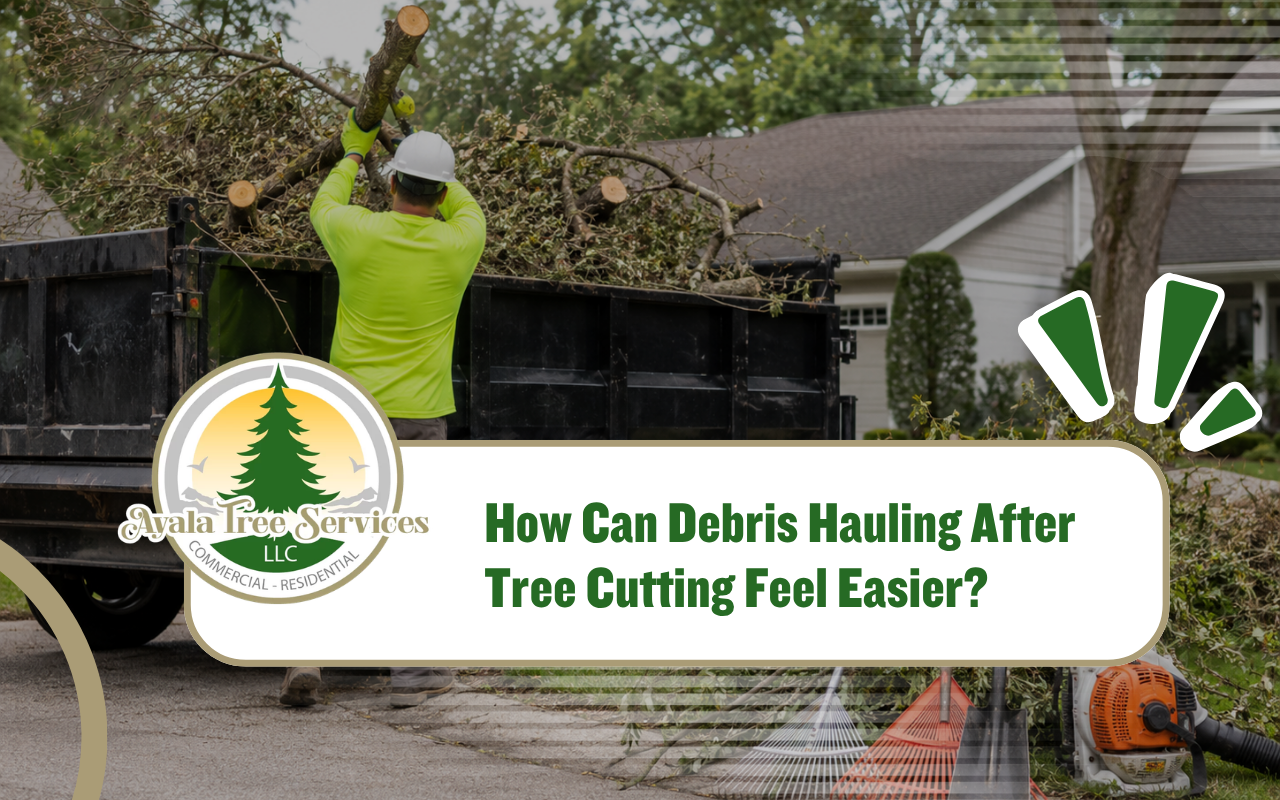
Tree cutting can leave branches, logs, leaves, and sawdust across your yard. However, debris hauling after tree cutting becomes easier with a clear plan. At Ayala Tree Services LLC, we focus on safe, simple cleanup steps. Therefore, homeowners can restore outdoor space with less stress.
Debris hauling after tree cutting feels easier when you sort materials, use the right tools, and plan each move. First, separate logs, branches, and small yard waste. Next, choose what can be reused, recycled, composted, or hauled away. With Ayala Tree Services LLC, we believe a tidy finish should feel organized from start to end.
Organize Cleanup Tools Before Heavy Yard Work Begins
First, gather your basic tools before moving debris. Good preparation reduces wasted steps and helps tree cutting cleanup stay controlled. Therefore, place everything near the work area without blocking paths.
Useful items include:
- Work gloves for splinters and rough bark.
- A strong tarp for dragging light branches.
- A wheelbarrow for smaller loads.
- Pruners or loppers for thin limbs.
- A rake and broom for leaves and sawdust.
Next, inspect each tool before use. Make sure handles feel secure, tires hold air, and cutting tools work properly. At Ayala Tree Services LLC, we prefer an orderly work zone because it supports safer movement.
Plan Each Cleanup Zone to Reduce Extra Trips
Next, divide the yard into simple work zones. For example, start near the cutting area and move toward the pickup point. This method keeps debris from crossing cleared spaces again.
A simple plan can include:
- Mark the largest debris piles first.
- Choose one temporary stacking area.
- Keep walkways open between zones.
- Move lighter material before final sweeping.
- Set aside reusable wood before hauling.
However, avoid making one large unstable pile. Instead, keep logs low and branches grouped by size. This approach can reduce repeated lifting during wood debris hauling.
Sort Cut Materials for Faster and Safer Removal
Then, separate tree debris before loading or dragging it. Put large logs in one area and medium branches in another. Keep twigs, leaves, and sawdust together as a lighter group. As a result, each load becomes easier to judge.
Also, bundle medium branches when practical. This can make a branch hauling service faster because materials are already organized. Meanwhile, keep heavy logs low to prevent rolling. At Ayala Tree Services LLC, we recommend sorting before transport because it creates a cleaner workflow.
For additional guidance, explore our practical debris removal techniques for a clean yard.
Reuse Smaller Wood Pieces to Improve Garden Beds
Instead of hauling every piece away, consider reusing clean wood chips around suitable landscape areas. Wood chips can help hold soil moisture. They can also cover bare ground and reduce some weed growth.
However, do not pile mulch against trunks or plant stems. Leave space around the plant base. Better Homes & Gardens also explains ways fallen sticks can support garden projects. Therefore, reuse can reduce the amount needing removal.
For local ideas, explore our eco-friendly branch cleanup in Marietta.
Compost Light Organic Debris to Support Healthy Soil
Likewise, smaller leaves, soft clippings, and thin twigs may work in a compost pile. Cutting material into smaller pieces can help it break down. However, large branches usually take much longer.
Mix dry woody material with greener garden material. Then, keep the pile slightly moist and turn it when needed. Over time, compost can become useful for garden beds.
At Ayala Tree Services LLC, we encourage separating reusable organic material before disposal. Consequently, less material may need hauling after tree work ends.
Recycle Suitable Wood Through Local Approved Collection Options
In addition, some communities accept untreated branches, logs, and yard waste at approved collection sites. Rules can vary by location. Therefore, check local size limits, pickup schedules, and preparation requirements before loading anything.
Never assume every wood product belongs in the same waste stream. Painted or treated wood may need different handling. Also, secure any load before driving.
For another practical option, review our yard waste removal services.
Choose Professional Hauling for Large Cleanup Loads Safely
Sometimes, the debris pile is too large for normal yard tools. Large logs can also be awkward and difficult to control. Therefore, professional support can reduce repeated lifting and hauling trips.
A branch hauling service can be useful after larger removals, storm work, or heavy pruning. As a result, the final cleanup can move more efficiently.
With Ayala Tree Services LLC, you can discuss the cleanup scope before work begins. If your yard needs help, contact our tree care team for a clear next step.
Protect Yourself While Moving Branches and Heavy Logs
Safety should remain part of every cleanup decision. Sharp limbs, uneven ground, and rolling logs can cause injuries. Therefore, use protective gear and controlled lifting methods.
Keep these habits in mind:
- Wear gloves, eye protection, and sturdy footwear.
- Bend your knees when lifting.
- Keep loads small enough to control.
- Watch for holes, roots, and slopes.
- Stay away from overhead lines.
- Take breaks during hot weather.
Additionally, do not move suspended branches without proper knowledge. A limb under tension can shift suddenly. Popular Mechanics has also highlighted risks from unstable branches during cleanup. Therefore, stop when debris is beyond your safe handling ability.
Separate Hazardous Materials Before Sending Debris for Disposal
Before disposal, check whether the pile contains anything besides natural tree material. Treated lumber, painted boards, chemicals, and containers should stay separate. These items may require special disposal methods.
Likewise, do not add questionable materials to compost or mulch piles. Instead, follow local waste guidance. Natural branches and logs can often follow normal yard-waste routes.
Our team at Ayala Tree Services LLC can help you understand what belongs within the agreed cleanup scope.
Finish Cleanup With a Clearer More Usable Yard
Finally, rake small twigs, leaves, and sawdust after the larger debris is gone. Check lawn edges, driveways, garden beds, and paths.
Good debris hauling after tree cutting is not only about removing large branches. It also means leaving the space easier to use. Therefore, a final walkthrough matters.
At Ayala Tree Services LLC, we want the finished yard to feel open, clean, and manageable. With careful planning, tree cutting cleanup can end with less stress and fewer trips.
Frequently Asked Questions
What should I do first after tree cutting?
First, separate logs, branches, leaves, and fine debris. Then, create a clear route for moving each group. Our practical debris removal techniques for a clean yard can help you organize the process.
Can branches be reused instead of hauled away?
Yes, some clean branches can become chips, compost material, habitat wood, or other landscape resources. Therefore, review our eco-friendly branch cleanup in Marietta before discarding everything.
When should I use professional debris removal?
Professional help makes sense when logs are heavy, access is difficult, or the debris volume is large. You can reach our team to discuss the safest cleanup approach.
Can yard waste be collected separately?
Yes, many cleanup plans separate natural yard material from other waste. However, local rules may vary. Our yard waste removal services page explains useful removal options.
How can I make branch removal more efficient?
Sort branches by size, keep paths open, and avoid unstable piles. Also, prepare the pickup area before moving material. Our practical debris removal techniques for a clean yard guide offers more simple cleanup steps.
References:
Better Homes & Gardens — 18 Clever Ways to Use Fallen Twigs and Sticks in Your Garden
U.S. Environmental Protection Agency — Green Waste and Vegetative Debris Guidance