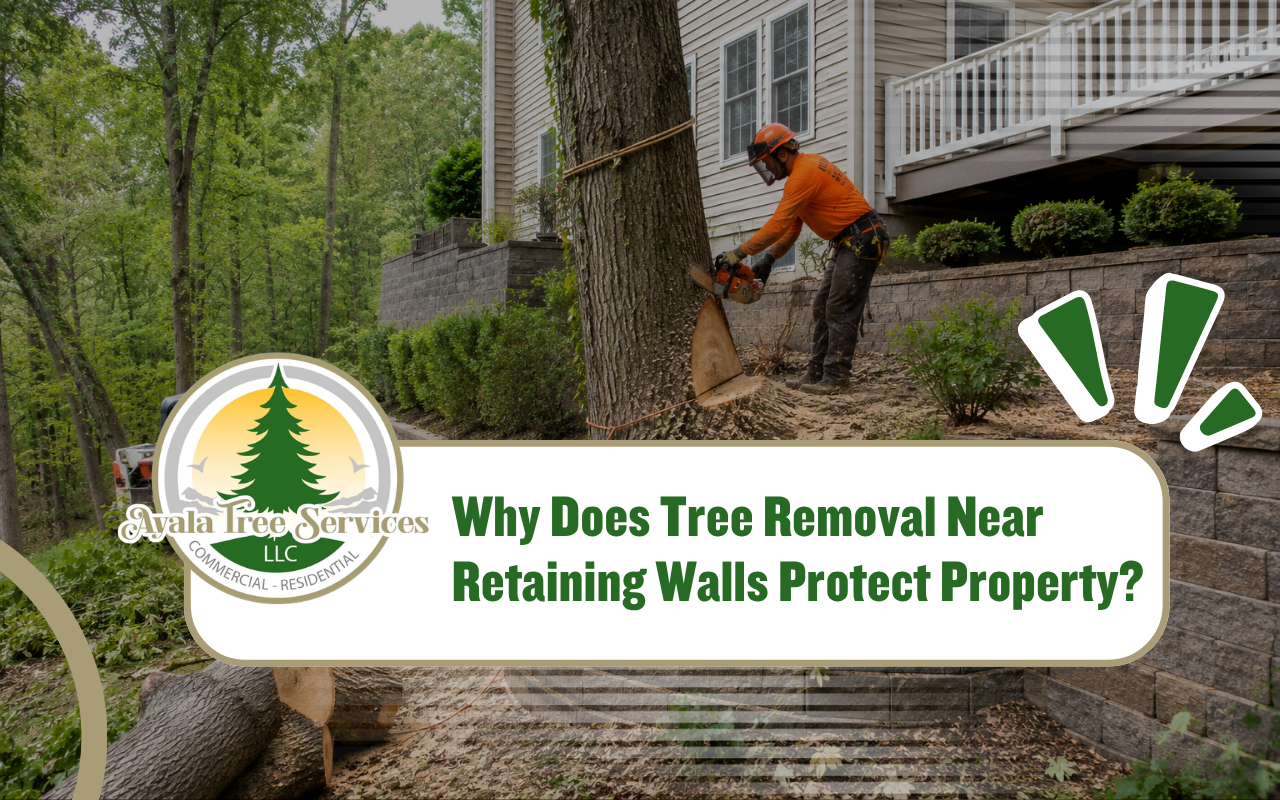
Tree removal near retaining walls can protect property when roots, soil movement, or tree instability threaten the structure. However, removal should follow a careful inspection. Roots can affect soil, drainage, and wall pressure in different ways. Therefore, the safest plan considers the tree, wall condition, slope, and nearby structures together.
Trees can support a beautiful landscape, yet nearby walls need enough space to stay stable. Therefore, early action matters when roots, soil, and drainage begin changing. At Ayala Tree Services LLC, we focus on safe planning that protects your wall, slope, and outdoor space before small warning signs become larger problems.
Early Warning Signs Reveal Retaining Wall Tree Damage
First, look closely at the wall and the ground around it. Small changes often appear before serious retaining wall tree damage develops. Therefore, regular checks can help you act before the wall shifts further.
- Cracks may appear along blocks, mortar joints, or concrete surfaces.
- Bulges can form where soil or roots push against the wall.
- Leaning sections may show that pressure behind the wall has changed.
- Raised soil can signal large roots growing close to the structure.
- Poor drainage may leave wet soil or standing water behind the wall.
Also, watch for roots near retaining wall edges or exposed areas. These roots do not always mean immediate failure. However, they deserve attention when cracks or soil movement appear nearby. For more context, our guide about warning signs below the soil explains clues that may remain hidden.
Root Pressure Creates Risks Around Retaining Walls and Slopes
Next, consider what happens below the surface. Tree roots naturally spread through soil while searching for water and support. Consequently, large roots can influence nearby soil and hard surfaces.
- Growing roots can push against weak wall sections.
- Changing soil moisture can increase pressure behind the wall.
- Root movement can disturb compacted soil near the wall base.
- Leaves and debris can block drainage paths around the structure.
- Unstable trees can add risk on steep or narrow slopes.
Moreover, slope tree removal needs careful planning because gravity changes the work area. A tree on an incline may have limited fall space. Likewise, disturbed soil can move more easily after large roots are cut.
Therefore, do not assume every crack comes from a tree. Drainage, settlement, and poor construction can also damage walls. Still, roots can add pressure where the structure is already weak. Our article about how roots affect hard surfaces shows how growing roots can influence nearby built areas.
Prompt Tree Care Prevents Larger Wall and Soil Problems
Once warning signs appear, timely action can limit further movement. Tree removal near retaining walls may become necessary when the tree or roots create an ongoing safety concern. However, the decision should match the actual condition of the site.
For example, a small surface root may not justify removing a healthy tree. Instead, selective work or monitoring may be enough. Conversely, a leaning tree beside a damaged wall may need faster attention.
At Ayala Tree Services LLC, we consider the tree, wall, access, and surrounding property together. Therefore, our goal is to avoid unnecessary disturbance while reducing clear risks. Early planning also gives homeowners more time to coordinate wall repairs and landscaping.
Professional Assessment Guides Safer Removal Decisions Near Walls
Before cutting major roots, confirm what is actually causing the problem. Large structural roots can support the tree. Therefore, careless cutting may weaken the tree instead of solving the wall issue.
A professional assessment can review the tree, soil, wall movement, and working space. For deeper planning, read our guide to safe root planning near structures.
At Ayala Tree Services LLC, we also explain whether selective root work, stump grinding, or full removal makes more sense. Therefore, you can understand the next step before work begins.
DIY work may suit small roots in open areas. However, larger trees near walls create more risk. Our comparison of homeowner and professional removal choices can help you judge the difference.
Careful Removal Steps Preserve Walls During Tree Work
When removal is appropriate, careful sequencing protects the surrounding area. Therefore, tree removal near retaining walls should control branches, trunk sections, equipment movement, and soil disturbance.
- First, inspect the wall, slope, tree lean, and nearby targets.
- Next, mark safe work zones and protect vulnerable wall surfaces.
- Then, remove branches in controlled sections to reduce falling weight.
- Afterward, lower trunk sections without striking the retaining wall.
- Next, evaluate roots before cutting, grinding, or excavating them.
- Finally, inspect soil, drainage, and wall movement after cleanup.
Also, the right equipment depends on root size and access. Sharp hand tools may suit smaller roots. Meanwhile, larger systems may require grinding or mechanical support. Our guide to tools for careful root work explains common options.
At Ayala Tree Services LLC, careful site control remains important throughout the job. Therefore, we plan each step around the wall instead of treating the tree as an isolated problem.
Post-Removal Repairs Restore Drainage and Retaining Wall Stability
After removal, the wall and surrounding soil still need attention. First, clear loose debris and inspect the wall face. Then, note cracks, shifted blocks, open joints, or leaning areas.
Next, check drainage behind and around the wall. Water trapped in soil can increase pressure. Therefore, clogged outlets, poor grading, or damaged drainage materials should be corrected as needed.
- Replace loose soil carefully and compact it in suitable layers.
- Repair damaged wall materials when the structure allows safe repair.
- Keep drainage paths clear so water can move away properly.
- Monitor the wall after heavy rain for new movement.
- Ask a qualified wall professional about major leaning or structural damage.
Furthermore, avoid pulling large roots without considering soil support. Sudden excavation can create voids near the wall.
Smart Replanting Maintains Beauty Without Renewing Root Pressure
Once the area is stable, thoughtful landscaping can restore its appearance. However, avoid placing another large tree in the same tight space. Instead, choose plants that fit the available soil area and mature size.
Ground covers and smaller shrubs may suit areas close to retaining walls. Additionally, mulch can reduce exposed soil and slow erosion.
Meanwhile, keep new planting away from drains and wall joints. Regular checks can catch new root or moisture problems early. Therefore, good maintenance supports both appearance and long-term stability.
At Ayala Tree Services LLC, we believe safe tree care should support the whole landscape. If you see cracks, bulges, exposed roots, or slope movement, schedule a property assessment. We can review the site and discuss practical options before the damage grows.
Frequently Asked Questions
Can tree roots crack or move a retaining wall?
Yes, roots can add pressure to nearby soil and weak wall sections. However, drainage and settlement can cause similar signs. Therefore, review signs of hidden root problems before assuming the cause.
Should every tree beside a retaining wall be removed?
No, removal depends on risk, distance, tree condition, and wall movement. Therefore, start with planning root work near structures before choosing a method.
Can I cut large roots beside the wall myself?
Sometimes small roots are manageable, but major roots may support the tree. Therefore, compare DIY and professional root work before cutting.
What tools are used for roots close to walls?
Tool choice depends on root size, depth, and access. Therefore, review equipment for safer root removal for common options and limits.
Who should inspect a risky tree near my wall?
A qualified tree professional can assess the tree and work area. Structural wall concerns may also need a wall specialist. Therefore, request an on-site tree assessment from our team to begin.
References:
- How To Repair a Cracked Stucco Retaining Wall – This Old House
- 7 Signs Your Tree Might Need to Come Down Before It Damages Your Home – Real Simple