Backyard storage areas can feel calm until one leaning trunk or heavy branch threatens the shed. For homeowners comparing Safe Tree Removal options, tree removal near sheds can prevent damage, reduce risk, and keep the yard easier to use after storms or routine maintenance.
When Should Homeowners Plan Tree Removal Near Sheds?
Tree removal near sheds should be planned when branches, roots, decay, or leaning trunks create a clear risk to the structure. The safest next step is a careful inspection, followed by pruning, controlled removal, or cleanup based on the tree’s condition and the shed’s location.
For many homeowners, this service involves checking a tree that grows too close to a shed, garage, fence, or storage area. It helps people who notice cracks, hanging limbs, root lift, or storm movement. The goal is to solve shed damage tree risk before a branch or trunk harms the structure.
Early Risk Checks Reduce Shed Damage Tree Risk
Visible warning signs near a shed should be checked before wind, rain, or root movement makes the problem worse. Large dead limbs, trunk cracks, lifted soil, and leaning growth can show that a tree may fail or damage nearby storage areas.
Our team at Ayala Tree Services LLC looks at the tree’s shape, branch weight, root area, and distance from the shed. We also check whether limbs already touch the roof or walls. These details help us explain whether trimming, monitoring, or full removal is safer.
- Dead or hanging limbs over the roof
- Cracks, splits, or hollow areas in the trunk
- Roots lifting soil near the shed base
- Branches rubbing siding, shingles, or gutters
- New leaning after storms or soil erosion
Small warning signs can grow into larger backyard structure hazards when a tree has limited space to move safely.
Careful Inspections Reveal Backyard Structure Hazards Before Storms
A tree inspection helps homeowners understand risk before removal becomes urgent. The International Society of Arboriculture explains that dead branches, cracks, loose bark, and root issues can point to higher tree risk near people and property.
During a review, we look for weak unions, decay, pest damage, soil movement, and branch direction. With Ayala Tree Services LLC, customers get a clearer view of the safest option before work begins. We do not guess from one branch alone. Instead, we review the full area around the shed.
Important decision factors include:
- Tree health and visible decay
- Shed distance from the trunk and canopy
- Branch weight above the roofline
- Access space for tools and crew movement
- Soil condition around roots and foundations
If removal is needed, we explain the next step and help you prepare the area.
Smart Pruning Protects Trees Close To Buildings Better
Not every tree near a shed needs to be removed. Pruning may reduce risk when the tree is healthy, stable, and growing in a manageable direction. However, pruning must be done carefully so the tree is not weakened.
Trees close to buildings need balanced trimming, not rough cutting. Heavy limbs should be reduced with clean cuts, and branches should not be topped just to clear space. Poor cuts can leave wounds that invite decay and future limb failure.
At Ayala Tree Services LLC, we check which branches create contact, shade, weight, or storm risk. Then we explain whether trimming can protect the shed or whether removal is the safer choice. Tree Removal in Roswell, GA may be the better option when the trunk leans toward the structure or roots already affect the shed base.
Good pruning guides growth away from vulnerable areas while keeping the tree as stable as possible.
Clear Preparation Guides Safer Tree Removal Near Sheds
Preparation makes tree removal near sheds safer and more organized. Before work starts, homeowners should clear stored items, mark hidden obstacles, and give the crew open access to the shed area.
When customers contact Ayala Tree Services LLC, we first ask about the tree, shed location, access points, and visible risks. Photos can help us understand the space before an on-site review. Then we explain what should be moved and what should stay protected.
- Move tools, furniture, pots, and loose items away.
- Mark hoses, cables, drains, and irrigation parts.
- Keep children, pets, and neighbors away from the work area.
- Cover shed windows or vents if debris may reach them.
- Ask about cleanup before the removal process begins.
The University of Georgia Extension notes that trees can become riskier when roots are damaged by soil work, equipment, or trenching. For that reason, clear access and careful planning matter near sheds, fences, and small yard structures. You can also review Tree Removal Preparation Tips before scheduling.
Controlled Removal Keeps Nearby Sheds And Yards Safer
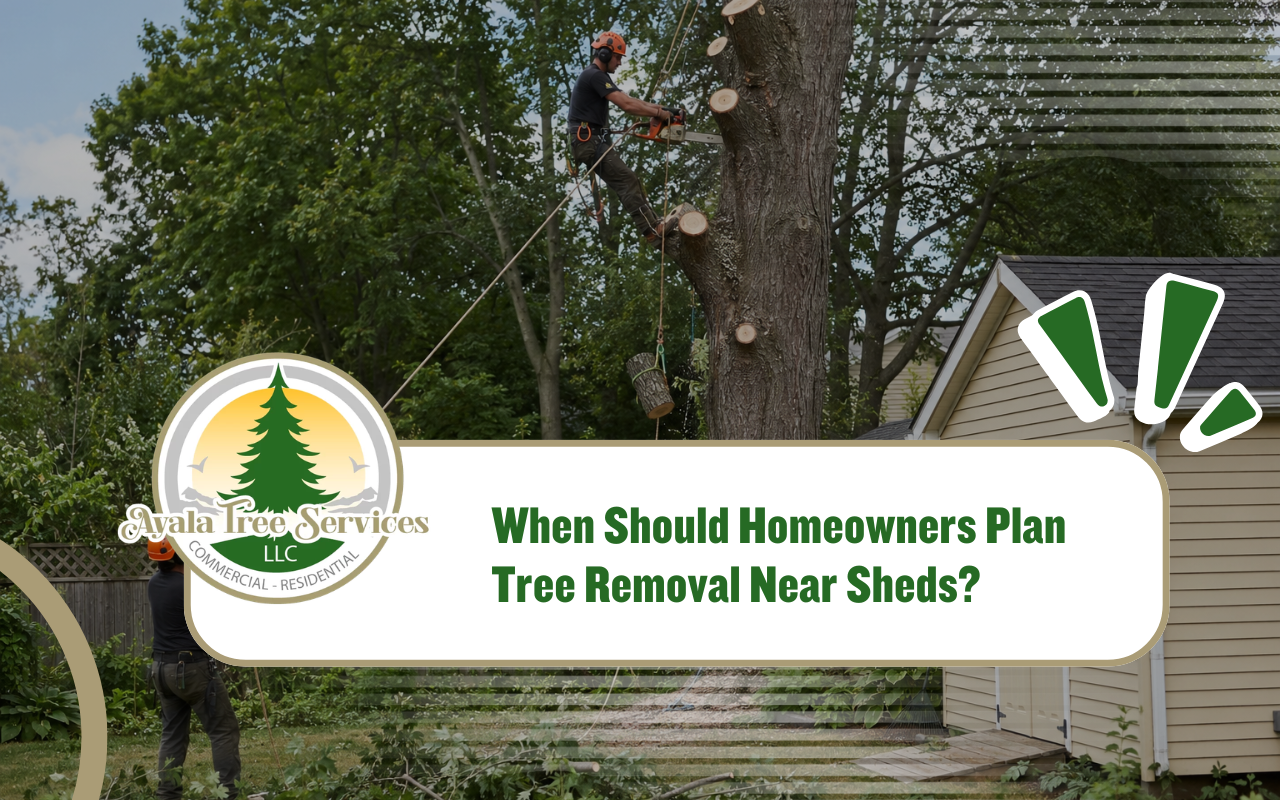
Controlled removal uses planning, section cuts, and safe lowering methods to protect nearby sheds. In tight backyards, dropping large limbs freely can damage roofs, walls, doors, windows, garden beds, or fences.
With Ayala Tree Services LLC, you get a crew that reviews the drop zone before cutting begins. We may remove branches in sections, guide limbs with ropes, and keep the work area clear. The goal is to reduce impact, protect the shed, and leave the yard tidy.
A safe removal plan may include:
- Setting a clear work perimeter
- Cutting from the upper canopy downward
- Lowering large limbs in controlled sections
- Protecting the shed from chips and falling debris
- Reviewing cleanup needs after the trunk is down
Sectional cutting is often safer near sheds because each piece can be managed with more control.
Frequently Asked Questions
Can a tree near my shed be trimmed instead?
Yes, trimming may work if the tree is healthy, stable, and only has a few branches touching the shed area. Removal is safer when the trunk leans, roots lift the base, or decay is visible. A careful review helps choose the right option.
What signs show a tree may damage my shed?
Look for dead limbs, trunk cracks, loose bark, exposed roots, leaning growth, and branches scraping the roof. These signs can point to shed damage tree risk. For next-step help, visit Contact Us and share photos of the area.
How should I prepare my shed before removal?
Move tools, patio items, storage bins, and plants away from the shed. Mark hoses, buried lines, and sprinkler parts. You can also read Tree Removal Preparation Tips to understand simple steps before the crew arrives.
Are roots a problem for small backyard sheds?
Roots can affect sheds when they lift soil, push against foundations, or change drainage near the structure. Not every root needs removal, but raised soil and floor movement should be checked. Early action helps prevent backyard structure hazards from getting worse.
Who should handle trees close to backyard buildings?
Tree work near sheds, fences, garages, and storage areas should be handled by trained crews with proper equipment. Tight spaces need controlled cuts and careful cleanup. For safer planning, review Safe Tree Removal before booking service.
Schedule Safer Yard Work With A Clear Plan
If a tree is too close to your shed, do not wait for the next storm to reveal the problem. Share what you see, ask questions, and let us review the safest path. With Ayala Tree Services LLC, you can request guidance through Contact Us and plan a cleaner, safer backyard.
References
Smart Pruning Protects Trees Close To Buildings Better
Not every tree near a shed needs to be removed. Pruning may reduce risk when the tree is healthy, stable, and growing in a manageable direction. However, pruning must be done carefully so the tree is not weakened.
Trees close to buildings need balanced trimming, not rough cutting. Heavy limbs should be reduced with clean cuts, and branches should not be topped just to clear space. Poor cuts can leave wounds that invite decay and future limb failure.
At Ayala Tree Services LLC, we check which branches create contact, shade, weight, or storm risk. Then we explain whether trimming can protect the shed or whether removal is the safer choice. Tree Removal in Roswell, GA may be the better option when the trunk leans toward the structure or roots already affect the shed base.
Good pruning guides growth away from vulnerable areas while keeping the tree as stable as possible.
Clear Preparation Guides Safer Tree Removal Near Sheds
Preparation makes tree removal near sheds safer and more organized. Before work starts, homeowners should clear stored items, mark hidden obstacles, and give the crew open access to the shed area.
When customers contact Ayala Tree Services LLC, we first ask about the tree, shed location, access points, and visible risks. Photos can help us understand the space before an on-site review. Then we explain what should be moved and what should stay protected.
- Move tools, furniture, pots, and loose items away.
- Mark hoses, cables, drains, and irrigation parts.
- Keep children, pets, and neighbors away from the work area.
- Cover shed windows or vents if debris may reach them.
- Ask about cleanup before the removal process begins.
The University of Georgia Extension notes that trees can become riskier when roots are damaged by soil work, equipment, or trenching. For that reason, clear access and careful planning matter near sheds, fences, and small yard structures. You can also review Tree Removal Preparation Tips before scheduling.
Controlled Removal Keeps Nearby Sheds And Yards Safer
Controlled removal uses planning, section cuts, and safe lowering methods to protect nearby sheds. In tight backyards, dropping large limbs freely can damage roofs, walls, doors, windows, garden beds, or fences.
With Ayala Tree Services LLC, you get a crew that reviews the drop zone before cutting begins. We may remove branches in sections, guide limbs with ropes, and keep the work area clear. The goal is to reduce impact, protect the shed, and leave the yard tidy.
A safe removal plan may include:
- Setting a clear work perimeter
- Cutting from the upper canopy downward
- Lowering large limbs in controlled sections
- Protecting the shed from chips and falling debris
- Reviewing cleanup needs after the trunk is down
Sectional cutting is often safer near sheds because each piece can be managed with more control.
Frequently Asked Questions
Can a tree near my shed be trimmed instead?
Yes, trimming may work if the tree is healthy, stable, and only has a few branches touching the shed area. Removal is safer when the trunk leans, roots lift the base, or decay is visible. A careful review helps choose the right option.
What signs show a tree may damage my shed?
Look for dead limbs, trunk cracks, loose bark, exposed roots, leaning growth, and branches scraping the roof. These signs can point to shed damage tree risk. For next-step help, visit Contact Us and share photos of the area.
How should I prepare my shed before removal?
Move tools, patio items, storage bins, and plants away from the shed. Mark hoses, buried lines, and sprinkler parts. You can also read Tree Removal Preparation Tips to understand simple steps before the crew arrives.
Are roots a problem for small backyard sheds?
Roots can affect sheds when they lift soil, push against foundations, or change drainage near the structure. Not every root needs removal, but raised soil and floor movement should be checked. Early action helps prevent backyard structure hazards from getting worse.
Who should handle trees close to backyard buildings?
Tree work near sheds, fences, garages, and storage areas should be handled by trained crews with proper equipment. Tight spaces need controlled cuts and careful cleanup. For safer planning, review Safe Tree Removal before booking service.
Schedule Safer Yard Work With A Clear Plan
If a tree is too close to your shed, do not wait for the next storm to reveal the problem. Share what you see, ask questions, and let us review the safest path. With Ayala Tree Services LLC, you can request guidance through Contact Us and plan a cleaner, safer backyard.