
Freshly trimmed trees can make a yard look better, but the scattered limbs can quickly become a safety concern. For helpful cleanup methods, see our Practical Debris Removal Techniques for a Clean Yard before the piles become harder to manage.
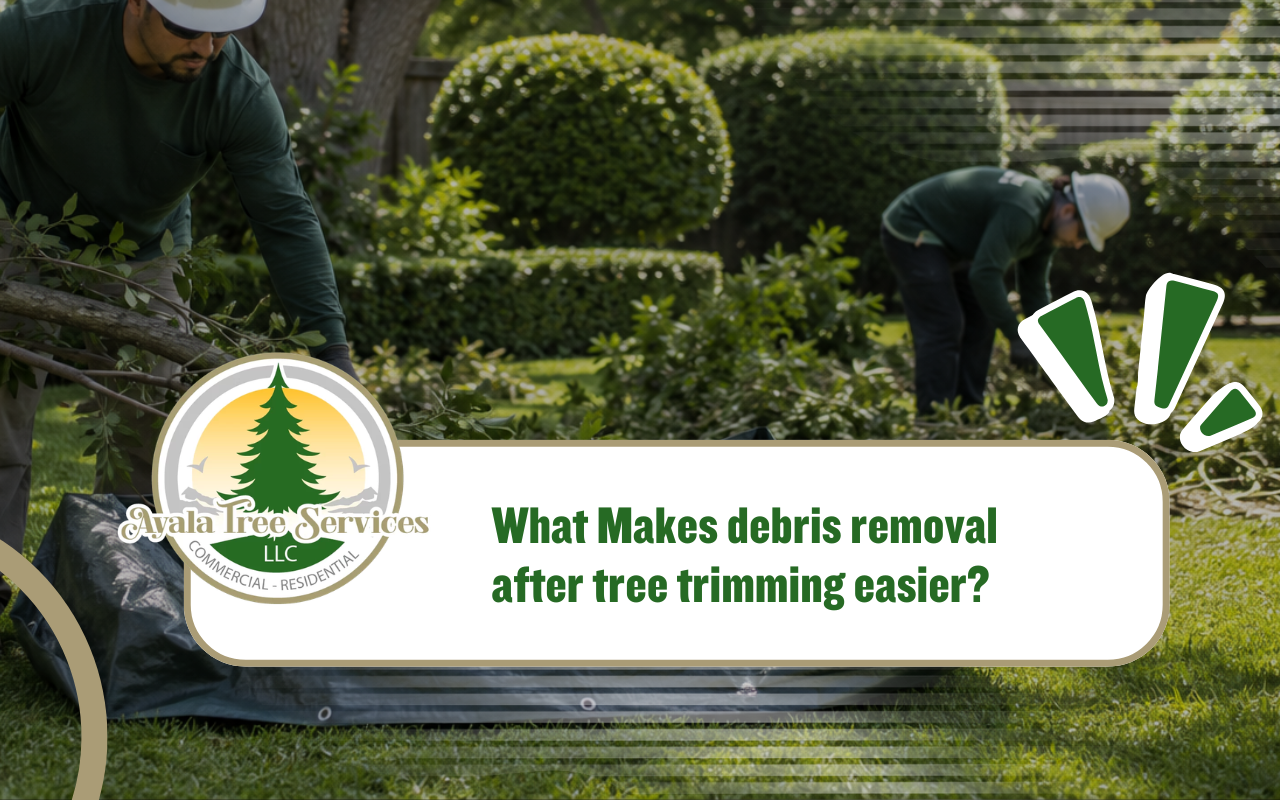
What Makes debris removal after tree trimming easier?
Debris removal after tree trimming becomes easier when branches, leaves, and limbs are sorted, moved safely, and disposed of the right way. A clear plan helps protect your lawn, reduce pests, and make the cleanup feel less overwhelming.
Tree trimming cleanup is the process of collecting cut branches, leaves, twigs, and heavy limbs after pruning work. Homeowners need it when debris blocks walkways, covers grass, or creates hazards. The goal is to leave the outdoor space cleaner, safer, and easier to maintain.
Clear Cut Branches Safely With A Simple Yard Plan
Smart cleanup starts with a simple yard plan because scattered limbs can hide hazards, slow progress, and damage grass. At Ayala Tree Services LLC, we check the area first, separate debris by size, and explain which piles need careful handling.
Start with the largest branches, then move to smaller twigs and leaves. This keeps the work path open. It also helps you avoid stepping over sharp or unstable pieces. Large limbs should never be dragged across fragile plants because they can tear roots, flowers, or new growth.
- Move large limbs away from walkways first.
- Collect sharp twigs before mowing.
- Use tarps to reduce repeated trips.
- Keep children and pets away from piles.
According to Alabama Extension, storm and tree cleanup can involve falling limbs, hidden tension, and electrical hazards. That is why careful planning matters before lifting or cutting anything.
Sort Branch Cleanup Tasks Before Heavy Hauling Starts
Branch cleanup works best when every pile has a clear purpose. Separate usable wood, compostable leaves, small twigs, and heavy limbs before hauling begins. This makes each next step faster and helps prevent the same debris from being moved twice.
With Ayala Tree Services LLC, you get a cleaner process because we look at volume, weight, and access before debris is moved. Small pieces may go into bags or containers. Larger branches often need cutting into safer lengths. Sorting before lifting saves time and reduces strain during cleanup.
Use this decision guide when sorting:
- Leaves and grass can go into compost.
- Small twigs can be bundled or bagged.
- Clean branches may become mulch or edging.
- Heavy limbs may need professional hauling.
If piles are too large for normal pickup, review our Yard Waste Removal Services for a Tidy Outdoor Space to plan the next step.
Reuse Tree Trimmings For Cleaner Garden Soil Benefits
Many tree trimmings can serve a new purpose instead of going straight to disposal. Smaller branches, leaves, and wood chips can support garden beds, compost piles, drainage areas, and simple outdoor projects when they are clean and safe to reuse.
Fresh leaves and small chips can help improve soil when composted correctly. The EPA reports that yard trimmings include grass, leaves, tree trimmings, and brush from residential and commercial sources. Composting organic debris can reduce waste while creating useful material for garden beds.
Try these simple reuse ideas:
- Use dry twigs under planters for drainage.
- Turn small branches into garden edging.
- Chip clean wood for mulch paths.
- Compost leaves with brown materials.
Avoid reusing diseased wood or pest-filled debris. When customers contact Ayala Tree Services LLC, we help them understand which material may be reused and which pieces should be removed.
Schedule Tree Limb Hauling When Cleanup Becomes Risky
Tree limb hauling is the safer choice when branches are heavy, tangled, sharp, or too large for normal handling. Professional support is also useful when debris blocks driveways, covers walkways, or creates lifting risks for homeowners.
Large limbs can shift while being carried or loaded. Wet wood is also heavier than it looks. If branches are near fences, roofs, vehicles, or utility lines, avoid pulling them without guidance. Heavy debris can cause injuries when moved too quickly or without proper tools.
Our crew at Ayala Tree Services LLC reviews the debris, access points, and removal path before work begins. We also explain safe disposal options so the cleanup matches the size of the job. For safer handling tips, visit Safe Debris Disposal Tips for a Cleaner, Safer Home.
Follow Yard Debris Removal Steps After Booking Service
Yard debris removal feels easier when you know what happens after booking. We ask about the debris type, the amount of material, access to the yard, and any safety concerns before we recommend the best cleanup approach.
Before the appointment, we may ask if the debris includes branches, leaves, shrubs, or heavy limbs. We also want to know whether anything blocks gates or driveways. Clear details help us prepare the right cleanup plan without making false promises about timing or disposal limits.
- Share photos or describe the debris pile.
- Point out access areas and obstacles.
- Tell us about large or heavy limbs.
- Review the cleanup plan before work starts.
- Check the yard after debris is removed.
By choosing Ayala Tree Services LLC, you can ask questions before the work begins and understand what will happen during the cleanup. This makes debris removal after tree trimming more organized from the start.
Frequently Asked Questions
What tools make branch cleanup easier after trimming?
Rakes, tarps, gloves, loppers, pruning shears, and wheelbarrows make branch cleanup easier. Tarps help move piles faster, while gloves protect hands from splinters. For larger debris, visit Practical Debris Removal Techniques for a Clean Yard.
Can leaves and small twigs go into compost?
Yes, many leaves and small twigs can go into compost when they are clean and disease-free. Smaller pieces break down faster. Mix dry brown materials with fresh green materials, and keep the pile moist but not soaked.
When should I avoid moving tree limbs myself?
Avoid moving limbs yourself when they are very heavy, tangled, near power lines, or resting on structures. These situations can shift suddenly. Learn more through Safe Debris Disposal Tips for a Cleaner, Safer Home.
How soon should yard debris removal happen after trimming?
Yard debris removal should happen soon after trimming so branches do not block walkways, damage grass, or attract pests. Quick cleanup also makes the yard safer to use and easier to inspect after the trimming work.
Does professional hauling help with large branch piles?
Professional hauling helps when branch piles are too large, heavy, or awkward for regular pickup. A cleanup crew can plan safer loading and removal. Visit Yard Waste Removal Services for a Tidy Outdoor Space for more guidance.
Restore Safer Outdoor Space With Helpful Cleanup Support
Debris removal after tree trimming should leave your yard safer, cleaner, and easier to enjoy. If branches, leaves, or limbs feel like too much to handle, contact us through Contact Us for Expert Hardscaping, Sod, and Tree Services. Ayala Tree Services LLC can help you plan the next cleanup step with clear guidance.