
After heavy rain, trees need calm care, not rushed cuts. Therefore, this guide explains how rain damaged trees can recover from wet soil, root instability, and leaning trees with safe steps. At Ayala Tree Services LLC, we help homeowners make clear choices after storms.
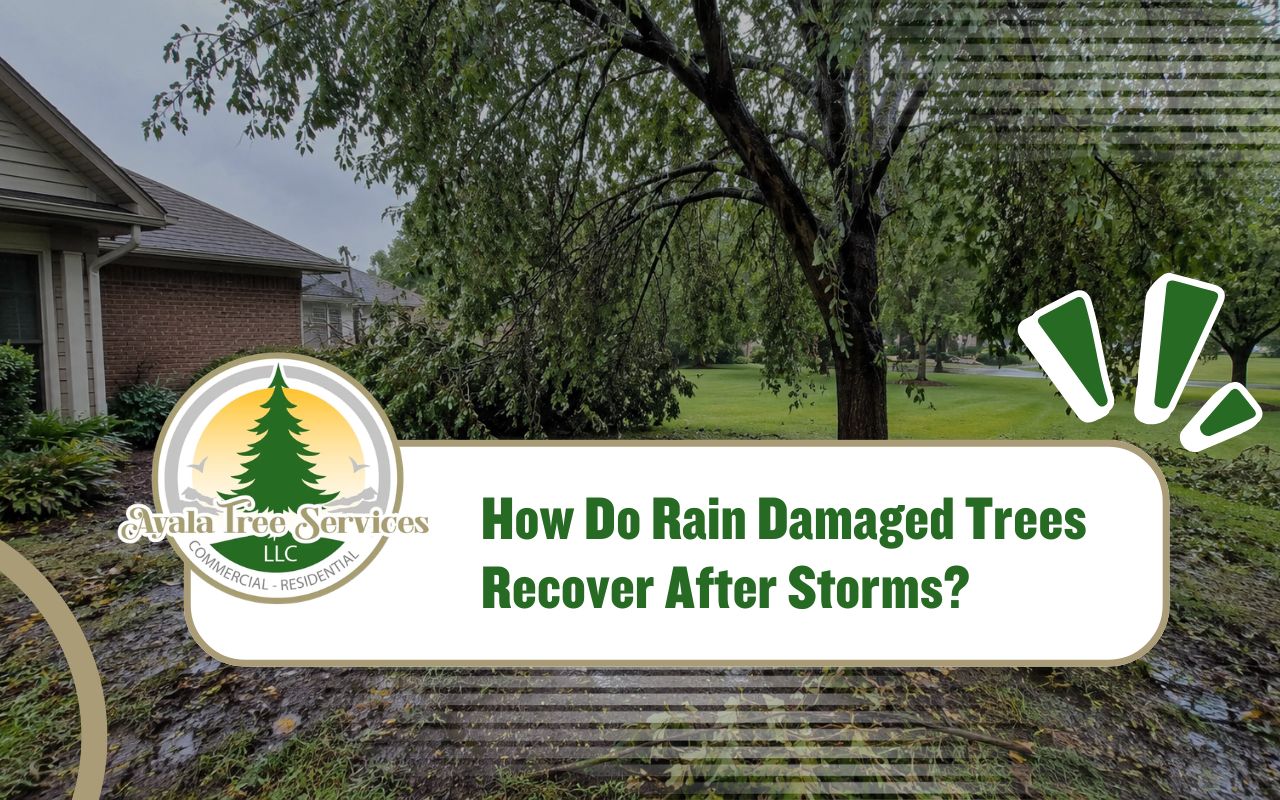
How Do Rain Damaged Trees Recover After Storms?
Rain damaged trees can recover when you first check safety, improve drainage, support weak trunks, and prune only what is broken. However, some trees become unsafe after storms. So, when a tree leans toward a home, driveway, or power line, professional guidance is the safer choice.
Inspect Storm Harm Before Touching Any Weak Branches
First, look at each tree from a safe distance. Then, check the crown, trunk, roots, and ground. Heavy rain can hide problems below the soil. Also, wet branches may look normal but still break later.
At Ayala Tree Services LLC, we suggest watching for clear warning signs before cleanup begins. This simple step helps you avoid injury and prevent more damage.
- Look for cracked branches or hanging limbs.
- Check for bark splits along the trunk.
- Watch for soil raised near the roots.
- Notice any fresh lean after the storm.
- Stay away from trees touching wires.
Because storm damage can worsen fast, avoid standing under heavy limbs. Also, do not pull broken branches by hand. Instead, use safe distance and call trained help when the damage is high.
Improve Wet Soil So Roots Breathe Again Safely
After heavy rain, wet soil can block air from reaching roots. As a result, the tree may struggle to take in water and nutrients. Therefore, drainage and airflow matter during recovery.
Start by moving standing water away from the root area when possible. Next, loosen only the top layer of compacted soil. However, avoid deep digging near the tree base. Deep digging can cut roots that are already stressed.
At Ayala Tree Services LLC, we often remind homeowners to protect the root flare. This is the area where the trunk meets the soil. It should not be buried under mud or thick mulch.
- Remove extra soil from the root flare gently.
- Spread mulch in a wide, thin ring.
- Keep mulch away from the trunk.
- Add compost lightly to improve soil texture.
- Avoid watering until the ground begins to dry.
Also, do not pile mulch like a mound. Instead, leave space around the trunk. This helps reduce fungus and keeps rain damaged trees from staying too wet.
Support Leaning Trunks While Roots Regain Their Hold
Leaning trees need careful attention after storms. Sometimes, a young tree can be helped back into place. However, large leaning trees can be dangerous, especially when roots have shifted.
Root instability often starts when soaked ground can no longer hold the root plate. Then, wind or weight can pull the tree to one side. Because of this, a new lean should never be ignored.
If the tree is small and recently planted, gentle staking may help. Still, the support must not cut into the bark. Use soft straps, keep the ties loose, and allow slight movement. This movement helps roots grow stronger again.
For larger trees, do not pull the trunk upright with a vehicle or rope. Instead, read our leaning tree safety guide to understand when a leaning tree may need urgent care.
Prune Broken Limbs To Guide Healthy New Growth
Broken limbs take energy from the tree. Therefore, clean pruning helps the tree focus on healthy parts. Still, pruning too much can slow recovery.
Begin with branches that are cracked, hanging, or rubbing. Then, cut near the branch collar without cutting into it. The branch collar helps the tree close the wound naturally.
At Ayala Tree Services LLC, we avoid topping trees after storm damage. Topping can create weak growth that breaks more easily later. Instead, we focus on careful cuts that support long-term health.
- Remove hanging branches first.
- Cut small broken limbs cleanly.
- Keep the main leader when possible.
- Leave healthy leaves for food production.
- Call for help with high or heavy limbs.
Also, avoid wound paint or sealants. In many cases, these products trap moisture. As a result, they may slow natural healing in rain damaged trees.
Feed Stressed Trees Without Overloading Their Soaked Roots
After storm stress, trees need support. However, fertilizer should be used with care. Too much fertilizer can harm weak roots, especially when soil is still wet.
Instead, use a light layer of compost around the root zone. Then, let the soil improve slowly. Compost can help soil hold better structure, while also supporting helpful life below ground.
Because wet soil can already stress roots, avoid strong products right after heavy rain. Also, do not fertilize if the tree has major root damage. In that case, a professional inspection is better.
With Ayala Tree Services LLC, you get clear guidance before action begins. We look at the tree, the soil, and the risk around your property.
Follow Simple Steps To Help Trees Stand Again
Recovery works best when each step is calm and safe. Therefore, follow a simple plan after heavy rain. This helps you support the tree without causing more harm.
- Check the tree from a safe distance.
- Look for leaning, cracks, and exposed roots.
- Move water away when drainage is poor.
- Clear small debris from the root area.
- Prune only broken or unsafe limbs.
- Stake only small trees with soft straps.
- Watch new growth over several weeks.
- Contact trained help when risk is high.
If a tree looks unsafe after heavy rain, review our storm cleanup guidance. Also, reach out through our contact page when you need direct help.
Track Recovery Signs As Tree Strength Returns Slowly
Tree recovery takes time. Therefore, watch small signs each week. New buds, steady leaves, and a firm trunk are good signs. However, yellow leaves, soft soil, and a worsening lean need attention.
Keep a simple note on what you see. For example, write down the lean direction, soil moisture, and any new cracks. Then, compare your notes after each rain.
At Ayala Tree Services LLC, we know that rain damaged trees do not heal overnight. Still, careful checks can show whether the tree is improving or becoming unsafe.
Also, check the ground after the next storm. If soil lifts on one side, roots may be moving. Because root instability can lead to sudden failure, take this sign seriously.
Let Natural Healing Build Stronger Future Storm Resilience
Trees have strong natural healing systems. Therefore, the goal is to support them, not force them. Once drainage improves and broken limbs are removed, give the tree space.
Avoid overwatering after heavy rain. Also, avoid chemicals near the root zone. Helpful soil life can support roots and improve the ground over time.
For rain damaged trees, patience matters. Some trees need a full season to recover. Others may need removal when the roots cannot hold anymore. Either way, safety should guide each decision.
Protect Your Yard With Careful Next Steps Today
After storms, your yard may look messy and stressful. However, not every damaged tree must come down. Some trees can recover with better drainage, gentle pruning, and steady care.
Still, leaning trees near homes, roads, or power lines need fast attention. Therefore, do not wait for the next storm to test their strength.
When customers contact Ayala Tree Services LLC, we explain the safest next step in simple terms. We help you understand whether recovery, pruning, support, or removal makes sense.
For help after heavy rain, use contact page. Together, we can protect your property while giving healthy trees the best chance to stand strong again.
Frequently Asked Questions
Can rain damaged trees recover without being removed?
Yes, some rain damaged trees can recover when the roots are stable and the trunk is sound. However, trees with severe leaning or broken roots need inspection. For risky cases, review our Storm Cleanup Guidance.
When should I worry about wet soil around trees?
You should worry when wet soil stays soft for days, smells bad, or lifts near the trunk. Also, exposed roots can mean erosion. For direct support, reach us here.
Are leaning trees always dangerous after heavy rain?
No, not always. However, a new lean after rain can mean root instability. If the tree leans toward a structure, it needs attention. Learn more in our leaning tree safety guide.
How can I help roots after heavy rain?
First, improve drainage and keep mulch away from the trunk. Then, avoid digging near the root zone. If roots are exposed or shifting, use our contact page for guidance.
What should I do before removing a storm damaged tree?
First, stay away from hanging limbs and power lines. Then, check whether the tree is unsafe or can recover. Our storm cleanup guidance explains safe post-rain decisions.
References: