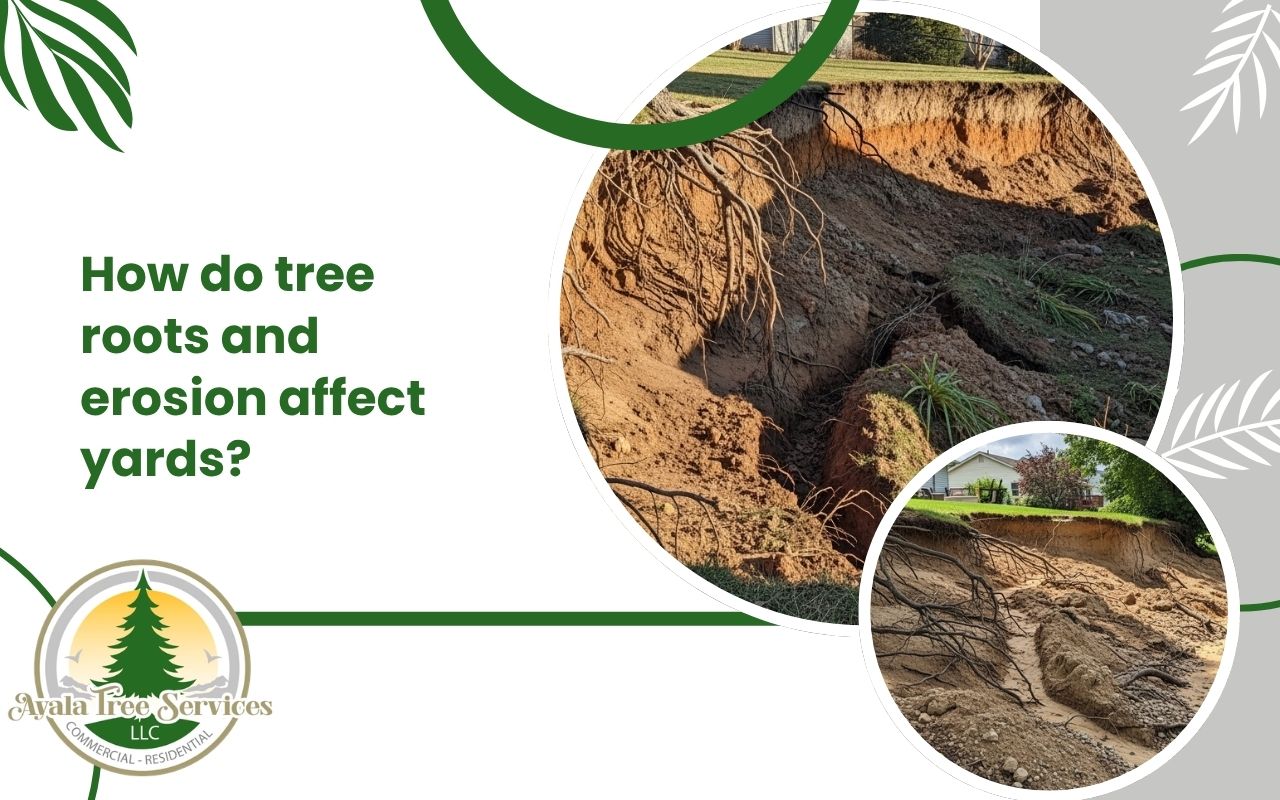
Tree roots and landscape erosion shape yard health every season. When that balance shifts, you may notice slope destabilization, water pooling, and shallow roots problems around your home.
How do tree roots and erosion affect yards?
Tree roots and landscape erosion influence each other every day. Roots can anchor loose soil and slow runoff. However, poor drainage, compacted ground, or weak planting choices can change that benefit fast. At Ayala Tree Services LLC, we help homeowners read these signs early and protect both trees and landscape areas before damage spreads.
Recognize how roots support soil across changing grades
Healthy roots act like a natural web in the soil. They hold topsoil during rain and reduce washouts on mild slopes. Even so, not all root systems behave the same way. Some go deep, while others stay close to the surface. That is why tree roots and landscape erosion should always be reviewed together.
- Deep roots help hold lower soil layers on hills.
- Fibrous roots protect topsoil from light runoff.
- Mixed roots often give more balanced yard support.
At Ayala Tree Services LLC, we often see better results when trees, shrubs, and groundcovers work as one system. As a result, soil stays firmer and rainwater moves more slowly across the yard.
Manage runoff patterns before slope issues grow worse
Water rarely follows a straight path for long. Instead, it follows cracks, bare spots, and exposed roots. Over time, that movement can create channels, soft zones, and uneven settling. Therefore, tree roots and landscape erosion can become a serious issue when runoff keeps hitting the same area.
- Slope destabilization often starts with repeated fast runoff.
- Water pooling can weaken soil near trunks and walkways.
- Exposed roots may leave gaps where water cuts deeper.
We encourage homeowners to look for muddy patches, fresh rills, or soil that pulls away after storms. In many yards, these signs appear before larger structural problems begin. When roots are already close to hard surfaces, Tree Root Removal Near Foundation Safe Methods can help you understand when targeted action makes sense.
Choose root-friendly plants that strengthen weak ground naturally
Plant choice matters because each species changes the soil in its own way. Some trees build deeper support. Others spread wide and help cover the surface. For that reason, good planning reduces shallow roots problems and improves long-term stability.
Ayala Tree Services LLC recommends matching plants to the slope, drainage pattern, and available space. On steeper areas, deeper-rooted trees often perform better. On flatter yards, layered planting can control splash, runoff, and bare soil at the same time.
- Use native groundcovers to fill open soil fast.
- Add shrubs between trees to slow runoff.
- Leave mulch rings around trunks for added protection.
If roots are already crowding the surface, the right tools and techniques matter. Our guide on Best Tools for Tree Root Removal explains safe ways to work around problem roots without creating new damage.
Follow practical steps to reduce shallow root stress
Shallow roots problems often appear when soil is compacted, thin, or always wet near the surface. Still, small changes can improve conditions. We usually start with moisture control, surface protection, and better plant spacing. That approach helps the yard recover without harsh disruption.
How to improve erosion-prone areas around tree roots
- Add organic mulch to soften rain impact and hold moisture.
- Use compost to improve soil structure and root depth.
- Plant low groundcovers in bare patches between larger roots.
- Guide runoff with shallow swales or gentle berms.
- Inspect after storms and repair new washouts quickly.
At Ayala Tree Services LLC, we also remind homeowners not to pile heavy soil over exposed roots. That can stress the tree and make drainage worse. When support is needed across the property, our Tree Services in Atlanta, GA – Care for Healthy Landscapes page shows how professional care can help protect trees and soil together.
Build lasting landscapes with smart drainage and care
The best yards treat erosion control as an ongoing habit. Good drainage, healthy roots, and regular inspections work better than one-time fixes. Because of that, tree roots and landscape erosion can coexist more safely when the whole site is planned as one system.
Ayala Tree Services LLC believes every yard should balance beauty with function. We look at runoff paths, root spread, and vulnerable edges before problems grow. In turn, homeowners gain a more stable yard, fewer muddy spots, and less risk from slope destabilization.
When you are ready to protect your property, reach out through Contact Us. You can also see what local homeowners say about our work on Leave Us a Review.
Frequently Asked Questions
Can tree roots stop erosion completely?
No, roots help a lot, but they do not solve every drainage issue. We often combine root care with grading, mulch, and runoff control. For related guidance, visit FAQ – Ayala Tree Services LLC.
Why do I see water pooling near exposed roots?
Water pooling often means runoff is slowing in a low spot or hitting compacted soil. Exposed roots can redirect flow and trap moisture near the surface. If you need site-specific help, use Contact Us.
Are shallow roots always a sign of a bad tree?
Not always. Some species naturally grow closer to the surface. However, shallow roots problems can worsen when soil is compacted or drainage is poor. If roots are close to structures, review Tree Root Removal Near Foundation Safe Methods.
What should I plant on a slope with erosion?
We usually suggest a mix of trees, shrubs, and groundcovers instead of one plant type. This layered approach improves coverage and reduces slope destabilization. You can explore broader property care on Tree Services in Atlanta, GA – Care for Healthy Landscapes.
Call early if you see fresh soil loss, recurring puddles, exposed roots, or movement near patios and foundations. Fast action usually prevents bigger repairs. For the next step, visit Contact Us.
References:
Soak Up the Rain: Trees Help Reduce Runoff
Soak Up the Rain: Rain Gardens