Tree roots and lawn health often clash in one yard. However, the right steps can protect both. If you see thin turf near trunks, the soil may be stressed. Because roots compete for water and space, grass can fade fast. This guide explains the signs and fixes that support a greener lawn.
Why do tree roots affect lawn health, and what can you do about it?
Tree roots and lawn health are linked because both depend on the same soil, water, and nutrients. As roots spread, they can dry the topsoil and tighten the ground. Therefore, grass may struggle to stay dense and green. With steady watering, better soil airflow, and smarter planting choices, you can reduce conflict and improve results.
How tree roots and lawn health connect below the surface
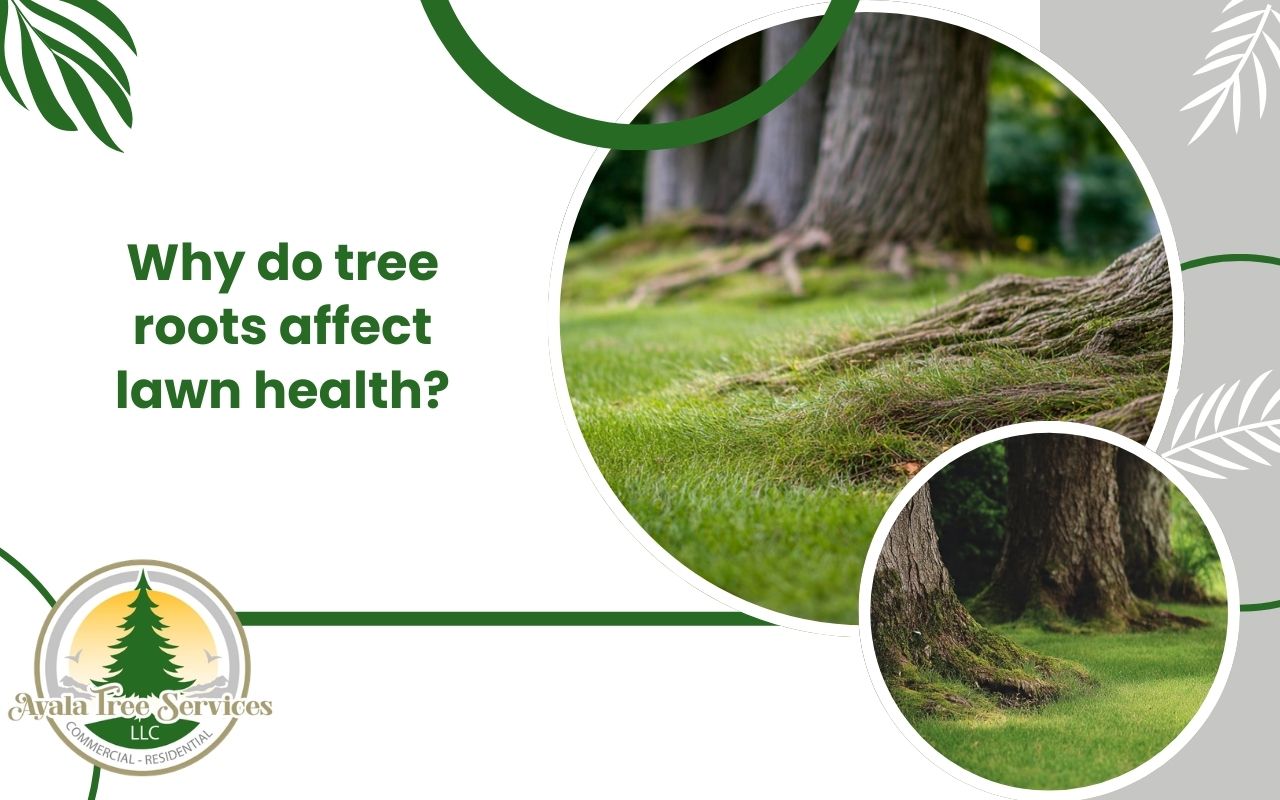
Tree roots and lawn health change together as trees mature. While young roots often stay deeper, older roots may rise near the surface. As a result, the lawn can become uneven and thin.
- First, surface roots can lift soil and disrupt mowing patterns.
- Next, shallow roots share the same zone as grass roots.
- Then, shade and leaf drop can slow turf recovery.
- Finally, repeated stress can reduce turf density over time.
Ayala Tree Services LLC often sees these patterns in established yards. Therefore, early detection helps you avoid bigger repairs. If roots are near hardscapes, review Tree Root Removal Near Foundation with Effective Methods for safer planning.
Signs you have root-driven turf stress
Tree roots and lawn health issues often show up in the same spots each season. For example, grass thinning near trunks is a common clue. Also, the ground may feel firm underfoot because of compacted soil.
- Patchy color or slow growth in rings around the trunk.
- Raised lines or mounds that hint at shallow roots.
- Puddling after irrigation, which suggests poor infiltration.
- Dry soil near the drip line, even after watering.
Because these symptoms can overlap, it helps to track them weekly. Ayala Tree Services LLC can also help you confirm whether roots are the main driver. When you need broader support, explore Safeguard Your Property with Tree Services in Atlanta, GA.
Compacted soil makes root competition worse
Compacted soil limits oxygen and water movement. Consequently, roots and turf crowd into the same shallow layer. This overlap intensifies stress for both systems.
- Foot traffic on wet ground presses particles together.
- Frequent mowing without aeration adds repeated pressure.
- Equipment use around trunks can seal the surface.
- Poor drainage keeps the soil tight and sticky.
Therefore, relieving compacted soil often improves tree roots and lawn health at the same time. Ayala Tree Services LLC may recommend practical steps that match your site conditions.
Water and nutrient competition: what is really happening
Water competition is a major reason tree roots and lawn health decline in dry spells. Since turf roots are shallow, they dry first. Meanwhile, trees can draw moisture steadily across a wide zone.
Nutrient competition adds more strain. As trees feed, grass may miss key minerals near the surface. Therefore, turf can look pale, thin, and slow to rebound after heat.
However, targeted watering and steady feeding can reduce stress without overdoing inputs. Ayala Tree Services LLC can guide next steps when the situation feels unclear.
How to balance tree roots and lawn health in a real yard
Use a simple plan to reduce conflict. Then, keep changes gentle to avoid harming the tree. Tree roots and lawn health improve most when you work with the site, not against it.
Step 1: Water deeper, not more often
First, water early to reduce evaporation. Then, aim for deeper soak cycles to support steadier moisture. This also reduces surface drying near roots.
Step 2: Aerate and top-dress lightly
Next, core-aerate to open the soil. After that, add a thin compost layer to improve structure. As a result, water moves better and roots breathe easier.
Step 3: Strengthen turf in the right zones
Then, overseed thin areas with shade-tolerant blends. Also, mow a bit higher to protect crowns. Consequently, turf handles stress with less thinning.
Step 4: Use mulch where grass cannot win
Finally, consider a clean mulch ring under dense canopy. Keep mulch off the trunk to avoid rot. This reduces mowing damage and supports moisture balance.
When removal work is necessary, use safe methods and tools. For guidance, see Best Tools for Tree Root Removal That Get the Job Done Right. Ayala Tree Services LLC can also help you choose the safest approach for your property.
FAQs about tree roots and lawn health
Why is my lawn thinning around a mature tree?
Usually, tree roots and lawn health collide due to shade, shallow roots, and stress. In addition, water competition can dry turf quickly near the drip line. If you suspect the roots are close to structures, start with Tree Root Removal Near Foundation with Effective Methods and plan next steps carefully.
How can I fix compacted soil without harming the tree?
First, use core aeration in open lawn areas away from major surface roots. Then, top-dress lightly with compost for better structure. Because compacted soil reduces airflow, easing it can improve tree roots and lawn health together. If you want local support, Ayala Tree Services LLC can advise through Contact Us for Expert Hardscaping, Sod, and Tree Services.
What is the safest way to manage visible surface roots?
Avoid cutting large roots without a plan, since stability can change. Instead, adjust mowing height, add a mulch ring, and improve irrigation patterns. If you must address roots near hardscape, follow safer methods in Tree Root Removal Near Foundation with Effective Methods.
How do I reduce water competition between trees and grass?
Water early and soak deeper, so moisture reaches lower layers. Also, keep turf thicker with overseeding and higher mowing. Consequently, tree roots and lawn health can stabilize during dry weather. If you need a site-specific plan, Ayala Tree Services LLC can help via Contact Us for Expert Hardscaping, Sod, and Tree Services.
When should I call a professional instead of doing it myself?
Call a pro when roots affect foundations, plumbing, or major grade changes. Also, get help if you need cutting near utilities. For service options, review Safeguard Your Property with Tree Services in Atlanta, GA. You can also find Ayala Tree Services LLC locally through Ayala Tree Services LLC on Google Maps.
Next steps for a greener yard with healthy trees
Tree roots and lawn health do not have to stay in conflict. Instead, use aeration, smarter watering, and selective turf improvements. Ayala Tree Services LLC can help you protect trees while restoring thin lawn zones. To schedule guidance, use Contact Us for Expert Hardscaping, Sod, and Tree Services. With the right plan, tree roots and lawn health can work together, not against each other.
References
- When Should You Aerate Your Lawn to Grow Healthier Grass? (Better Homes & Gardens)