
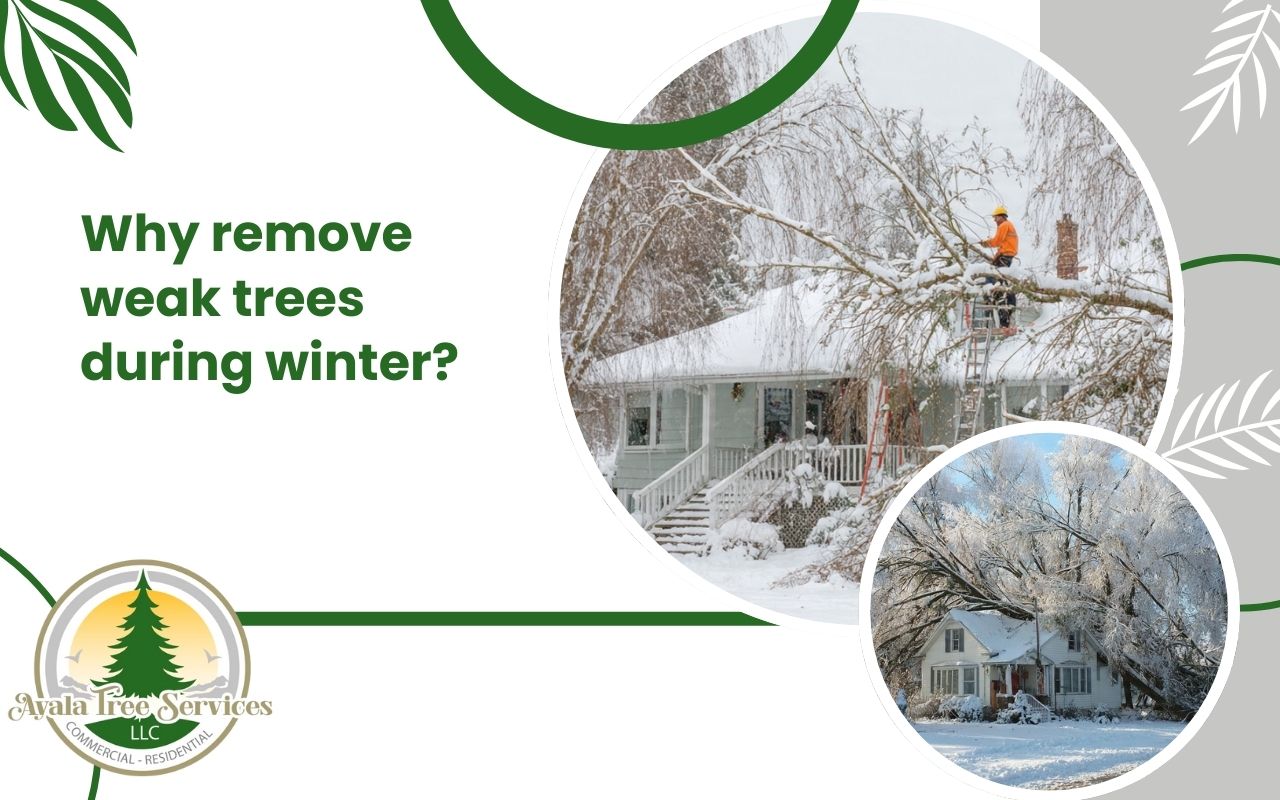
Winter is the clearest season to spot trouble in your landscape. With leaves gone, cracks, decay, and unbalanced limbs stand out, making decisions easier and safer. The benefits of removing weak trees in winter include fewer storm surprises, healthier remaining trees, and access for crews. This guide explains what to look for and when to call Ayala Tree Services LLC.
Why remove weak trees during winter?
Winter makes hazards easier to identify and safer to manage because bare branches reveal defects and access is simpler. Removing compromised trees during dormancy can reduce storm damage risk, limit disease spread, and protect nearby plants and property before spring growth returns.
How to spot a weak tree in winter
Walk your yard after calm, clear weather and look for visible warning signs. Leaf-off season helps you see the branch framework, including areas that commonly fail during wind or ice.
- Deep cracks, cavities, or seams along the trunk
- Peeling bark with soft, crumbly wood underneath
- Leaning trunks or sudden shifts in posture after storms
- Large dead limbs or multiple dead twigs in one section
- Fungal growth near the base or along the trunk
- Weak branch unions that suggest structural hazard trees
If any sign is near a driveway, roofline, play area, or utility corridor, treat it as a priority.
What risks do weak trees create?
Ignoring a failing tree can lead to expensive damage and safety issues, especially during high winds, ice, or saturated-soil conditions.
- Falling limbs that can strike cars, roofs, fences, or people
- Whole-tree failure that can impact structures and block access routes
- Increased exposure to pests and decay organisms that can spread to healthy plants
- Emergency calls after storms that often cost more than planned work
For many homeowners, the benefits of removing weak trees in winter come down to preventing a surprise failure when weather turns severe.
Winter assessment: what to check before taking action
Start by evaluating the canopy structure and the trunk’s stability. Winter visibility helps identify storm-sensitive branches, weak crotches, and imbalanced crowns. Also look at the base: soil heaving, exposed roots, or a hollow-sounding trunk can indicate instability. When defects are visible now, you can plan controlled work instead of reacting to an emergency later.
Key benefits of winter removal
Planned winter work can be cleaner, faster, and safer—especially when access improves and the tree is dormant.
- Clearer diagnostics: leafless canopies reveal defects and poor branch structure
- Better scheduling: you can often avoid peak-season bottlenecks
- Lower risk of spread: reduced sap flow can limit mess and some disease movement
- Fewer storm emergencies: you reduce the chance of urgent removals after heavy weather
Done at the right time, the benefits of removing weak trees in winter include protecting nearby trees and setting up a healthier spring landscape.
Healthy growth and surrounding vegetation
Removing a declining tree can reduce competition for sunlight, water, and soil nutrients. Once the canopy opens, shrubs, groundcover, and turf often improve—especially in areas that were previously shaded or root-competed. You may also gain space for new planting or a redesign that improves airflow, which can help remaining trees resist stress and pests.
How to plan proactive removal
- Survey your property and mark trees with visible cracks, decay, heavy lean, or repeated dieback.
- Prioritize targets near structures, parking areas, walkways, or power lines.
- Document what you see (photos of trunk damage, fungi, or failed limbs) to speed up evaluation.
- Request a professional assessment to confirm risk level and removal approach.
- Plan disposal (mulch, firewood cuts, or haul-away) based on how you’ll reuse the material.
- Replant intentionally in spring with a species suited to your light, soil, and space constraints.
This proactive removal approach helps you avoid reactive decisions after storms and protects the long-term health of your yard.
Frequently Asked Questions
How do I know if a tree is too risky to keep?
If you see a major lean, trunk splitting, large dead limbs over targets, or fungus at the base, treat it as a high-priority inspection. When in doubt, request an on-site evaluation using https://ayalatreeservices.com/contact/.
Is winter the best time to remove a dangerous tree?
Often, yes—because defects are easier to see and work access can improve. The benefits of removing weak trees in winter are strongest when you schedule removal before severe-weather periods rather than waiting for damage to occur.
Can I remove storm-damaged limbs myself?
Only small, reachable branches with safe footing. If limbs are overhead, tangled, or near lines, hire a trained crew to reduce injury and property-damage risk.
How much does tree removal typically cost in Roswell, GA?
Pricing depends on size, risk level, access, and cleanup. For a location-specific overview and removal options, review https://ayalatreeservices.com/tree-removal-roswell-ga/ and request a site visit.
What services should I bundle with removal for best results?
Many homeowners pair removal with pruning, stump options, and debris hauling. To compare what fits your property, browse https://ayalatreeservices.com/services/ and match the scope to your goals for safety and replanting.
Get help from Ayala Tree Services LLC
If you suspect a high-risk tree, professional planning is safer than guesswork. Ayala Tree Services LLC can evaluate structure, determine whether removal is necessary, and manage the job with the right equipment and cleanup plan. To schedule an assessment, use https://ayalatreeservices.com/contact/.
References
- Better Homes & Gardens: 10 Plants to Prune in Winter for Stronger Spring Growth
- Homes & Gardens: Don’t Miss the January Pruning Window